

Healthy bones means better overall health and longevity. Let’s break some common myths about osteoporosis and bone loss so you can feel confident about what you can do to build your bones.
It can be very scary to find out that you have osteoporosis. The standard medical approach doesn’t include diet, nutrients, or yoga, even though there is evidence to show they are effective.
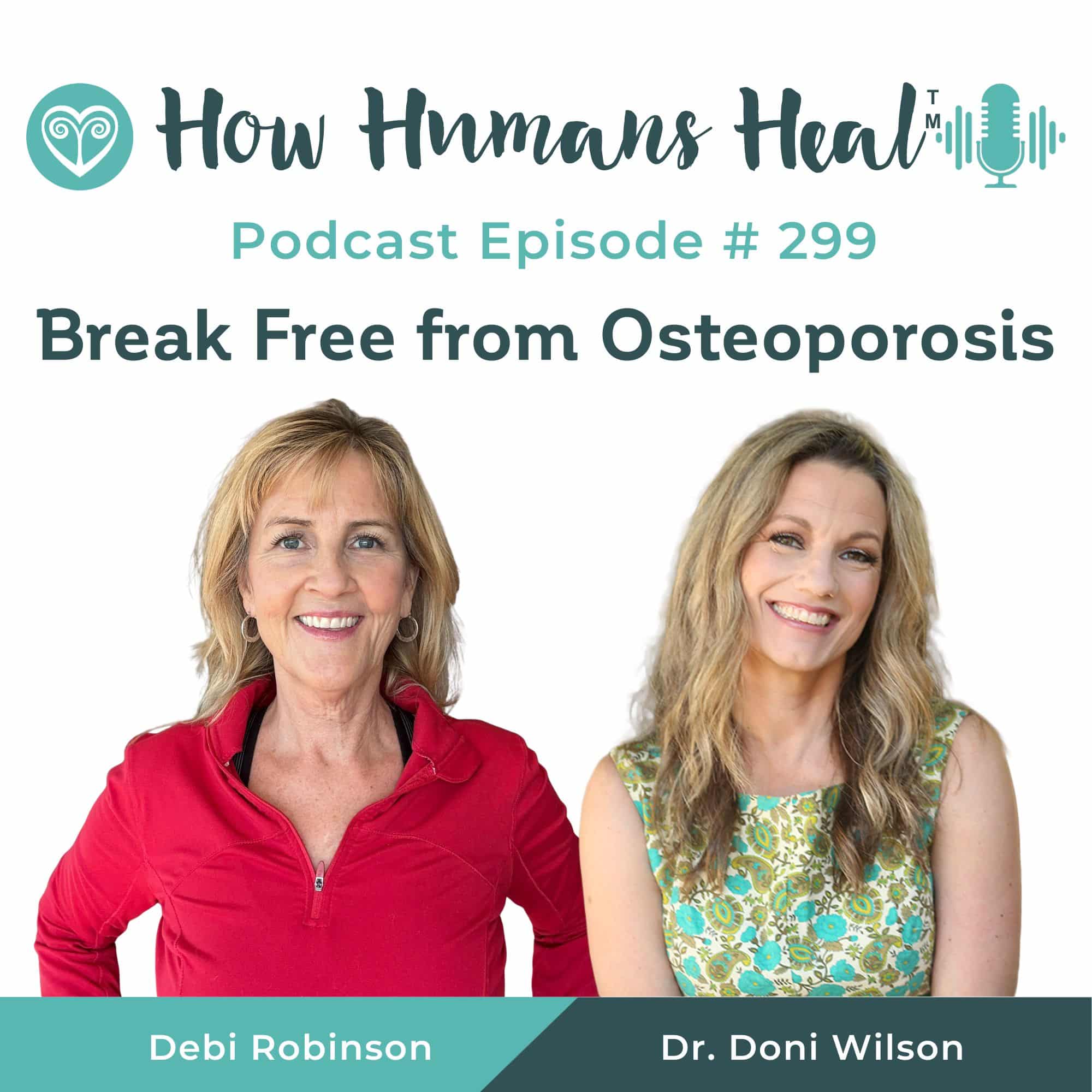
That’s exactly why I’m excited to introduce you to Debi Robinson. She’s a functional bone health expert and a certified yoga therapist. She teaches women to prevent bone loss and improve health using a holistic approach, including yoga.
From Hip Injury to Bone Health Expert
Debi came into this field in an unexpected way. She started practicing yoga in her thirties, and then in her forties, something happened to her hip. It was an injury where she tore her labrum, and it changed the way that she practiced yoga.
It turns out she had a surgery that collapsed her hip joint, and then she had a total hip replacement when she was fifty-one years old. That experience of having to have a hip replacement and having surgeries on her bones raised her awareness about her bones. She started studying osteoporosis and what she could do to prevent it.
What Debi experienced is quite common. Many women have a fracture or a surgery and that’s when you find out that your bones need attention. Or maybe you’re postmenopausal and you have a DEXA scan and the doctor says you’ve got some bone loss happening.
In fact, women are finding out earlier and earlier that their bones need attention. In that moment that you find out you have bone loss, something happens inside of you. You go from not even thinking about your bones, to a place of complete fear and fragility.
It’s really indescribable. It’s like having the rug pulled out from under you. Many women walk into the doctor’s appointment thinking their bones are like the bricks of a castle, and the minute you get a diagnosis of osteopenia, it changes, and you feel like your bones are made out of sand. It is a deep, deep fear and feeling of fragility.
Understanding Bone Loss Beyond Medication
Oftentimes in the doctor’s office, they don’t explain what the results mean or even what the options are beyond a medication. We have a broken system and we’ve been misguided and misinformed and misled since the nineteen nineties. It all happened because a company had a drug that got approved in nineteen ninety-five, called Fosamax, and another company had an X-ray machine to look at the bone density.
Ever since, we’ve been in a framework of “scan, diagnose, and treat.” And the treatment has to do with pills. Doctors are not educated on what it takes to build strong fracture-resistant bones. But the big thing is that they were thinking that osteoporosis is a progressive degenerative disease and as you get older, your bones get weaker. That is not the truth.
The truth is it’s an inflammatory metabolic disease, which means lifestyle is going to be the drivers of the root causes of bone loss.
We think of osteoporosis when we see someone who is over eighty years old and they’re now hunched over in their posture. So when you’re in your fifties or sixties, and find out you have osteoporosis, it’s common to think: “what the heck? How did this happen?”
To be told, oh, “there’s nothing you can do about this, or all you can do is take this medication,” is quite a shock. Lo and behold, the medication has a lot of side effects and it’s not even that effective.
There are a lot of limitations to Fosamax and other bisphosphonates. It is the only tool in the toolbox and women don’t want it. It’s the number one declined medication. We are learning more about the negative side effects. You could get osteonecrosis of your jaw. Your jaw will break, just shatter, and the dentist won’t even want to work on you if you’ve been on a bisphosphonate. You could get what are called atypical spontaneous femur fractures. And often then don’t warn you about these potential effects.
The Truth About Our Bones
What Debi would like people to understand is that our bones are our foundation. They’re a reservoir of minerals, and throughout our lives, usually up until about our thirties, we are building, building, building.
After that point, there is a remodeling process of building and breaking down. About age thirty is when that shifts, and now there’s more breakdown than build up. Then at menopause, when we lose hormones, the loss accelerates more.
The thing that we’re understanding now is that there are many contributing factors to bone loss and it’s not just as you age. When you raise your awareness about the factors that lead to bone loss, then you can actually stop bone loss.
This is such important information because by knowing what can stop bone loss, we can reverse bone loss, and that means we could reverse osteoporosis.
Dr. Doni shares that she has been helping women with osteoporosis and bone loss since the year 2000, and I’ve seen patients reverse osteoporosis before my eyes. The results of their DEXA scan went from osteoporosis range to healthy range. I just want everyone listening to know that it is possible improve your bone density using natural approaches, even if you’re not hearing it from your doctor’s office.
When to Get a DEXA Scan and Understanding Your Results
A DEXA scan is an imaging test for bone density. It is common for doctors to wait until over age 60 to order your first DEXA, however it would be better if it can be done earlier, such as when you’re 50. When you are premenopausal going into menopause is when the greatest decrease of bone density usually occurs. So having a DEXA at that time is helpful. When you get a DEXA, ask for the report.
Anyone who’s going through any kind of cancer treatment and/or taking medications that could contribute to bone loss should get a DEXA scan. Having chronic gut issues, and if you’re on a PPI (protein pump inhibitor), or glucocorticoids (steroids), or certain other medications, can contribute to bone loss.
There’s better technology for assessing bones, an ultrasound called REMS (radio frequency echographic multi-spectrometry), but it’s not readily available, and not covered by insurance.
Quick way to explain a DEXA scan: We look at the T score. Healthy bones are at a zero or higher than zero. When you start having bone loss, you’re going into the negative, so you’re going to see a negative like -0.5, -1, or -2.5. That’s telling us the degree of bone loss. —Dr. Doni
A DEXA focuses on the bones in your hip and spine because there are different bone types in the hip and spine. On the report, you’ll see lumbar vertebrae, one through four, and the hip joint (femoral neck), which is an area we want to avoid fracturing if possible.
Most people are going to be in the negatives because zero at age thirty, and if you’re not thirty anymore, you’re probably not going to look like thirty on the inside. As we age, we notice what happens to our body. We have wrinkles on the outside. Well, there are also wrinkles on the inside, and bone loss is some of that.
Once you get above (below) -2.5, that’s when you go into the category called osteoporosis. Prior to osteoporosis, is called osteopenia. Just know your number and then say, hey, “that’s my starting point. Now what am I going to do about it?”
The Gut-Bone Connection
One of the things Debi focuses on when helping women with osteoporosis is the relationship between gut health and the bones.
She shares: I think it could be surprising for people to realize, “what does my gut have anything to do with my bones?”
The thing that builds our bones are the foods that we eat. We need protein, vitamins, and minerals; those are the building blocks of bone tissue. The bones store minerals, and so we need those nutrients to come into our body. We are what we absorb!
The food that comes in, it needs to get from our mouth to our bones. To do that, the nutrients have to go from the mouth to the stomach to the small intestines, into the body, through the liver, and then it gets delivered wherever it needs to go. This whole entire flowing system from mouth to anus matters because that’s how we bring nutrients into our body, they goes to where they need to go, and then we need to eliminate what our body no longer needs.
The gut is where all that absorption takes place. Right after the stomach, the small intestines is where eighty to ninety percent of absorption takes place. We need to make sure we are digesting, absorbing, and then we need to make sure that that barrier is intact.
The intestinal lining is one cell thick and has two layers of mucus, and that fortress has to be intact. Eighty percent of our immune system is in our gut. That’s where your outside world can become your inside world. You’ve got your soldiers, your immune system, waiting to see what’s coming in. If you don’t have a nice, healthy barrier, then you’re going to let things come in.
Osteoporosis is a disease of inflammation, and the gut is where most of the triggers of inflammation occur, which is why we have to pay such critical attention to gut health for our bone health.
When the intestinal lining is not healthy, it is referred to as leaky gut. It’s not if you have leaky gut – it is a matter of how severe is the leaky gut. And the more severe the leaky gut, the higher the inflammation is going to be.
Our microbiome, the bacterial inside of our gut, help protect the intestinal lining. Healthy bacteria are what creates that double mucus layer and supports the fortress. That’s why it is important to optimize your microbiome, which can be done with diet. We need to feed the healthy bacteria and not the inflammatory bacteria.
If you are not managing stress or you’re eating in a stressed state, your body won’t fully or properly digest. Most of us have leaky gut because we’ve been exposed to toxins and stress. And if you’re not eating foods to support your healthy bacteria, it creates a vicious cycle of inflammation that effects your bones, and whole health.
A lot of times, people feel surprised to find out that they have leaky gut because they don’t have digestive symptoms. Dr. Doni finds that fifty percent of people with leaky gut don’t have gut symptoms.
Then after they follow a gut healing protocol with an anti-inflammatory diet and supplements to heal the gut lining, they notice, their sleep is better, and their hands don’t hurt anymore. They didn’t even know their hands hurt. They were desensitized or living with things that they didn’t realize were things they didn’t have to live with.
Bone Health is Related to Stress and Your Whole Health
Sometimes finding out that your bones need attention is an opportunity to pivot your whole health and improve your whole health. You may start with a focus on improving your bones, and end up preventing heart disease, diabetes, dementia, cancer because you’re helping your whole health.
The bones are foundational. They’re in the center of our body, and they are the reservoir of minerals. The bones are one of the first organ systems to respond to stress. When you get into a stressed-out state, your bones are what helps you move. Inside of the bones are the minerals that are going to run the show.
That doesn’t just mean when a crazy amount of stress is going on. It is even when you just heard something someone said. Or you just smelled something that triggered something in you. It could even be the way that person just looked at you. When you have a gut reaction, your bones respond. Your bones are going to dissolve the minerals they store in order to do whatever it is your body needs to do to protect you.
The tricky thing is we are under stress all the time as humans, and we just kind of dismiss it. We’re so overwhelmed by it. We don’t even know where to begin, and we certainly aren’t realizing that it impacts our bones because we can’t see our bones until we have something like a DEXA scan.
If you’re under constant stress, you better start to do something about that because your bones are likely being impacted.
Using Yoga for Bone Health and Stress Recovery
Dr. Doni shares that in my book, Master Your Stress Reset Your Health, I talked about my Stress Recovery Protocol, helping people to recover from stress, including by optimizing cortisol, gut health, and neurotransmitters.
Part of that plan includes recovery activities as well as exercise. The cool thing about yoga is it fits in both of those categories. It can help us with stress recovery and with movement and exercise.
A lot of times, when people hear about bone health, they think about weight-bearing exercise. They might think about walking or running or lifting weights. I wanted to hear Debi’s perspective on how is it that yoga can help with our bones?
Debi thinks that yoga is often misunderstood. When yoga came to the U.S., it came as an exercise. Whenever she tells someone she teaches yoga, they say to her, “I’m not flexible.” What she says to them is that yoga doesn’t require physical flexibility. It requires mental flexibility.
Yoga is not actually a workout. Yoga is a “work in!” The word yoga means to yoke the body, the mind, and the soul. We live so disconnected.
Debi suggests four main areas we should focus on when it comes to bone health:
- Strength. Yes, bigger, stronger muscles are going to lead to bigger, stronger bones.
- Posture because half of all the fractures in osteoporosis are in the spine. We need to stand up straight, and we need the muscles in the back of our body to be strong to hold us upright.
- Flexibility because we need to be bendable and not breakable. If you are going to misstep on something and your ankle joint is going to move, you need your ankle joint to be able to receive that. You need your ankles to be limber so that if they do bend a little bit, it’s not going to pull on the bones and fracture them. If you are walking and your leg slips out from under you on a banana peel, you need your legs to be able to take that wide range of motion. You need the dance in your hips. You need that play and that range of motion so that when you pull on it, you don’t fracture.
- Balance for fall prevention because bones don’t break because they’re fragile. They break because we fall.
Yoga, from a physical perspective, works on all of that. If you practice yoga the way yoga was intended, you are matching breath with movement. You are staying right here, right now. There is no stimulation of cortisol, which is the biggest bone-dissolving hormone in the body. You are working on strength, flexibility, posture, and balance.
To Debi, yoga is the best thing when it comes to bone health.
How To Find a Yoga Class and Yoga Therapist
When someone’s thinking, how best to find a yoga teacher or class?
Debi warns that she has a hip replacement because a yoga teacher tore her hip when she was forty-four. He pushed her body and he tore her hip joint, and it has changed the course of her life.
You don’t want another person to be moving your body, to be adjusting your body. You want to develop that inner body awareness, so you know how to move your body efficiently and effectively.
If you’re an aging female, if you’re in menopause, then work with somebody that’s also in that category and understands your body type. Especially if you have osteoporosis, make sure you work with somebody that is skilled in bone loss.
Debi offers yoga classes online, so there’s no reason why somebody can’t find somebody skilled.
She’s a yoga therapist and a yoga teacher. To become a yoga teacher, it’s a two hundred hour certification. To become a yoga therapist, it is a one-thousand-hour clinical training. We are trained by chiropractors, physical therapists, MDs, and nurses. We’re trained in clinical conditions. We learn about the restrictions, limitations, or contraindications.
A yoga therapist then goes through a clinical rotation at the end. If you can find a yoga therapist, then you have an even higher level skill set and especially a lot of knowledge of anatomy. You’re going to need that if you have osteoporosis.
Resources and Programs for Bone Health
Debi has a podcast called Stronger Bones Lifestyle. For years, she ran functional labs on women with osteoporosis, helping them stop and reverse bone loss. She found that it is important to take a multi-pronged approach. It is lifestyle, what we eat, how we think, and how we move every day that’s either building or dissolving our bones.
Debit’s YouTube channel is Debi Robinson Wellness. She has over seven hundred videos on there, including a lot of yoga therapy sessions.
Debi is also a chef. She went to professional cooking school, so she does cooking classes for bone health and gut health. She has a program called Healthy Gut Healthy Bones, which is her foundational program for learning how to change your lifestyle, focusing on optimizing gut health to optimize bone health.It’s so valuable and helpful, especially for people to know that they can access all of this online. It’s hard to find someone in your local area who has this knowledge. And healing is a process. We’re not looking for an overnight change. We’re looking for change over time, over months, over years.
Good Bone Health: Debi’s Overall Perspective
You need your bones, and if you raise awareness and you will learn the answer to: “are you building or dissolving?”
We are living tissue constantly remodeling all day, every day, and that’s beautiful because that means we can actually do something about it.
The statistics are one out of two women will fracture a bone in her lifetime. Every thirty seconds, worldwide, someone is falling and fracturing a bone. If someone does fall and fracture a bone closer to the eighty-year-old time frame, there’s a fifty percent chance that a year later they won’t be here. It can be deadly.
Debi’s body was broken at age fifty. Her hip joint was collapsed at age fifty, so she was stopped in her tracks, which is why she’s so adamant to do what she does now.
Our bones are constantly remodeling, and so this isn’t something where you do a program for one week or one month. The mindset is: let me learn the lifestyle that’s going to build bones and not dissolve them.
It’s the way you eat, how you think, and how you move. You’re going to learn the foods that contribute to dissolving bones, and the foods that contribute to bone building. Then you can make the best food choices with that information. You have to move your body. Move it, use it, or lose it.
It’s not go to the gym for an hour every day. It’s do pushups, do a plank, go up against the wall and push away from the wall, practice getting up and down from a seat or from the toilet every day. She likes to teach what you can do every day that’s working on your bones.
Then master stress. Stress is the biggest bone dissolver of all. Cortisol is a catabolic hormone that when it’s secreted in your body is going to break down everything, and your bones are one of the first things that get broken down under stress. You’ve got to manage stress because you can’t eat your way or move your way out of bone loss if you are not managing your stress.
Bone-Dissolving Foods to Avoid
What are the most shocking bone-dissolving foods out there?
Really, the big ones are sugar, dairy, and gluten. People will be surprised about dairy because we were taught from a young age all these advertisements, oh, you’ve got to drink your milk for your bones.
- Gluten is probably the number one cause. Gluten negatively affects thyroid, which is a master metabolizing hormone. Osteoporosis is an inflammatory metabolic disease.
- Gluten also affects the secretions of bile, which breaks down fat-soluble vitamins. You need vitamin D and vitamin K for your bones. Gluten contributes to leaky gut. Almost all gluten is hybridized, sprayed with glyphosate.
- Dairy, because dairy is inflammatory. There are two proteins in dairy that are inflammatory. And there’s the growth factor in dairy that’s not healthy for us.
- Women are eating dairy for protein and calcium, but we don’t need as much calcium as we’ve been misled to believe we do. We don’t need twelve hundred milligrams. We probably need around seven or eight hundred milligrams per day, and you can get that amount in your food.
- Sugar is inflammatory, so we don’t want that. Debi also recommends to limit coffee, caffeine and alcohol.
Debi used to run a food sensitivity panel looking at all the proteins and all the peptides of dairy. She ran them on women over 60 years old with osteoporosis or osteopenia. Eighty-five percent of the time, they showed high reactivity to dairy. That is the proof right there.
Cow milk is for calves. We are the only animals that drink milk after we’re weaned. Cow milk has got calcium molecules to build calf bones. It’s got an accelerated growth factor in there that is inflammatory to our immune system. Dairy proteins are addictive. They also contribute to mucus. The biggest point is we don’t need them.
Dr. Mark Hyman went up against the dairy association that put out Got Milk. He said Got Proof, and he made them take down their campaigns because he showed that it wasn’t true. The countries with the highest dairy consumption have the highest fractures. Asia doesn’t really consume a lot of cow milk dairy, and there’s plenty of people that have strong bones. We have some of the highest fracture risks here in this country.
If it is about the yummy factor, there’s plenty of yogurts and ice creams that are alternatives. Debi eats cheese every now and then. It’s not like she’s one hundred percent. You just have to know it’s going to be contributing to inflammation, and inflammation leads to bone loss and many other diseases.
This is why I have been gluten-free and dairy-free for decades.
Certainly, for someone facing bone loss and wanting to recover your bones and reverse osteoporosis, then definitely don’t fall for the myth that you need more milk. Bone loss is not even necessarily due to a lack of calcium.
What You Need to Know About Calcium
For a long time, practitioners have been recommending over-the-counter, low-quality calcium that isn’t even being absorbed very well. I love that Debi is saying, yes, we need calcium, but we can get it from our food. We don’t need anywhere near as much as we’ve been told by the RDA.
My point is, it’s not just about calcium. We need the calcium with the vitamin D, the vitamin K, magnesium, and other nutrients. They all play a role synergistically.
Debi agrees, saying it’s like an orchestra. Calcium, ninety-nine percent is stored in your bones. We need the vitamin D to get it absorbed. We need the magnesium to put the calcium into solution, and we need the vitamin K to bring it into the bones. Then there’s cofactors, and we need amino acids, silica, manganese, boron, B6, and we need a healthy gut to make sure that the food and supplements are being absorbed and utilized.
It’s this whole entire process. It’s this lifestyle.
We were so wrong with bone health. We’ve been so misguided, so misled, so misinformed. It’s been the whole entire machine since the nineteen nineties that’s controlled the narrative on this.
You don’t need to spend a whole heck of a lot of money. You need to eat the right foods, manage your stress, and move your body appropriately, focusing on strength, flexibility, posture, and balance.
Real Results from Lifestyle Changes
What did Debi notice with her bones after making these changes?
When she had a surgery that collapsed her hip joint, four months later, they took part of her femur bone off and part of her pelvic bone. For seventeen months, she thought she could repair herself, but she couldn’t. She was teaching eight yoga classes at that time.
When she came out of that surgery, for the next two years, she demonstrated everything in her classes on her new hip replacement side because her right side had become so weak. Her right side did everything, and her left side didn’t.
Then, after two years, another DEXA scan, and her bone density was negative two point four in her right hip, her natural hip, which is one point away from osteoporosis. She was only fifty-three years old.
She realized, what am I doing? This is my real hip. Why am I focusing on the fake hip? She started then, for the next two years, for eight classes a week, doing everything on her right side, focusing on developing strength. Her DEXA scan changed from a minus two point four to a minus one point nine, which is a very significant shift.
Of course, she was also running functional labs to identify imbalances to address. She was eating the right things and supplementing correctly and not eating dairy, sugar, and gluten, plus minimizing her alcohol consumption. She was doing the lifestyle pieces too. Her bone density now hovers around -1.9.
She’s learned so much since then. She interviews so many amazing people that educate her even deeper. She has taught thousands and thousands of people yoga since two thousand ten. She knows what’s possible.
How to Work with Debi to Heal Your Bones
If you want to learn more from Debi you can find her on Instagram @debirobinsonwellness and Facebook @Debi Robinson Wellness. You can also check out her podcast Stronger Bones Lifestyle.
Know that you can heal. Humans heal when they decide to heal, when they do the things, learn the things that are healing. There are so many things that can heal, and we have such a tremendous inner healer inside of all of us. When we learn how to support that healer with food, mindset, movement, all of the things we need to do, then our body heals itself.
That’s so beautiful to know that the bones can heal. I think that brings so much hope. Any of you who’ve just recently been diagnosed or maybe you’ve been sitting with this diagnosis, I’m hoping your stress about your bone results has gone down, and you have a plan for how you can start to take even more action to recover your bones. While you do that, you’ll be improving your whole health.
Protecting Your Bones: Note from Dr. Doni
Bone health is so important for longevity, and knowing there is so much you can do to protect your bones is essential for your wellness.
I agree with Debi that it is better to start thinking about and supporting your bone health earlier, before menopause. But no matter what your age, you can start now.
I also agree that bone health is related to your overall health, including your gut health and the impact of stress. When stress and trauma disrupt our cortisol and adrenaline levels, it leads down a cascade that disrupts our digestion, hormones, immune system, and nervous system. Those disruptions increase bone loss.
When you add going through menopause on top of stress, our bones take the brunt of the blow. That’s why it is so important to work with a practitioner who understands how to help you to fully recover from stress, optimize your cortisol and adrenaline levels, and repair all that was disrupted.
That’s exactly why I’m so passionate about helping you recover from stress and trauma – so you can reverse the impact and prevent health issues, such as bone loss.
I help women in my practice every day to reverse osteoporosis and osteopenia using a holistic, naturopathic approach. As a naturopathic doctor and midwife, I’ve been helping women with bioidentical hormone replacement therapy for over 25 years.
If you have any questions, please don’t hesitate to reach out to my office at doctordoni.com. My team and I would be happy to connect with you and help you know what your next best step is to optimize your health. Click here to set up a call with my team.
Thank you, everyone, for listening in to How Humans Heal and learning all about bone health from Debi. I welcome you to subscribe so you don’t miss the next episode.
We’re here to help you!

Social:
- Facebook: https://facebook.com/drdoniwilson
- Instagram: https://instagram.com/drdoniwilson
- Threads: https://threads.net/@drdoniwilson
- YouTube: https://youtube.com/DoniWilsonND
Subscribe:
- Weekly Wellness Wisdom (Newsletter): https://doctordoni.com/www
- How Humans Heal (Podcast): https://doctordoni.com/podcast
More Resources from Dr. Doni:
- Stress Type Quiz: Assess your Adrenal Function
https://doctordoni.com/quiz - Dr. Doni’s Book: Master Your Stress, Reset Your Health
https://doctordoni.com/book - Dr. Doni’s Facebook Group: Stress Warrior Stress Resiliency
https://facebook.com/groups/stresswarrior - HPV Recovery Guide (FREE)
https://doctordoni.com/ddpp/hpv-guide/ - FREE Masterclasses with Dr. Doni
https://doctordoni.com/masterclasses - FREE Guides from Dr. Doni
https://doctordoni.com/guides
Personalized Solutions:
- 14-Day Detox Program: You can start this transformation program anytime
https://doctordoni.com/detox-program - Say Goodbye to HPV (12-week Program): Begin the journey to freedom from HPV today!
https://doctordoni.com/say-goodbye-to-hpv - If you’d like to meet with Dr. Doni one-on-one for your health, request a Health Breakthrough Session: https://doctordoni.com/breakthrough
Disclaimer: This specific article and all other Content, Products, and Services of this Website are NOT intended as, and must not be understood or construed as, medical care or advice, naturopathic medical care or advice, the practice of medicine, or the practice of counseling care, nor can it be understood or construed as providing any form of medical diagnosis, treatment, natural HPV cure, or prevention of any disease.

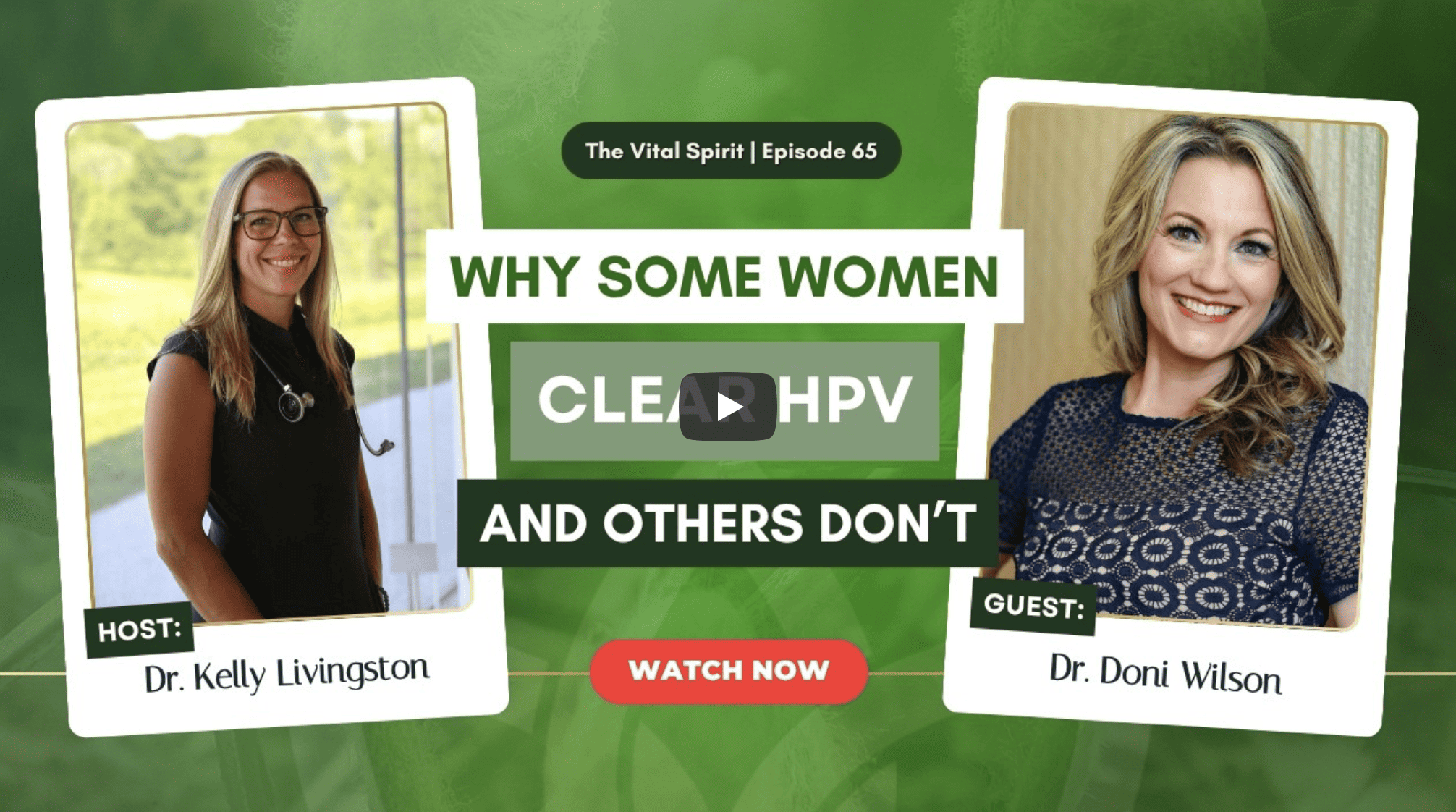
The Truth About HPV: Why Some Women Clear It and Others Don’t – Dr. Doni on The Vital Spirit Podcast
Dr. Doni was interviewed by Dr. Kelly Livingston on The Vital Spirit Podcast to talk about how we can clear HPV by addressing the root causes that made us susceptible to the virus in the first place.
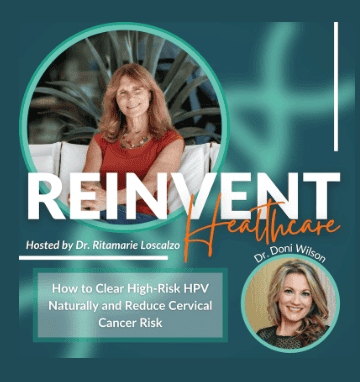
How to Clear High-Risk HPV Naturally and Reduce Cervical Cancer Risk – Dr. Doni on the Reinvent Healthcare Podcast
Dr. Doni was interviewed by Dr. Ritamarie Loscalzo on the Reinvent Healthcare Podcast to talk about what actually drives HPV persistence, why most women are told “there’s nothing you can do,” and how a terrain-based approach helps the body clear high-risk HPV and stay negative long term.
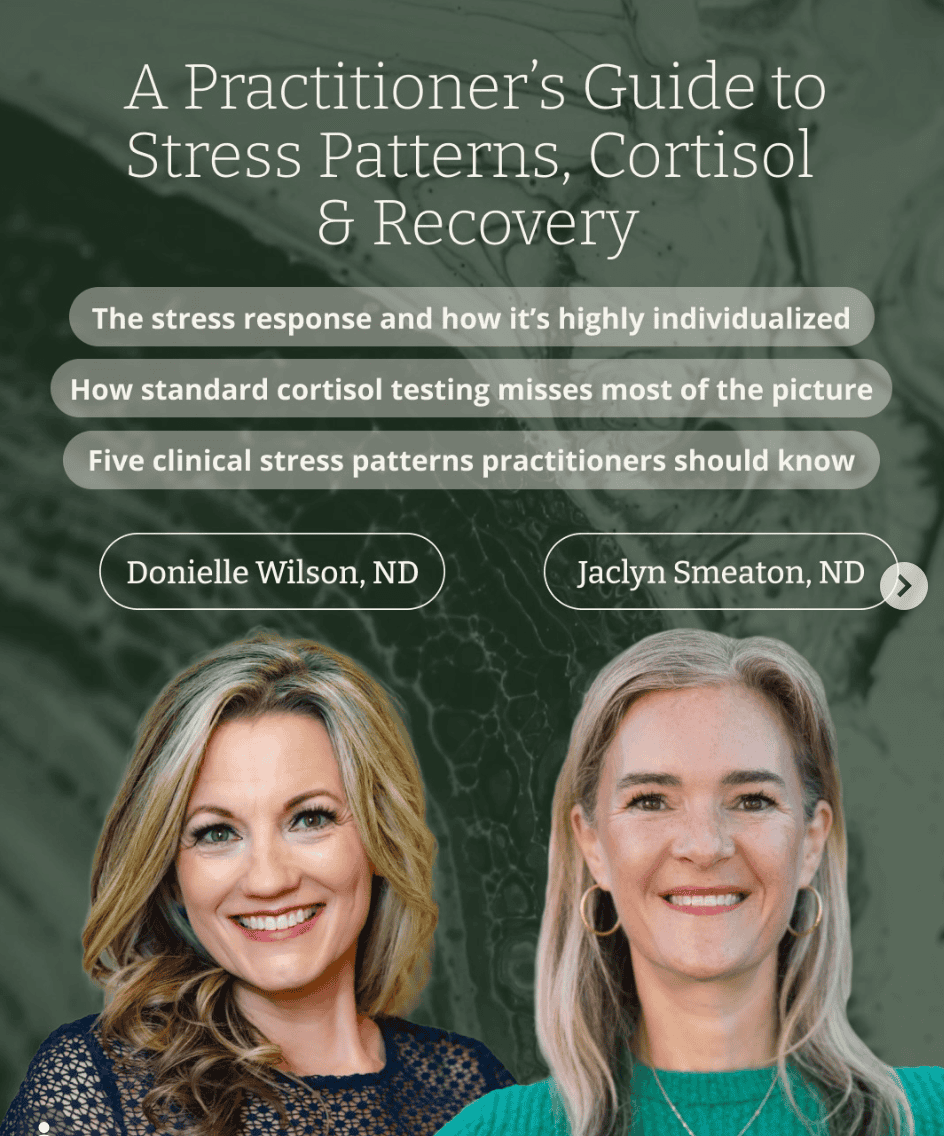
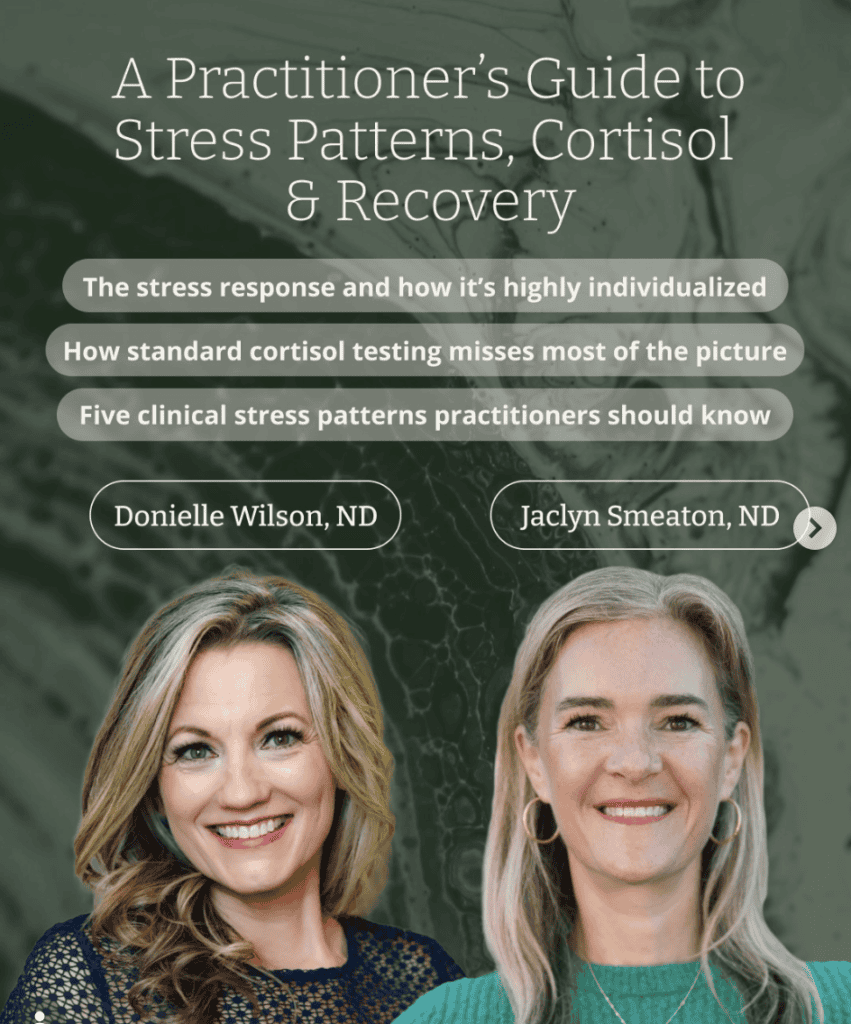
A Practitioner’s Guide to Stress Patterns, Cortisol & Recovery – Dr. Doni on The DUTCH Podcast
Dr. Doni was interviewed by Dr. Jaclyn Smeaton on The DUTCH Podcast to discuss Dr. Doni’s clinical philosophy, research findings, and personal journey around understanding and treating stress.
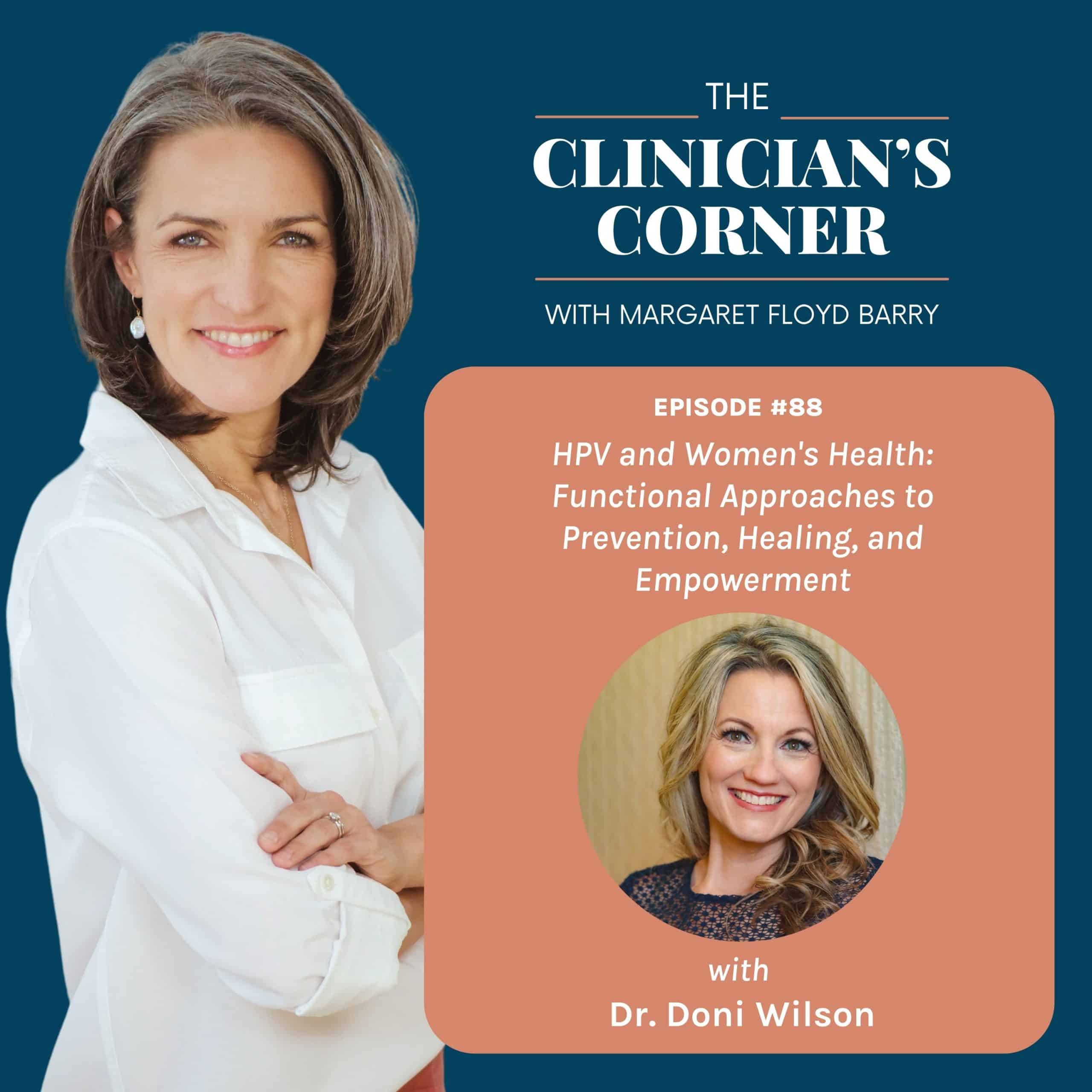
HPV and Women’s Health: Functional Approaches to Prevention, Healing, and Empowerment – Dr. Doni on “The Clinician’s Corner” Podcast
Dr. Doni was interviewed by Clinician Margaret Floyd Barry on “The Clinician’s Corner” Podcast to talk about how HPV isn’t just a women’s health issue, how stress and trauma can play a pivotal role in immune resilience, and the actionable strategies clinicians can implement to help their clients clear HPV naturally.