

In this episode I’m going to help you understand your Pap smear and colposcopy results, particularly if you have an abnormality. Abnormal cells on the cervix are referred to as “dysplasia,” and that means high-risk HPV (human papilloma) virus is active and now is the time to prevent it from getting worse.
I want to help you understand what your results mean and what your options are. I know you likely didn’t get much information from your doctor’s office, and that’s exactly why I created this video.
About My Background and Expertise
A little bit about me: I’m a naturopathic doctor and midwife working in holistic gynecology and women’s health. I’ve specialized in helping women with high-risk HPV virus and abnormal Pap smears for over 25 years.
I’ve seen so many different scenarios involving women of all ages and backgrounds from around the world. I’ve put my attention into helping women prevent cervical cancer, vaginal cancer, and other forms of HPV-related cancer. I’ve developed a protocol that has successfully helped women clear high-risk HPV all the way to negative and maintain that status, preventing the virus from causing cancer.
If you found this video, I’m glad you’re here. I know you likely feel very alone, afraid, and even in shock that you got these results. More and more women are finding out they test positive for high-risk HPV and have abnormal cells for several reasons. Now more than ever, gynecologists are testing for high-risk HPV. In decades before, we didn’t test unless we saw abnormal cells, but now we’re testing first.
Another thing that happened is during the pandemic, many women didn’t go to the gynecologist, and offices were even closed. There was a period of time, even a couple years long, where women weren’t getting their exams regularly. When women finally went in for an exam, in many cases, their situation progressed to abnormal cells during that time, which can be quite shocking.
I also hear from women who didn’t know they should be going in for regular testing. Maybe you haven’t been sexually active and thought you didn’t need to go, or you had a hysterectomy and were misinformed that you don’t need testing, or you thought since you’re over 50 you don’t need to go to the gynecologist.
Why Regular Testing Matters
I want to emphasize that it is important to do regular screening for high-risk HPV and abnormal cells on your cervix. Even if you’ve been not sexually active for a long time or had very little sexual exposure, or even if you had a hysterectomy, it’s still important to be tested for high-risk HPV regularly.
Right now the guidelines are, if you’ve had normal negative HPV and Pap results, you can wait three to five years between tests. But if you’ve had a positive HPV test or any abnormality in the past, you need to be tested more often.
I add to the standard guidelines by saying, if you’ve been under significant stress, you need to be tested for high-risk HPV.
Examples of significant stress are the pandemic (which we all went through), a divorce, a stressful job, working night shifts, have newborns or multiple children, experienced the death of a loved one, or taking care of loved ones for years without caring for yourself. When women’s bodies get depleted by stress, that’s when your body is less able to protect you from high-risk HPV virus. It’s better to know you are testing positive because with my protocol, you’ll be able to take action as soon as you find out there’s an issue and work to prevent it from getting worse.
Why I Recommend Taking Action Early
In the standard medical system, if your results show no abnormal cells or mildly abnormal cells, the doctor may say to wait and see if it gets worse, and to come back in six months or a year.
However, for many women, when they go back to be rechecked, it will have progressed to high grade abnormal cells, which require more invasive procedures.
From my experience, I would not wait. As soon as you know you’re testing positive for high-risk HPV, as soon as you know there’s even mildly abnormal cells, I would start following my protocol because I see women turn that around to negative and avoid a progression and need for more procedures.
Women who follow my protocol are able to get HPV to “not detected” within two to three months, or in some cases six to twelve months. That means, by the time of your next exam, you will have eliminated the issue and avoided all the associated stress.
Why wait for it to get worse we can catch it early, reverse it and prevent cancer?
Addressing HPV is a 2-Step Process
I recommend a two-step approach:
Step 1: Address any abnormal cells.
Step 2. Address HPV.
If we skip either of these steps, abnormal cells can progress or recur. Here’s what you need to know:
- If you are testing positive for HPV with no abnormal cells, it’s time to take action to prevent abnormal cells.
- If you have low-grade cells, it’s time to take action to prevent progression.
- If you have high-risk HPV and high-grade abnormal cells, it’s time to take action to remove the abnormal cells and prevent a recurrence.
Please know I can help with all of these situations, including for those who have CIN2 or 3. There are still options and ways to help your body heal. Even when it has progressed to carcinoma in situ or cancer cells, I still suggest following my HPV protocol to address the virus.
When you have a LEEP procedure, hysterectomy, or chemotherapy, it’s not necessarily going to kill the virus. In most cases, the virus remains after those treatments, and the problem is the virus can cause a recurrence of abnormal cells.
That’s why it’s so important to look at this as a two-step approach. We can’t just deal with abnormal cells—that’s important, but not the end of the story. We have to address the virus, high-risk HPV, and there are absolutely effective ways to clear it to negative and keep it negative.
If you’re testing positive for high-risk HPV, no matter what type of cells you’re dealing with, please consider following my HPV protocol.
If you want to find more about my protocol and how I help, go to doctordoni.com or clearhpvnow.com where you’ll see videos from me, videos from women who’ve worked with me, articles, and free resources you can download, including the HPV Recovery Guide.

You can sign up for the live How to Get Rid of HPV Workshop where I guide you to understand exactly how I think about HPV, the current research, and how to create a plan to completely resolve high-risk HPV.
Understanding Your Pap Smear Results
If you don’t have your test results and only got a phone call from your doctor’s office, I encourage you to contact the doctor’s office and ask for your Pap and HPV results. I believe everyone should have a copy of their results so you can save them in a folder and know what’s going on with your body.
What you’re looking for on your results:
First, did they get an adequate sample. It should say adequate sample. If not, they need to repeat it.
Second, we want to see if they found endocervical cells. You have the main part of the cervix that looks like a pink doughnut, and the opening inside is the endocervical canal. When we take a sample, we’re looking for cells around the face of the cervix and right inside the opening, referred to as endocervical cells.
The next thing you’re looking for is any abnormal cells.
We hopefully want to see “no dysplasia,” which means no abnormal cells. Or it might say “benign,” meaning healthy cells. We want benign epithelial cells, benign squamous epithelial cells, or no dysplasia. Those are all good things.
Categories of Abnormal Cells
When it comes to abnormal cells, there’s various terminology depending on the lab, but think of it as either low-grade or high-grade.
What happens is the HPV virus goes into the cell, hijacks it, goes into the DNA in the nucleus and starts changing the DNA. So it changes the way the cell looks. They can see this under a microscope. When the pathologist looks at your cells, they can see how the cells look, including the shape and coloring around the nucleus.
If the virus is only mildly active, it causes low-grade abnormality. As the virus is more active, it can cause moderate to severe abnormality. It’s a spectrum. It’s not yes or no. Abnormal cells can be a little bit, medium, or a lot of effect on the cells.
If it’s normal, it will say “normal, no dysplasia,” or “negative for intraepithelial lesion and malignancy.” That’s what we want.
If it starts to show inflamed cells, the Pap smear results will say “Atypical Squamous Cells of Undetermined Significance, or ASCUS.” Think of ASCUS as inflamed cells. It might be caused by HPV but could be caused by something else, such as yeast, BV, or low estrogen levels.
Cancer is way over on one end of the spectrum, and ASCUS is next to normal cells. Sometimes we see ASCUS when the cervix is healing.
If it progresses from ASCUS, to low-grade, it is called CIN1. CIN1 stands for Cervical Intraepithelial Neoplasia Grade 1, meaning the epithelial cells have mild abnormality. They might also use the word koilocytosis, which means the cells look like they’ve been affected by HPV. That causes a clearing around the nucleus. When they see that, they call it koilocytosis, an indication that HPV is present and active.
Treatment Options for CIN 1
With CIN1, from standard guidelines in gynecology, it doesn’t require surgery or a procedure because in many cases CIN1 can resolve on its own. It’s low-grade, not anywhere near cancer cells yet. The standard approach is to say, “okay, CIN1, let’s wait and see if it gets worse.”
From my perspective, when I see a CIN1 result, I want to take action because I’d rather help you avoid the need for procedures or surgery altogether. If we take action when there’s no abnormal cells, ASCUS, or CIN1, and we can help your body heal, we can prevent the need for a procedure or surgery.
I say let’s start working now. Why not get motivated and turn this around? I can very effectively help you do that using diet approaches, nutrients, herbs, and balancing your body—whether that’s blood sugar, hormones, or microbiome. In my protocol, I guide you through addressing eight susceptibilities to help you clear high-risk HPV.
When I work with women at the CIN1 stage, we look at everything making your body susceptible to HPV and create a comprehensive plan.
We look at your diet and nutrition because what you eat directly impacts your immune system and your body’s ability to fight off the virus. I recommend specific nutrients known to support your body in clearing HPV. We use herbs that have been shown to be effective. We address your microbiome because having a healthy vaginal microbiome is crucial for preventing HPV from progressing. We look at your stress levels and hormones because when these are out of balance, it makes it harder for your body to clear the virus. We use homeopathic remedies as part of the comprehensive approach, along with vaginal suppositories and probiotics in specific dosing with high-quality professional-grade products.
This is why I’m so passionate about catching things at the CIN1 stage or earlier. At this stage, your body has the best opportunity to heal naturally with support. You don’t have to go through a procedure. You don’t have to deal with potential complications or scar tissue. You can help your body do what it’s designed to do, which is clear the HPV virus and heal.
Understanding CIN 2 and CIN 3
If your results say CIN 2 or CIN 3, or high-grade dysplasia (HGSIL), both are high-grade types of dysplasia. Now you’re in a category where in gynecology, a procedure or surgery is indicated. As soon as it goes into the high-grade category, that means we should take action to remove the abnormal cells. That’s the standard of care I see around the world.
If your results say CIN2 or CIN3, it is common to feel disappointed and angry, thinking, I wish my doctor told me I could have prevented this. I understand. You may be feeling anger, frustration, resentment, guilt, shame, sadness, and disappointment.
Try to breathe and be gentle with yourself. This is not your fault. The medical system doesn’t inform women how to prevent CIN2 or 3 and there are no symptoms. Being exposed to high-risk HPV is very common—most of us are exposed by age 50. It’s very common to test positive and develop abnormal cells. This doesn’t mean you did something wrong. You got exposed to a common virus and got depleted by stress, making you susceptible to abnormal cells.
Sometimes you just need to take a few days to process and realize “this is my reality now.” Try not to allow yourself to become paralyzed in fear. Instead, I want to help you become informed so you can take a pro-active approach starting now.
High-risk HPV doesn’t cause a vaginal discharge, odor, or pain, so you likely had no idea this was going on. Look at your results, understand them, and say, okay, here’s the reality. If you’re at high-grade cells, we need to take action now because we don’t want it progressing to carcinoma in situ or cancer. If it gets there, you’re looking at cancer treatment, working with an oncologist, chemotherapy, radiation, and potentially surgery. If we can prevent that, that’s better.
If it does progress to carcinoma in situ or cancer, I help with those cases too. You work with your gynecologist and oncologist on the abnormal cells, and I help you with the HPV. I also help when there are abnormal cells in the vagina, vulva, anal area, or oral area. My protocol works no matter where in your body the abnormal cells are showing up, but most commonly it’s the cervix.
Understanding Colposcopy Results
If your Pap shows abnormal cells, your doctor will likely recommend a colposcopy, which is a biopsy of the cervix. A colposcopy is considered to be more accurate than a Pap smear.
With a Pap smear, we’re taking a rough sample from the whole cervix and endocervical area. With a colposcopy, your doctor can specifically see where abnormalities likely are and take samples from those areas.
If your colposcopy shows the cells are actually low-grade, they’ll likely recommend to wait and see if it gets worse. That means you have time to address it with my protocol.
If the colposcopy confirms high-grade cells like CIN2 or CIN3, your doctor will talk about treatments. If it’s superficial and they can clearly see your cervix, they’ll likely recommend a LEEP procedure—Loop Electrosurgical Excision Procedure. This removes abnormal cells without removing part of your cervix. In other countries like the UK, they call it LLETZ, but it’s similar.
Other Treatment Procedures
If the cells are more severe, widespread and/or deeper in the tissue, or if you’ve had a LEEP previously and the abnormal cells came back, your doctor may recommend a cone biopsy or conization – also known as a cold knife cone (CKC) – where they remove part of the cervix.
Depending on your age, recurrence history, and severity, they might recommend a hysterectomy, which removes the cervix and uterus. This prevents abnormal cells from spreading into the uterus.
None of these procedures remove the HPV virus, and the virus can still cause abnormal cells vaginally. That’s why even if you do a LEEP, cold knife cone, or hysterectomy, you still need to address the virus.
I’ve talked to women who’ve had many biopsies, procedures, and surgeries over years or decades. I see you, and I want to help you stop this situation. There are ways to help women who’ve dealt with this for decades finally stop the virus from causing abnormal cells and prevent more procedures.
Getting Comprehensive Help
If any of this sounds like you, please reach out. Contact my office and schedule a consultation so I can understand your case and create a comprehensive plan. I’m not taking this lightly. I’ve seen the worst cases and know what it takes to stop this virus. It’s possible, but we have to take it seriously and prioritize you. No more procrastinating or putting everything else ahead of yourself. It’s time to put yourself at the top of your list and ask for help. You deserve help to change this situation and stop it from happening.
Know that your standard doctor’s office is not going to talk about addressing the HPV virus. They offer treatments for abnormal cells and recheck to see if the abnormal cells happen again. But they are not trained to help you prevent HPV from causing abnormal cells.
No matter what your results say, whether mild, low-grade, high-grade, or beyond, I can help you.
Understanding HPV Types on Your Results
On your results, it should show HPV type. Sometimes it just says “high-risk HPV detected.” Sometimes it says specifically type 16 or 18, which are the two types most associated with cancer risk.
There are fourteen types of HPV associated with cancer risk, so 16 and 18 are only two of 14. There are twelve others. Some labs list all twelve, and some just say “other types.”
Testing for HPV is identifying the DNA of the virus, not antibodies. When testing for other viruses, like HSV, we look at antibodies. The testing for HPV is much more specific.
If it shows detected, it’s present. If it is not detected, it’s not present. That’s how we know when the virus has cleared. When the report says “not detected” or “negative,” the virus is not there anymore, and not able to cause abnormal cells. That is our goal.
My protocol helps with all types of high-risk HPV, as well as low-risk HPV, and no matter where it’s located in your body.
My team and I are here to help. I’m training more practitioners in my protocol so more can help you because women deserve help to address abnormal Pap smears and prevent cervical cancer, vaginal cancer, and other HPV-related cancers.
You Don’t Have to Do This Alone
You’re no longer alone. You don’t have to deal with this alone or navigate it with question marks. Contact my office or sign up for my group program, and I’ll guide you through the protocol step by step with other women on the same path.
If you have no abnormal cells, ASCUS, or CIN 1, we have the best opportunity to prevent progression. We’ll use my protocol: diet and nutrition, nutrients, herbs, homeopathic remedies, vaginal suppositories, and probiotics in specific dosing with high-quality professional-grade products. I’ll guide you every step. This is how I’m helping women reverse low-grade cells.
If you’re in the high-grade category, CIN2 or 3, we need to have a conversation. It’s high-grade, we don’t want it progressing to cancer, so we need to take action immediately. You’ll choose either a procedure with your gynecologist or talk to me about escharotic treatments.
Escharotics are a traditional herbal natural treatment to the cervix to remove abnormal cells without a medical procedure, and without risk of scar tissue or cervical damage. This is often chosen by women who want to preserve their cervical and uterine health for a future pregnancy. It can also be used for postmenopausal women. It’s not used for CIN 1, only CIN2 or 3, and not for carcinoma in situ or cancer.
If you’d like to learn more, reach out so I can look at your results and help you understand if escharotics are an option for you. No matter where you are located in the world, there are options to consider.
No matter what you choose – escharotics, LEEP, or conization – we still need to address the virus. We use my protocol: diet changes, nutrients, homeopathic remedies, microbiome balancing, and addressing all eight susceptibilities so your body clears it and prevents recurrence. That includes my proprietary formulas and suppositories.
You can find more information at doctordoni.com. Read the website, watch videos, read testimonials from women who’ve worked with me over the years. This is something I’ve been doing a long time, and I’m here to help.
Taking the Step Forward
I want you to know what’s available, and you get to choose what’s right for you. I know it’s scary and feels vulnerable to talk about this. I know your mind might be hard on you right now. I understand, and I’m here to be supportive. When you take that courageous step to reach out even though it’s scary, you deserve it. You deserve help.
I’m trained in standard gynecological approaches and that’s what I did for many years. Then I realized women aren’t getting enough help with abnormal cells and preventing progression. That’s when I created this practice where I help you prevent progression and recurrence.
The whole point is to address the reasons your body isn’t protecting you from HPV, and once we do, your body will be able to protect you even if you are re-exposed to HPV.
The human immune system has the ability to clear high-risk HPV virus. We just need to know what’s making you susceptible to the virus so we can support you to address those factors. Then you’ll be able to maintain your resilience to HPV by continuing to support your health. This is absolutely possible using the Dr. Doni’s HPV Protocol.
If you’d like to learn more, join me over at doctordoni.com. You can download my HPV Recovery Guide, which is a free PDF. You’ll see all the success cases of women who’ve been through this process and found freedom from high-risk HPV so that you can have hope that it’s possible for you too. I see women achieving it every day.
If you have any questions, please don’t hesitate to reach out to my office. My team would be happy to connect with you and help you know what your next best step is to free yourself from HPV. My team can also help coordinate shipping worldwide. You don’t have to figure it out on your own. Click here to set up a call with my team.
If you’d like to get a better sense of my approach, I welcome you to join my next free How to Get Rid of HPV online workshop where I help you to create a plan to get HPV out of your life for good.
From there, you might choose to join the Heal HPV Kickstart Program, for the initial steps of my protocol, including diet changes and supplements, over the next 30 days. Or you can begin with the comprehensive Say Goodbye to HPV Program, which is 3 months and includes everything you need to implement my full protocol and address all the susceptibilities with live, group support, and access to testing and vaginal suppositories.

Thank you so much for joining me for this video. I’d love to hear from you – please like, comment, share, and subscribe, if you haven’t already. I look forward to having you join me for the next episode of How Humans Heal.

Social:
- Facebook: https://facebook.com/drdoniwilson
- Instagram: https://instagram.com/drdoniwilson
- Threads: https://threads.net/@drdoniwilson
- YouTube: https://youtube.com/DoniWilsonND
Subscribe:
- Weekly Wellness Wisdom (Newsletter): https://doctordoni.com/www
- How Humans Heal (Podcast): https://doctordoni.com/podcast
More Resources from Dr. Doni:
- Stress Type Quiz: Assess your Adrenal Function
https://doctordoni.com/quiz - Dr. Doni’s Book: Master Your Stress, Reset Your Health
https://doctordoni.com/book - Dr. Doni’s Facebook Group: Stress Warrior Stress Resiliency
https://facebook.com/groups/stresswarrior - HPV Recovery Guide (FREE)
https://doctordoni.com/ddpp/hpv-guide/ - FREE Masterclasses with Dr. Doni
https://doctordoni.com/masterclasses - FREE Guides from Dr. Doni
https://doctordoni.com/guides
Personalized Solutions:
- 14-Day Detox Program: You can start this transformation program anytime
https://doctordoni.com/detox-program - Say Goodbye to HPV (12-week Program): Begin the journey to freedom from HPV today!
https://doctordoni.com/say-goodbye-to-hpv - If you’d like to meet with Dr. Doni one-on-one for your health, request a Health Breakthrough Session: https://doctordoni.com/breakthrough
Disclaimer: This specific article and all other Content, Products, and Services of this Website are NOT intended as, and must not be understood or construed as, medical care or advice, naturopathic medical care or advice, the practice of medicine, or the practice of counseling care, nor can it be understood or construed as providing any form of medical diagnosis, treatment, natural HPV cure, or prevention of any disease.




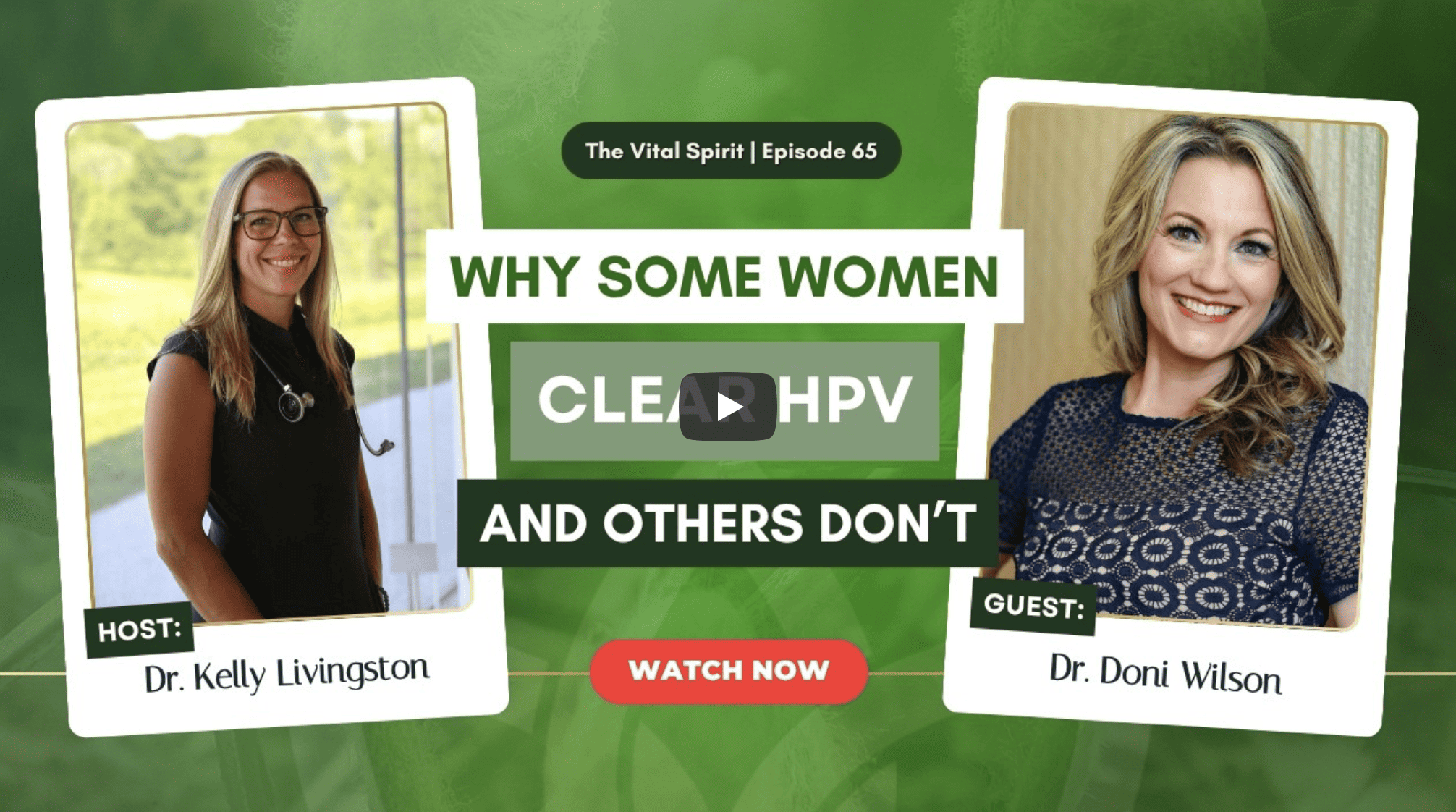
The Truth About HPV: Why Some Women Clear It and Others Don’t – Dr. Doni on The Vital Spirit Podcast
Dr. Doni was interviewed by Dr. Kelly Livingston on The Vital Spirit Podcast to talk about how we can clear HPV by addressing the root causes that made us susceptible to the virus in the first place.
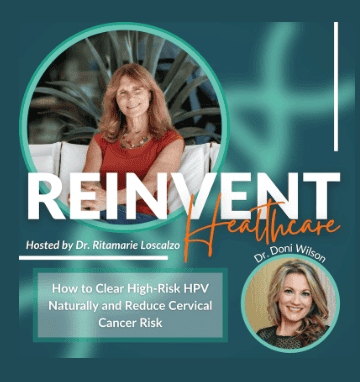
How to Clear High-Risk HPV Naturally and Reduce Cervical Cancer Risk – Dr. Doni on the Reinvent Healthcare Podcast
Dr. Doni was interviewed by Dr. Ritamarie Loscalzo on the Reinvent Healthcare Podcast to talk about what actually drives HPV persistence, why most women are told “there’s nothing you can do,” and how a terrain-based approach helps the body clear high-risk HPV and stay negative long term.
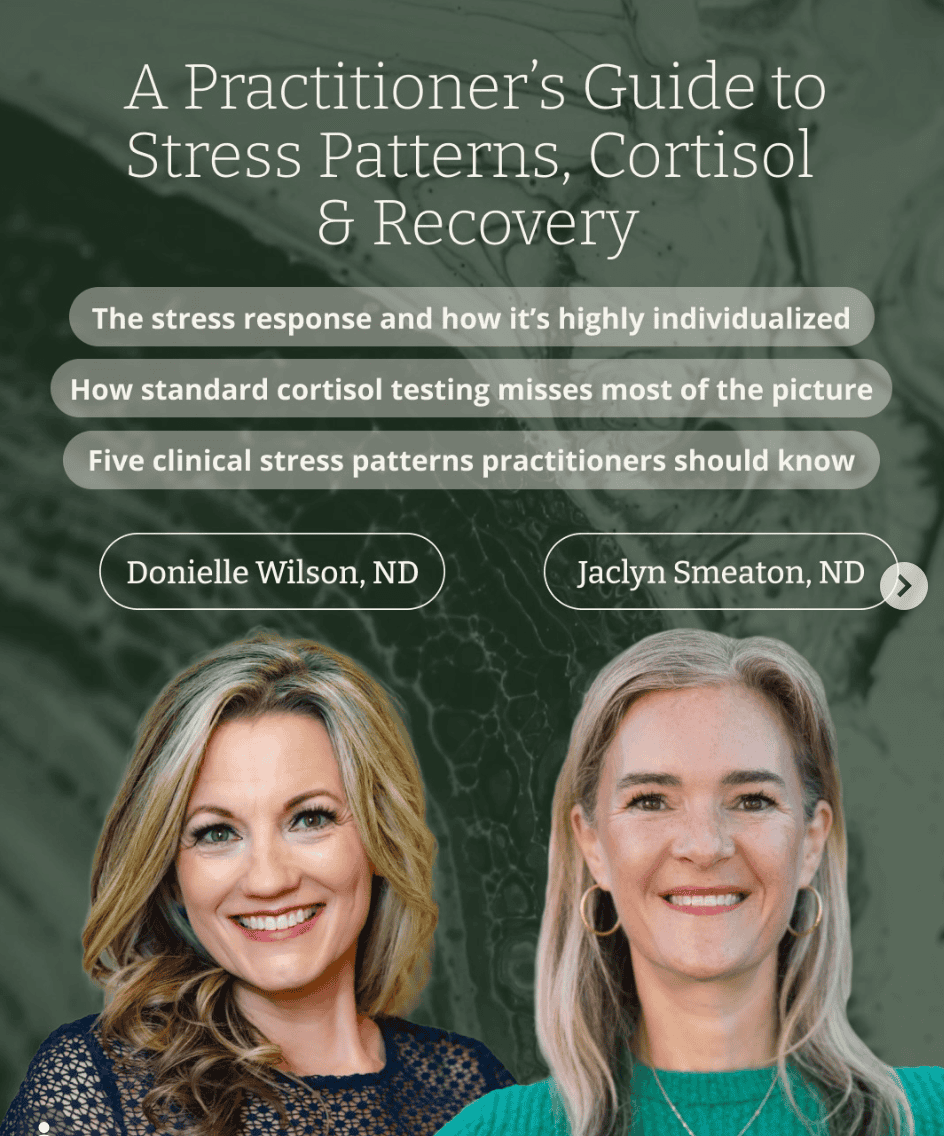
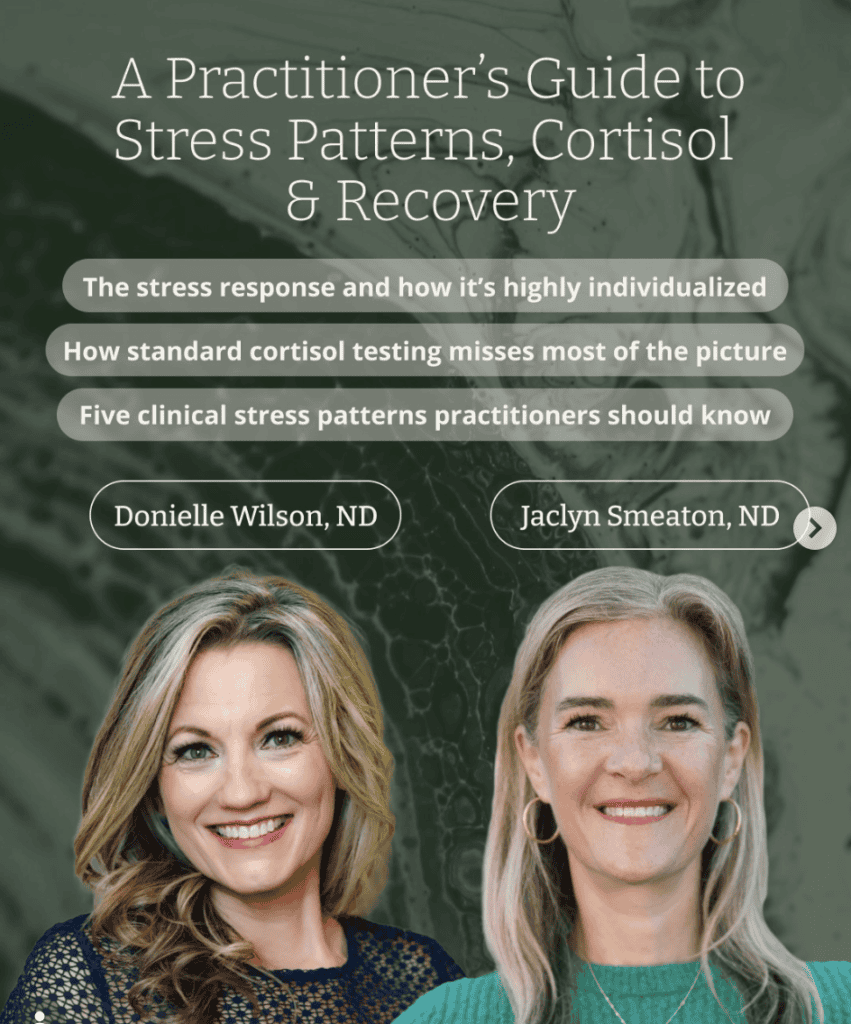
A Practitioner’s Guide to Stress Patterns, Cortisol & Recovery – Dr. Doni on The DUTCH Podcast
Dr. Doni was interviewed by Dr. Jaclyn Smeaton on The DUTCH Podcast to discuss Dr. Doni’s clinical philosophy, research findings, and personal journey around understanding and treating stress.

HPV and Women’s Health: Functional Approaches to Prevention, Healing, and Empowerment – Dr. Doni on “The Clinician’s Corner” Podcast
Dr. Doni was interviewed by Clinician Margaret Floyd Barry on “The Clinician’s Corner” Podcast to talk about how HPV isn’t just a women’s health issue, how stress and trauma can play a pivotal role in immune resilience, and the actionable strategies clinicians can implement to help their clients clear HPV naturally.