

In this episode, I share the latest research into the gut-vagina connection and how optimizing both gut health and vaginal health can help women to prevent high-risk HPV from causing abnormal cells and/or HPV-related cancer.
Many women who test positive for high-risk HPV are told there’s nothing they can do but wait and see if the virus causes abnormal cells or cancer. That’s because the only treatment option a gynecologist can offer is a procedure to remove abnormal cells, or a surgery, such as a hysterectomy. Even though research exists as to ways to prevent abnormal cells, those approaches are not yet integrated into the standard of care.
A common example is women who find out they are positive for HPV while they are pregnant. It is extremely stressful to make decisions about potential procedures that could impact the pregnancy, meanwhile not knowing whether abnormal cells have progressed during pregnancy.
Women are told there is nothing they can do to get rid of the HPV virus, and that is simply not true. Research shows that the human body can clear HPV to negative, and prevent it from establishing again, even if re-exposed. Women may also be told that a hysterectomy is there only option. Again, that is simply not the case.
A growing number of research studies are documenting the gut-vagina axis, also known as the cervicovaginal gut microbiota axis, and how it can be a key to helping women who are dealing with high-risk HPV. It is quite common that in addition to HPV, women have history of recurrent vaginal yeast or BV (bacterial vaginosis), along with digestive issues like bloating, gas, burping, pain, and/or constipation.
In the standard medical system, women go to the gastroenterologist for gut issues, and the gynecologist for vaginal infections, as if these two areas of the body are unrelated. Research demonstrates that in fact, the gut microbiome influences the vaginal microbiome, and inflammation in the gut has a system-wide impact on health.
As a naturopathic doctor and midwife, with over 26 years of experience helping women with both gut health issues, and vaginal health issues, including HPV, I have observed that they most definitely influence each other. Most importantly, by helping women to heal their gut, and optimize their microbiome, I’ve observed women clear HPV and heal their cervix, even during pregnancy. Now research is finally connecting the dots.
If you’re struggling with high-risk HPV, abnormal cells, recurrent infections, and/or gut issues, whether you’re pregnant, postmenopausal, or anywhere in between, this episode will help you understand the connection between the gut and the vagina, and why healing your gut can help your body clear HPV.
Positive HPV Doesn’t Mean You’ll Get Cancer
Cervical and vaginal cancer are predominantly associated with high-risk HPV, of which there are at least 14 high-risk types of HPV currently known. This is why women go for pap smears: to identify changes on the cervix before they turn into cancer. Just a couple of decades ago, researchers realized cervical cancer is associated with high-risk HPV over 95% of the time, so we started testing for HPV.
However, testing positive for HPV doesn’t mean you’re going to get cancer. Only about 10% of the time is the body unable to clear the virus, and in those cases, abnormal cells may develop, and they may eventually become cancer cells. The earlier we identify HPV and mildly abnormal cells, the more time we have to intervene and prevent cancer.
The environment in your body determines whether the HPV virus is able to persist and potentially cause abnormal cells. It’s not just about exposure to the virus. It’s about your body’s ability to protect you.
It is important to recognize that it is NOT about blaming or judging women, or you, in particular. What is important, is helping women to understand what may be making you susceptible and then address those factors.
What imbalances, deficiencies, or susceptibilities are allowing the virus to persist? When HPV remains positive for over 2 years, it is referred to as persistent, meaning your immune system isn’t getting rid of it. When we identify and address what is allowing the virus to persist, your body will be able to clear the virus to negative.
The Vaginal Gut Axis
The gut microbiome includes bacteria, viruses, protozoa, and other microbes. We need these healthy microbes. They help us make nutrients, communicate with our immune system and nervous system, decrease inflammation, and prevent autoimmunity.
Just like the gut, it is now known that there is a unique microbiome in the vagina. The predominate bacteria vaginally is called Lactobacillus crispatus. It produces lactic acid which protects the vaginal area and establishes a healthy pH.
The gut microbiome influences the vaginal microbiome, so when there are imbalances in the gut microbiome (referred to as dysbiosis), it can cause imbalances in the vaginal microbiome.
The Yeast Example
When patients come in with a vaginal yeast infection, I automatically ask about bloating, gas, burping, pain, and/or constipation. Yeast doesn’t stay in one place. You might be dealing with oral thrush, bloating, rectal itching, vaginal yeast, and/or yeast on your skin.
Yeast overgrows when there’s a microbiome imbalance, often after antibiotics kill the good bacteria. Antifungals may wipe it out temporarily, but it often flares again with stress, sugar, poor sleep, or more antibiotics. It can be difficult to fully get rid of yeast because it can persist at a low level and then recur.
Think of it like a room: If healthy bacteria fill the space, they send positive signals and prevent yeast from thriving. If yeast takes over the space, it causes inflammation and blocks the good bacteria from thriving. Getting rid of the yeast isn’t enough. We need to also get the good bacteria back into the space to prevent yeast from recurring.
Leaky Gut and Inflammation Increase Risk of HPV
Another important part of healing is to understand and address the gut lining, specifically leaky gut.
The epithelial lining runs from the mouth through the intestines. It also lines the vagina, bladder, and sinuses. It creates a barrier between the outside world and the inside of our bodies. 80% of our immune system is underneath our intestinal lining.
Dysbiosis can damage the intestinal lining, creating microscopic spaces between cells. That’s leaky gut. Microbes and undigested food can leak through (between the cells), triggering your immune system and inflammation, which causes more damage. That inflammation can spread throughout your body, to your sinuses, skin, nervous system, joints, and also your vagina.
With leaky gut, absorption of nutrients decreases and inflammation increases. Along with an imbalanced gut microbiome, this can all lead to an imbalance in the vaginal microbiome, inflammation in the vagina, and increased susceptibility to high-risk HPV.
While your immune system is bombarded by imbalanced microbes and inflammation, the HPV virus is able to sneak past and hijack the cells of your cervix.
This situation can be identified and addressed.
What Causes Leaky Gut and How to Test for Leaky Gut and Gut Dysbiosis
In addition to imbalances in the gut microbiome, leaky gut is also caused by stress, infections, antibiotics, proton pump inhibitors, pesticides, and gluten. When it comes down to it, most all of us have some degree of leaky gut – mild, moderate, or severe.
And leaky gut is associated with many different health issues, from anxiety and depression, to autoimmunity, fatigue, weight gain or loss, and recurrent infections.
To determine whether leaky gut is present, and the severity, I recommend doing an IgG food sensitivity panel. With a highly accurate panel, which is not offered from standard labs, we can identify which foods are triggering leaky gut and then formulate an individualized plan to heal leaky gut. Here’s the Food Sensitivity Home Testing that I recommend.
To identify microbiome imbalances, I recommend a highly sensitive PCR stool analysis. This type of test has been able to identify microbial imbalances that did not appear on standard stool cultures.
How to Heal Your Gut and Vagina
The more we help to heal your gut, the more we will help heal your vagina and cervix.
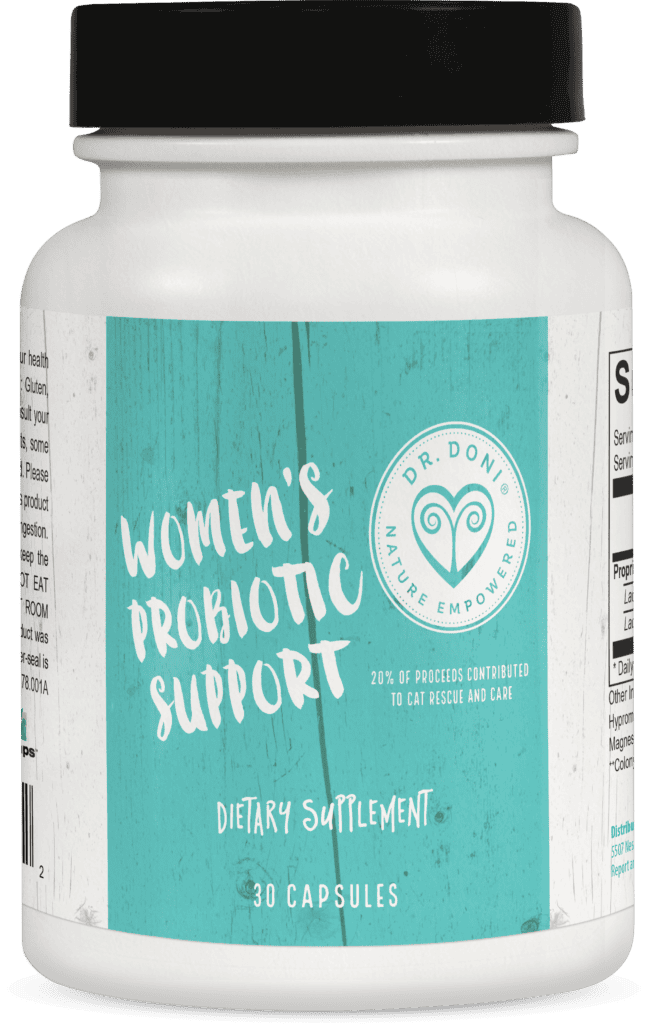
Specific lactobacillus strains, taken orally, help reestablish a healthy vaginal microbiome. Here’s the product I recommend: Women’s Probiotic Support.
We can also use vaginal suppositories containing Lactobacillus crispatus, which produces lactic acid and promotes the right pH. You can get Vaginal Probiotics I recommend here.
Keep in mind that probiotics require a healthy environment in order to thrive, just like a plant needs healthy soil. That’s why it is important to not just take probiotics, but also to heal leaky gut, heal the vaginal tissue, and drop inflammation through dietary changes, balancing blood sugar, and avoiding foods that cause leaky gut (like gluten).
We can also use anti-inflammatory herbs and nutrients orally and vaginally to help heal the tissue. I usually recommend 2 or 3 supplements over 3 to 12 months to help heal leaky gut. More is not better when it comes to leaky gut. I call it the “paradox of leaky gut.” When leaky gut is severe, you may even react to nutrients and herbs. So we have to start slow and simple.
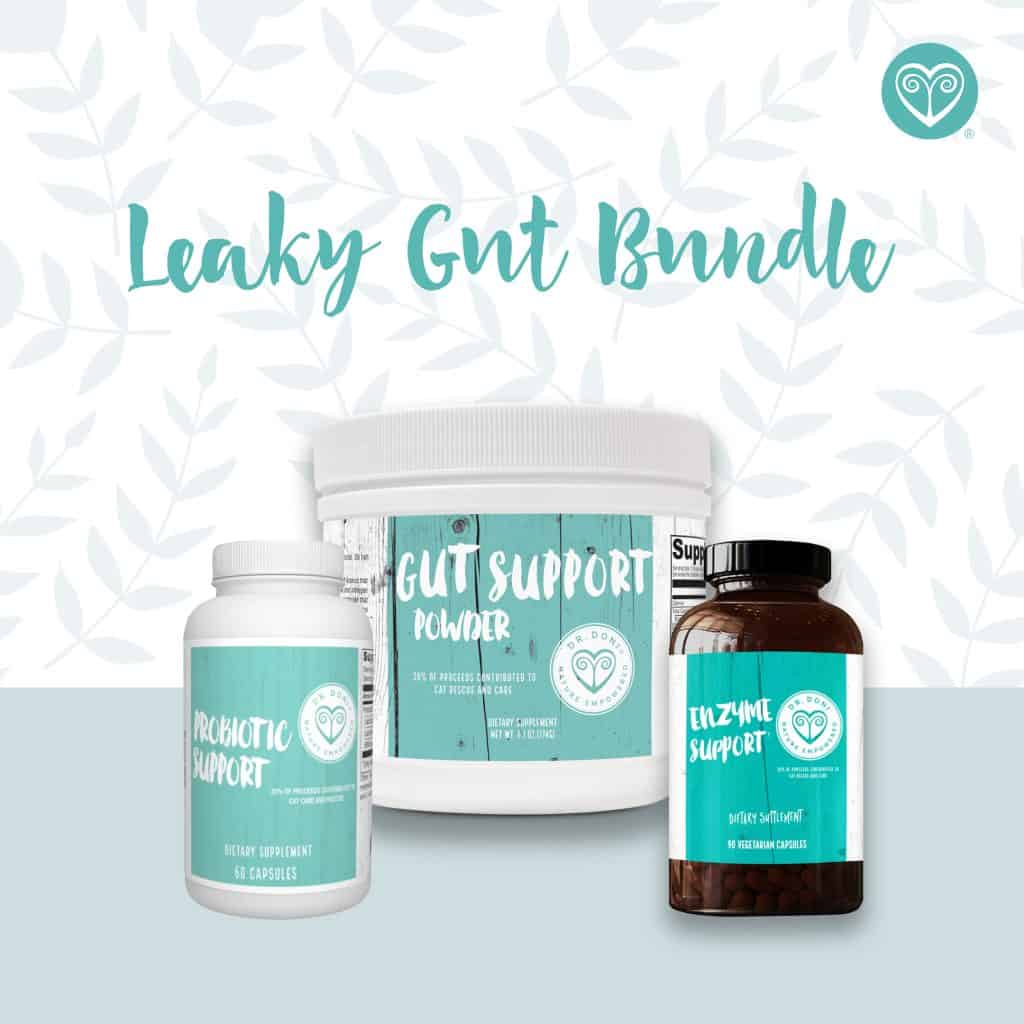
You can get the supplements I recommend in the Leaky Gut Support Bundle.
If you’re postmenopausal and not using vaginal estrogen, your vaginal lactobacillus drops, so we need to address that too. Estrogen, estriol in particular, can be used vaginally, safely and effectively, in the majority of cases. Be sure to check with your doctor or set a time to meet with me, if you’d like my help.
When we establish a healthy gut and vaginal environment, HPV doesn’t have a chance.
Changing Women’s Healthcare
Women are being told there’s nothing they can do, or that their only option is another procedure or a hysterectomy. That’s simply not true. Research shows the body can clear the HPV virus, and the gut-vagina axis is a key part of doing that successfully.
Healing your gut also helps prevent diabetes, heart disease, dementia, anxiety, depression, and autoimmunity. There is no downside to helping women heal their gut and vagina.
Your symptoms are your body’s way of asking for attention, not a sign that you did something wrong. I’m here as a detective to help you find what your body needs. Reach out to my office if you’d like my help with any of the options mentioned here.
What I find in my practice is that with compassionate and diligent support, we can identify what your body needs to heal. I help patients to do this in my practice every day – by phone and zoom, anywhere in the world. You can set up a one-on-one appointment here.
In my book Master Your Stress Reset Your Health, I explain how stress, trauma, toxins, and a lack of recovery, can keep us stuck in “stress mode” and turn on our genetic susceptibilities — and how an individualized approach to recovery makes all the difference.
If you’re dealing with persistent HPV, I welcome you to join my next FREE How to Get Rid of HPV workshop. Over the 5 days of the workshop, women from all around the world come together in a safe, healing space online to learn, to share, and to be inspired about your ability to clear HPV to negative.
From there, you might choose to join the Heal HPV Kickstart Program. It is a 30-day program to support you to implement the initial steps of Dr. Doni’s HPV Protocol®, including diet changes and supplements.
Or you can begin with the comprehensive Say Goodbye to HPV 12-Week Program. It includes weekly videos from me, twice monthly live, group calls, and access to the full Dr. Doni’s HPV Protocol®, including supplements doses and the full series of vaginal suppositories.

To learn more, go to DoctorDoni.com/HPV. There, you’ll find lots of resources and stories from women who’ve followed my protocol and cleared HPV to negative.
Thank you for joining me today for this episode of How Humans Heal®. Make sure to follow and subscribe so you don’t miss the next episode! You can access it on YouTube and Apple Podcasts. You can also watch at doctordoni.com.
I look forward to connecting with you soon!
Dr. Doni

Social:
- Facebook: https://facebook.com/drdoniwilson
- Instagram: https://instagram.com/drdoniwilson
- Threads: https://threads.net/@drdoniwilson
- YouTube: https://youtube.com/DoniWilsonND
Subscribe:
- Weekly Wellness Wisdom (Newsletter): https://doctordoni.com/www
- How Humans Heal (Podcast): https://doctordoni.com/podcast
More Resources from Dr. Doni:
- Stress Type Quiz: Assess your Adrenal Function
https://doctordoni.com/quiz - Dr. Doni’s Book: Master Your Stress, Reset Your Health
https://doctordoni.com/book - Dr. Doni’s Facebook Group: Stress Warrior Stress Resiliency
https://facebook.com/groups/stresswarrior - HPV Recovery Guide (FREE)
https://doctordoni.com/ddpp/hpv-guide/ - FREE Masterclasses with Dr. Doni
https://doctordoni.com/masterclasses - FREE Guides from Dr. Doni
https://doctordoni.com/guides
Personalized Solutions:
- 14-Day Detox Program: You can start this transformation program anytime
https://doctordoni.com/detox-program - Say Goodbye to HPV (12-week Program): Begin the journey to freedom from HPV today!
https://doctordoni.com/say-goodbye-to-hpv - If you’d like to meet with Dr. Doni one-on-one for your health, request a Health Breakthrough Session: https://doctordoni.com/breakthrough
Disclaimer: This specific article and all other Content, Products, and Services of this Website are NOT intended as, and must not be understood or construed as, medical care or advice, naturopathic medical care or advice, the practice of medicine, or the practice of counseling care, nor can it be understood or construed as providing any form of medical diagnosis, treatment, natural HPV cure, or prevention of any disease.
References
Bautista J, Altamirano-Colina A, López-Cortés A. The vaginal microbiome in HPV persistence and cervical cancer progression. Front Cell Infect Microbiol. 2025 Oct 7;15:1634251. doi: 10.3389/fcimb.2025.1634251. PMID: 41127671; PMCID: PMC12537727.
Oyedokun PA, Oyeleke BT, Akanji OO, Oyelaran AO, O KP, Akanbi GB, Oyedokun PO, Oyedokun MD, Naomi CC, Imoleayo OO, Akhigbe RE. The role of the microbiome in gynecological cancers: implications for diagnosis and treatment. Front Immunol. 2026 Apr 23;17:1718883. doi: 10.3389/fimmu.2026.1718883. PMID: 42112384; PMCID: PMC13149462.
Yang Y, Zhu J, Feng R, Han M, Chen F, Hu Y. Altered vaginal cervical microbiota diversity contributes to HPV-induced cervical cancer via inflammation regulation. PeerJ. 2024 Jun 12;12:e17415. doi: 10.7717/peerj.17415. PMID: 38881859; PMCID: PMC11179633.
Xu P, Mageswaran UM, Nisaa AA, Balasubramaniam SD, Rajendran D, Ismail EHBE, Kadir MN, Oon CE, Tan CS, Sany SB, Liong MT. Roles of probiotics against HPV through the gut-vaginal axis. Int J Gynaecol Obstet. 2025 Apr;169(1):1-8. doi: 10.1002/ijgo.16005. Epub 2024 Nov 9. PMID: 39520180.
Di Vincenzo F, Del Gaudio A, Petito V, Lopetuso LR, Scaldaferri F. Gut microbiota, intestinal permeability, and systemic inflammation: a narrative review. Intern Emerg Med. 2024 Mar;19(2):275-293. doi: 10.1007/s11739-023-03374-w. Epub 2023 Jul 28. PMID: 37505311; PMCID: PMC10954893.
Liu Y, Zhao X, Wu F, Chen J, Luo J, Wu C, Chen T. Effectiveness of vaginal probiotics Lactobacillus crispatus chen-01 in women with high-risk HPV infection: a prospective controlled pilot study. Aging (Albany NY). 2024 Jul 25;16(14):11446-11459. doi: 10.18632/aging.206032. Epub 2024 Jul 25. PMID: 39058300; PMCID: PMC11315381.



Why Chronic Stress Can Feel Normal and How to Break the Pattern: Dr. Doni on The Fit Over 50 Life Podcast
Dr. Doni joins Mark Patrick and Kelli Calabrese on The Fit Over 50 Life Podcast to discuss chronic stress, people-pleasing, narcissistic relationships, and how your healing can begin right now.
Sleep Better, Stress Less, and Protect Your Bones: Dr. Doni on The Happy Bones Happy Life Podcast
Dr. Doni was interviewed by Margie Bissinger on the Happy Bones, Happy Life Podcast to talk about how stress, cortisol and poor sleep affect bone health, and what women can do to sleep better, stress less and protect their bones during and after menopause.
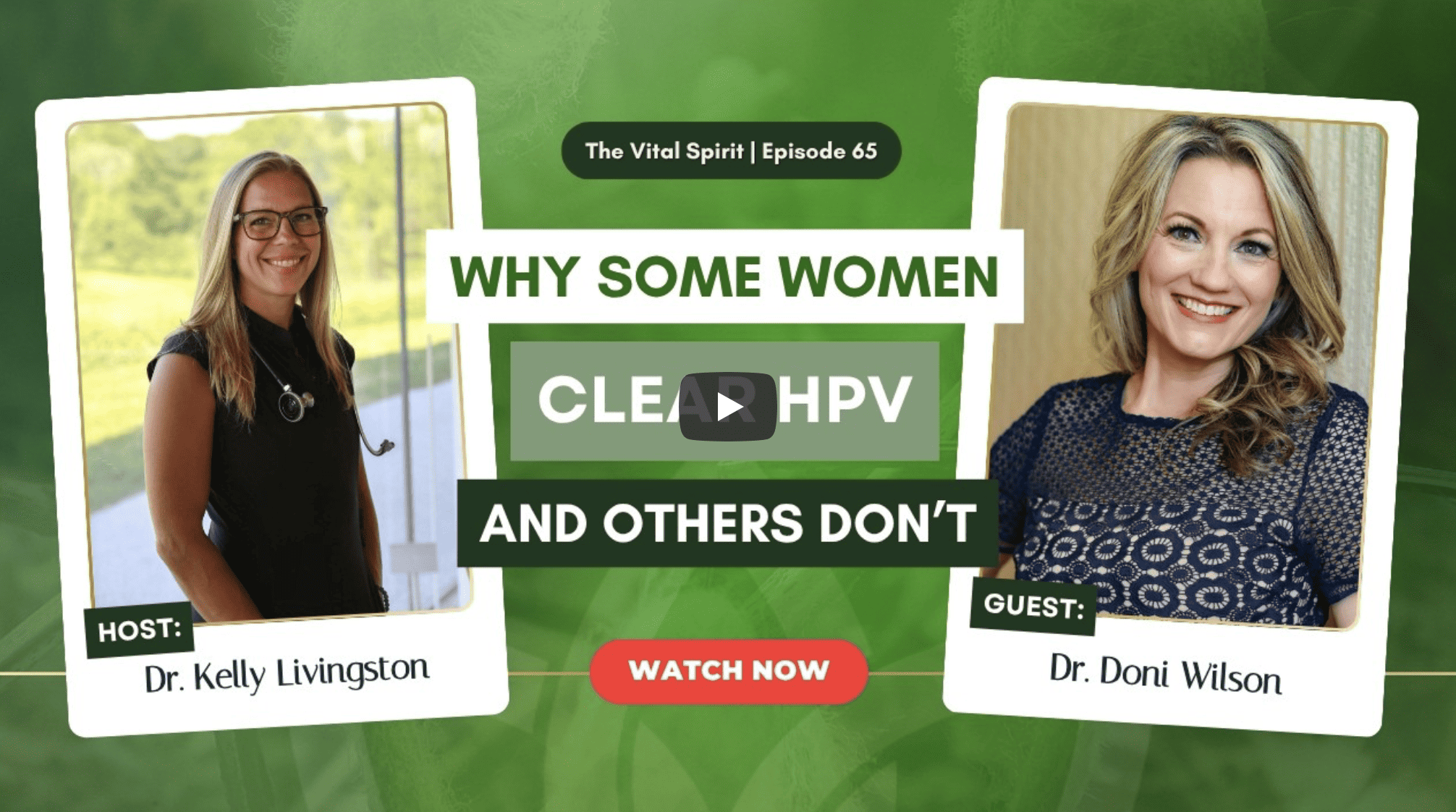
The Truth About HPV: Why Some Women Clear It and Others Don’t – Dr. Doni on The Vital Spirit Podcast
Dr. Doni was interviewed by Dr. Kelly Livingston on The Vital Spirit Podcast to talk about how we can clear HPV by addressing the root causes that made us susceptible to the virus in the first place.
How to Clear High-Risk HPV Naturally and Reduce Cervical Cancer Risk – Dr. Doni on the Reinvent Healthcare Podcast
Dr. Doni was interviewed by Dr. Ritamarie Loscalzo on the Reinvent Healthcare Podcast to talk about what actually drives HPV persistence, why most women are told “there’s nothing you can do,” and how a terrain-based approach helps the body clear high-risk HPV and stay negative long term.