
There are many different types of anxiety – understanding these differences can help you match the right strategy to help you better regulate your nervous system.
That’s why I’m excited to introduce you to Dr. Nicole Cain. She is a naturopathic doctor and author of a book called “Panic Proof: The New Holistic Solution to End Your Anxiety Forever“, which is helping people understand anxiety and panic and emotional wellness, with tools available beyond what people might be hearing in standard mental health clinics.
Understanding the Journey to Healing
Dr. Nicole shares what drew her into this work. She talks about hitting her rock bottom moment, which so many people experience. It’s that fork in the road where someone asks themselves if this is their story or if it’s going to be something different.
Her rock bottom moment involved continual trauma and panic and anxiety that was so somatically based in her body. It was like burning in her chest, restlessness, and involuntary muscle spasms in her arms. She wasn’t sleeping, lost so much weight, and stopped having her period. She had to decide if this was her story or if it was going to be something different.
Thank goodness she was able to find her way through that and discovered some really helpful tools and techniques. She got excited to share that with her patients, and they started getting better results. She started sharing it with her community, working with other counselors and doctors, and they started getting better results too. Then she started to look at the research, and it was supporting these discoveries.
Now she’s helping people who have tried everything to address anxiety and they are feeling hopeless. She wants people to know there is hope. There are great helpers out there to support people and provide resources.
Recognizing Anxiety in Its Many Forms
When talking about anxiety, there are several different words that get used. People don’t necessarily always say they have anxiety. People might say they worry a lot or they feel anxious, or they might describe physical sensations in the body. Maybe it gets to the point where they have a panic attack, and that’s when it becomes clear that this needs attention now.
What Dr. Nicole finds is that people get to that threshold, that red light zone, or crisis zone where the body may have been whispering and they didn’t hear it or didn’t understand the whispers. If whatever those root cause variables are aren’t being addressed, the whispers will turn into shouts.
That was her story too. She grew up in the Midwest in Iowa, and in the culture she grew up in, people don’t talk about their feelings. Her family is also very Dutch, so there’s lots of decorum. People didn’t really pay attention to their feelings. If there were symptoms, people pulled their bootstraps up and dealt with it. If that wasn’t working, they would go to a doctor who would help figure out a way to make those feelings or symptoms go away. Take ibuprofen if there’s pain, take a Benadryl or an antidepressant or a benzodiazepine if there’s anxiety. The“pill for an ill” model.
It’s important to recognize that every living mammal on this earth has a little bit of anxiety, and it can be on a continuum.
Anxiety is a part of natural human biology. It’s activation, an arousal response, and it was valuable for our ancestors. If they were gathering berries in the woods and a tiger came, if they couldn’t mount a fear response, they probably wouldn’t survive.
The fear response is protective. The brain doesn’t care about wellbeing, and it cares about safety. The question is: what is it like for each person uniquely, and what is their sense of personal power.
The Mind-Body Connection
Humans have a built-in stress response. People come with that innately, and it’s a good thing. If there wasn’t a stress response, humans probably wouldn’t have survived to this point. The goal is not to have zero stress or zero stress response or even zero anxiety. The goal is to understand it, work with it, and manage it, and not just in the mind.
For the past several decades, mental health in the United States and other countries has been very much about separating the mind and body. But anxiety may not be all in our head or in our brain. The question is: where is the anxiety located.
At the 2025 Integrated Medicine for Mental Health conference, where Dr. Nicole had the honor of being a speaker, the conversation is about a mind-body, holistic approach to mental health.
Healthcare has been very siloed for the past fifty or sixty plus years. The psychologists and counselors are very focused on thoughts and trying to regulate thoughts. Then there are the neurologists looking at what’s going on with the nervous system, the gastroenterologists looking at what’s going on in the gut, the cardiologists checking if there’s a heart attack. But what’s being wisely pointed out is that it’s all a part of one system.
It’s like making a soup. If peppers are added, all of the soup is going to taste different because it can’t be separated. By the same token, the systems in the body can’t be separated either. What’s beautiful is that this conversation is cutting edge now. Practitioners are asking: what is the whole-person process that’s taking place that’s holding someone or putting them in a state of adaptation that looks like anxiety.
Understanding Anxiety as an Adaptation
The research shows that anxiety and autonomic arousal, which could be anger or fear or headaches, is an adaptation, a coping skill to something that did or did not happen.
In naturopathic medicine we refer to this as identifying the root causes. Something did or did not happen, and the whole body and thoughts and mind are adapting to try to keep the person alive. But the problem is when adaptation doesn’t continue even though circumstances have changed, and instead symptoms develop and remain.
For those who do well with metaphors, there’s the metaphor of a coat. Dr. Nicole lives half the year in Michigan where it’s very cold. She adapts to the cold by putting on a warm coat. If Nicole were to go to Arizona and kept her coat on, she would suffer.
Just like if someone was raised in a family where somebody came home smelling like alcohol, that might mean something scary was going to happen. The person starts to adapt to that. If there’s that same level of hypervigilance, and the person goes to a restaurant with friends and they smell wine but still have the reaction to alcohol, the adaptation that was needed as a child creates symptoms and problems as an adult.
To help the person, we need to identify where the adaptations are happening and how can reprogramming and recalibration be used in real time so they are not stuck in the past.
The way it’s being described is from a place of acceptance and curiosity. So much of the time when someone is experiencing anxiety or panic, they’re in an internal battle wondering why this is happening to them. Often people are angry at themselves and feeling like the anxiety is happening to them in a judgmental way.
To be able to step back and realize that you are not the anxiety and you are not the ruminating thoughts. The thoughts and anxiety are something that’s happening as an adaptation from the past, but they are separate. In this way, you can now start to become aware and notice and be curious.
When We Identity with a Diagnosis
There’s a difference between experiencing something in the moment versus identifying with it.
There’s a story about lupus that illustrates this perfectly. Dr. Nicole’s mentor, Stephen Messer, told this story when she was in medical school. He was in private practice in Oregon helping patients with chronic autoimmunity. He had two female patients who came into his practice around the same time who both had the same diagnosis of lupus with similar lab values and symptoms.
One of the women was getting better. Her objective measures were improving, her symptoms were improving, everything was awesome. The other woman was not progressing. Her symptoms weren’t improving, her labs weren’t improving, and he was racking his brain wondering what he was missing.
Anytime someone finds themselves in this situation as a human being trying to heal something, if they’re not improving or not getting results, it often means that there’s missing information. The approach should always be to ask “why.”
He was asking why in his head, and then one day he discovered the answer. He walked her to the door after her appointment and watched her go to her car. She got in the car and backed out of the parking spot, and on her license plate it said “Lupus Me.” She was identifying with her diagnosis. It wasn’t until she started working on her sense of identity, that she started to heal. That was her obstacle to cure.
This brings up an important point about how to relate to symptoms. Symptoms can be looked at as part of an experience with curiosity and compassion as opposed to “this is me, I am broken,” or “this symptom is bad and I’m at war with it.”
Being about to stand back and see that you are not your diagnosis really changes things and opens up the possibility for healing because as long as there’s a battle within, it’s just going to keep circling round and round.
Understanding the Standard Approach to Anxiety
Serotonin was the first neurotransmitter that was discovered in the 1930s. Then there started to be modifications to see what would happen if serotonin levels were manipulated.
It was found that when serotonin levels were increased, stress markers went down. So the hypothesis became more serotonin leads to less depression, less anxiety, and more happiness, and less serotonin means worse outcomes.
Then after twenty-three or more trials, a drug was developed that can increase serotonin, and that was Prozac. The pharmaceutical companies were excited. There was a huge pharmaceutical push starting in the 1960s, and largely the same approach has been used ever since.
Talk therapy and cognitive behavioral therapy is great for thought-based anxiety and thought-based depression. Then there’s the biomechanical intervention with drugs. But the problem is that they don’t work for everybody. And instead of acknowledging that the medications are not effective, instead people are labeled as “treatment resistant.”
Then in 2022, researchers did a giant meta-analysis. They looked at all the research studies that were supposedly linking serotonin to depression and anxiety, and they found that there was no correlation at all. More serotonin is not better, less serotonin is not worse. Suddenly the hypothesis that has been leaned on for decades was proven wrong.
This is actually wonderful because now there’s an opportunity to ask more questions. Why did some people feel better on antidepressants? Some antidepressants are anti-inflammatory. Some antidepressants increased brain-derived neurotrophic factor. What are the root causes? What’s underneath?
This historical perspective needs to be common knowledge because that’s the only way to change the current approach. Use of anti-depressant medications has become so ingrained not just in medicine but even culturally.
It is important to know that medications don’t work for everyone. It is not a one-size-fits-all situation. It’s not that there’s a problem with the person; it’s that there’s a problem with the treatment.
What is the Underlying Cause of Anxiety
I studied the causes of anxiety and depression back in 2005 and published an article called “Anxiety and Depression: It All Starts with Stress.” That was the beginning of my writing and speaking on this topic.
Anxiety and depression are the tip of the iceberg. They are the symptom getting our attention. We need to look deeper to find what is really going on under the surface. Once the root causes are addressed, the anxiety disappears because there’s no reason for it anymore.
I was trauma-informed before trauma-informed was even a part of the conversation. Looking at what is the stress on the system, including mind, body, nervous system, spirit, and looking for the root of the root, of the root.
A lot of naturopathic doctors, although beautiful, brilliant, skilled, and well-intended, may not be quite getting that yet. What’s seen in practice is that some people, even holistic doctors, still see the symptom as the problem.
What we need to be doing is seeing the symptom, such as anxiety, as an adaptation. What is the state protecting from? Once we know what the root causes are, we can reverse engineer healing.
What’s interesting is that sometimes the root causes don’t even belong to the person experiencing them. The root causes could be generational. This was seen with the Dutch famine where people went through a famine, and that changed genetic expression such that people generations later struggle with weight gain. It could literally be an inherited stress that the body adapted to through generational information.
Understanding Trauma
What is trauma? What is meant by generational trauma?
Almost everyone has some degree of trauma. It’s not about comparing. It’s not about saying one person doesn’t have trauma because other people have more trauma. That’s a way of dismissing oneself. It’s about accepting and saying that as a human, there has likely been some stressful experiences that might qualify as trauma. By acknowledge our exposure to trauma with curiosity, healing can begin.
The conversation around trauma was used by researchers like Bessel van der Kolk when studying the impact of stress on veterans. Then subsequent research, especially out of Francine Shapiro’s research, who is the founder of EMDR, found that trauma is anything that changes the way someone sees themselves in the world. A trauma is what did or did not happen that changed the way someone sees themselves, others, or the world. These are called adaptive events.
There is an exercise called the “three-minute hack” or “breakthrough method.” Think of something that causes an activation in the present moment, like getting interrupted and notice the feeling in your body. The activation has become an adaptation.
Consider when it began? When was the earliest moment that can be remembered of feeling that way? The moment when the way someone felt or the way they saw themselves, others, or the world had to change just a little bit. Oftentimes if that timeline can be followed to the earliest moments, it can be processed and shifted. It is like pulling out a weed by its roots.
How Trauma Impacts the Gut Microbiome
We have to consider the gut-brain connection.

The gut microbiome changes with every single bite of food that is eaten, and the gut and brain are in constant bidirectional communication. It turns out the gut microbiome also changes with exposure to trauma.
If somebody hears a car backfiring and it sounds scary, the gut microbiome will change in response to that sound so that it’s better equipped to change the way neurotransmitters fire in the brain. So now the gut has changed. When the gut changes, it changes the immune system. When the immune system changes, hormones change. So now suddenly the whole person is responding.
What a child is exposed to in childhood can really shape the microbiome that might then affect them later in life. There’s such opportunity to heal though. If you experienced trauma in childhood, it may have impacted your whole system, your whole biology, your nervous system, and it could still be affecting them today, thirty or seventy years later. And at the same time, there’s still opportunity for change.
Trauma doesn’t mean that your system is set in stone and stuck forever. Things can change quickly. The gut microbiome can change when you change your diet. The way genes behave and are expressed can change.
The good news is the research shows that the body is continuously able to grow and adapt and change. This is what is referred to as “neuroplasticity.” The brain can be reprogrammed. The gut can be healed. Hormones can be rebalanced.
7 Types of Anxiety and Treatment Approaches
There are different types of anxiety, and understanding the differences can help people understand their symptoms.
The first type is “thought anxiety.” This is when you feel like you can’t focus, or you experience ADHD, or have racing thoughts, or the mind goes blank, or you get brain fog. If the symptoms are really presenting in the thoughts, then thought-based interventions may work better. This may be thought-based counseling, mindfulness activities, or herbs like phosphatidylserine or ginkgo biloba.
There’s also “chest anxiety.” This is when anxiety shows up with heart pounding or maybe the heart skips beats or it’s hard to get a good breath of air. One of Dr. Nicole’s patients had a horrible fear of flying but had to fly for work. Her doctor suggested taking Xanax, but then she felt like a zombie. So she asked for a beta-blocker. When the intervention was tailored to the part of the body that was barking the loudest, she got better results.
More interesting questions can be asked as naturopathic doctors. Where did this begin? What is the heart saying? Are there unmet needs? Heart-focused herbs like Hawthorne or theanine can help with heart palpitations.
Then there’s “gut anxiety.” If there’s gut anxiety, then gut-based interventions can be helpful. A stool analysis may be needed, or figuring out whether a probiotic is needed, or a gut detox.
Then there’s “nervous system anxiety.” A person may feel numbness in their fingertips, or headaches. Perhaps the person has sore muscles. What is the nervous system adapting to? Is there a magnesium deficiency or vitamin D is needed? Maybe the neck is out of alignment. Maybe there’s inflammation.
Then there’s “endocrine anxiety.” What’s going on with the thyroid? So many people have anxiety that’s actually due to thyroid or estrogen, and then they’re given an antidepressant, but it’s hormone-based and the hormones need to be addressed.
Then there’s “immune system anxiety.” This is quite common. People who have long haul COVID, or who have mast cell issues. Histamine is one of the immune system mediators that can cause itchy eyes, watery nose, and eczema. It is as stimulating to the nervous system as adrenaline. Histamine can also cause insomnia and panic attacks.
Then there’s “depressive anxiety,” which is anxiety with depression. And there’s “anger anxiety,” which is the fight part of fight-flight-freeze. In this case, there is excess heat in the system. The system needs to be cooled. We might use cooling approaches.
Understanding the type of anxiety a person is experiencing can help us figure out where to begin with helping the person feel better.
There’s an Anxiety Type quiz in Dr. Nicole’s book, “Panic Proof,” and also on her website.
4 Steps to Expand Tolerance
There’s a four-step process to mindfully expand your window of tolerance. This can be practiced every day.
Step 1: Bring your focus into your body.
Many people don’t pay attention to their body all day long. To do this, while brushing your teeth for example, notice your teeth, notice the mint flavor, notice the bristles, notice your saliva. Then you can notice other parts of your body. You can essentially do a body scan while brushing your teeth. Notice the bottoms of your feet. The key is not to change or react to what you notice. Just practice noticing.
If you find it difficult, you can use a change in temperature. Maybe drink ice water or put a cold pack on your face or a hot pack on your shoulders. You can also use taste, like mint in the toothpaste, or a sour candy. Or you can try smell like a favorite perfume or oils. And you can use texture, such as feeling three different things that can be touched. This comes from dialectical behavioral therapy.
Step 2: Use the prefrontal cortex.
Lean into the more rational, logical, problem-solving part of the brain. Practice doing a little bit of mental math. That may be counting backwards from forty to zero by twos. It may be a sudoku puzzle, a brain exercise on the phone, or picking top ten things to get at Costco. Anything that requires thinking.
Step 3: Practice interoception.
That’s going back to the body scan. Now that you have awareness of your body, notice what you feel inside. Notice what you feel in your gut or in your chest.
Step 4: Activation!
And now the last step, which is the most important step. This is about expanding tolerance by going into activation and bringing yourself out of it. The antidote to panic is personal power. This may be getting in the shower and turning the water to cold for fifteen seconds. There’s going to be activation, and there’s going to be breathing and noticing, and then rescuing oneself.
Often with anxiety there is a feeling that “I can’t rescue myself.” A cold plunge or high intensity interval training or climbing a rock wall can be used to trigger activation, and then you practice saving yourself using personal power. That’s when confidence can be restored.
Neural Regulation with Havening
Neural regulation is the name of the game. Even food reactivity could be nervous system-based. Some people have reactions to foods that is a pairing of stimuli with the body mounting an autonomic nervous system response.
Neural regulation has been studied especially in the EMDR community to be useful for all sorts of adaptations. There are many kinds of neural adaptations that can be used, including mindfulness-based stress reduction activities, transcendental meditation, and yoga.
There’s one form of neural regulation that is Dr. Nicole’s favorite. Every single person can do it. And it’s free! It is called havening.
Havening used to be called “amygdala de-amplification.” Think of the amygdala as Amy with big feelings. When the amygdala is activated, logical thinking is not possible. There’s fight-flight-freeze stress response.
Havening reprograms and helps with neural regulation so that when a stressor happens, roads have been created in the brain to be able to cope.
Havening is a two-step activity:
- Step one is noticing the yuck, and…
- Step two is activating the logical brain while doing grounding touch.
Notice the yuck: Close your eyes and notice a specific moment when there was activation. It could be someone interrupted, stress when driving, when someone was a kid and someone undermined them, or feeling lonely when the sun starts going down. Whatever it is, notice the yuck. Set a phone alarm for thirty to sixty seconds and notice it. Breathe through it. Then when that alarm goes off, go into the second step, which is touch.
There are three ways that work well with the touch. One is dusting your hands off. Wipe palms left and right. During the entire second step, just do this. It might be found that dusting shoulders off is better, wiping down the shoulders and down the arms. The most research is using touch on the face. Take your fingertips, starting on your forehead, and pulling them down your cheeks to your chin.
During step two, you can count backwards from forty to zero. Or you might say the ABCs out loud. Or you can name all of the sports teams in football for about four minutes.
Then after four minutes, relax your hands and go back to thinking about the yuck. Take a breath and notice what’s different, what changed. What does it feel like in your body? Notice it. Then repeat that process back and forth.
What people tend to notice over time is that they’re a little bit less activated, a little bit less stressed. They might even notice a positive feeling at the end. When doing the touch part, you might say “I am calm, I am safe, I’m happy.”
Havening is something that could be done every single day. Pick a yuck and spend three to five minutes working through it. The research shows that doing this once can make a big difference, but for the brain to create a new habit, it requires repetition for sixty to ninety days.
Real Results and Healing Anxiety
We are seeing that the nervous system can heal, and discovering what can help humans heal from stress and trauma.
Dr. Nicole shares that when she realized that anxiety had a message for her, and it was when she stopped fighting the anxiety and started looking for the messages that she was finally able to heal.
She figured out that she had learned from early childhood to say yes to everybody else and to deny herself. She believed that her value came from achieving. When working at Sonora University, one of the professors said “you know what I love about you, you never say no, you always say yes.” And she realized, “that’s not actually a good trait.”
She decided to move to Michigan and start over from a place of thinking “how do I want to feel, what is my sense of value.” Suddenly everything she had previously tried to help with anxiety started working because there wasn’t a fight with the symptoms anymore. There was a partnership with them.
Dr. Nicole shares a case about a military veteran who was ready to end his life, feeling despairing, hopeless, experiencing PTSD. When he read “Panic Proof,” his biggest insight was “I’m not broken, there’s not something wrong with me.” The symptoms he was experiencing were adaptations to what he went through. When he started to lovingly acknowledge and accept what his experience was, he was able to begin to use the tools that the book gave him. She recently heard that his life has shifted significantly. He has a job, and is very happy and doing well.
The biggest message Dr. Nicole wants to share is that you are not broken. Healing is possible. Symptoms are a saving grace. By being compassionate and curious and looking at the stress, at the root, healing can happen. It’s just different for everyone. It’s not one-size-fits-all.
If you want to learn more about Dr. Nicole you can find her on Instagram @drnicolecain and Facebook @Dr. Nicole Cain. You can also check out her book “Panic Proof: The New Holistic Solution to End Your Anxiety Forever” here.
Note from Dr. Doni
I’m so grateful to Dr. Nicole Cain for joining me on How Humans Heal and sharing her expertise. Helping people with anxiety, depression and other mental health issues is essential, especially because the current standard approach is simply not working.
Recovery from stress and trauma is absolutely possible. There are more and more ways to support healing the nervous system, from home, that don’t have any addictive qualities or negative side effects.
I completely agree with Dr. Nicole that it is important to address the underlying causes of health issues, and the major underlying cause of most health issues is stress and trauma.
Instead of focusing on the health issue, and identifying with it, and thinking that there is nothing we can do, or that we have failed in some way, we can step back and start to notice that the symptoms are here to tell us something.
Common health issues that arise when we have not healed from trauma include:
- Fatigue
- Vaginal infections (HPV, BV, and yeast)
- Hormone imbalances (including menstrual irregularities, PMS, fertility issues, and menopause related symptoms, as well as thyroid and insulin related issues)
- Digestive issues (such as bloating, reflux, and leaky gut)
- Autoimmunity and frequent infections
- Anxiety, depression, and other mood fluctuations
- Issues with focus and memory
- And so many more
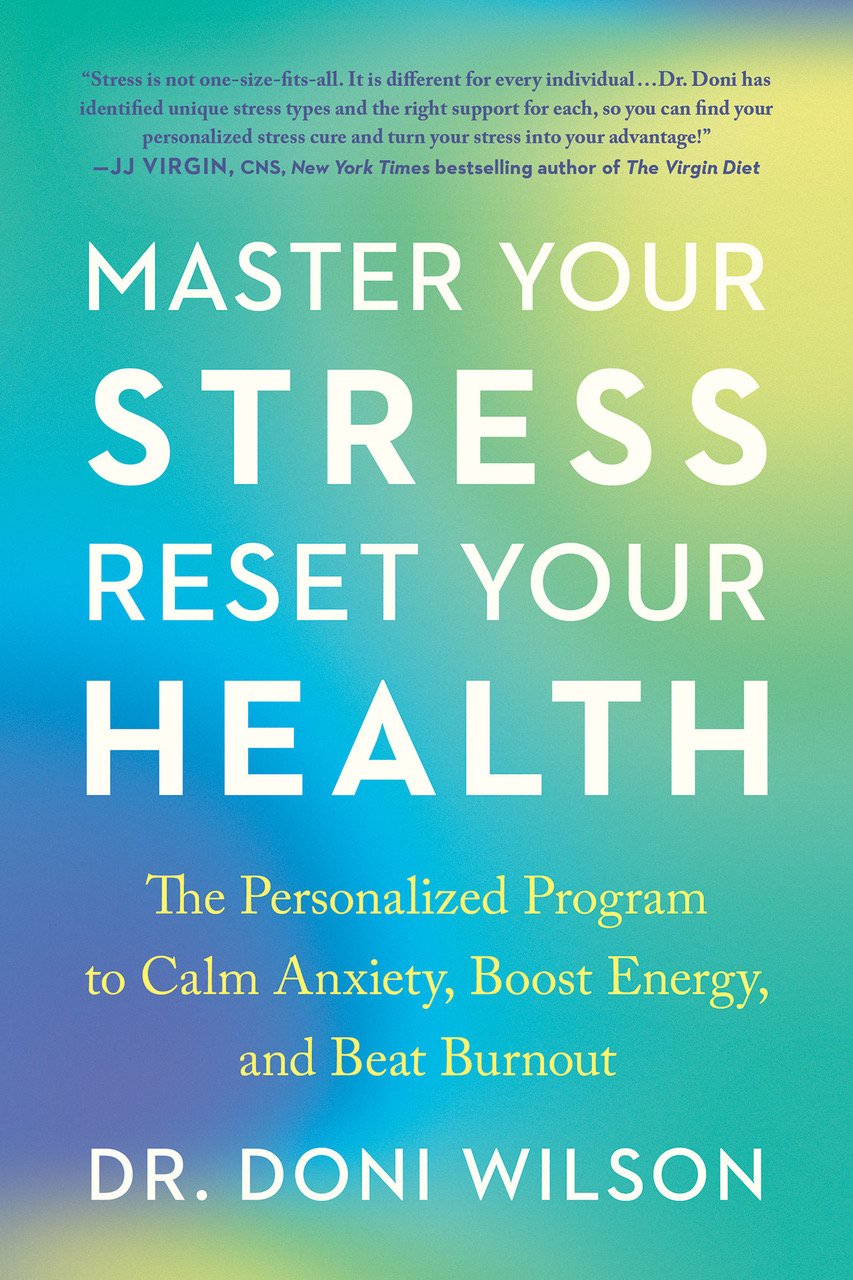
In my book, Master Your Stress Reset Your Health, I go into great detail about our built-in stress response system, and how stress and trauma can cause us to be stuck in “stress mode.”
A key insight from the book is that stress doesn’t affect us all the same way. For some, our stress hormones (cortisol and adrenaline) will remain high, while for others, the levels may be too low, or somewhere in between. It is essential to know how stress and trauma have impacted your stress hormone levels, as well as your neurotransmitter levels, and your mitochondrial function, so that we can provide an individualized protocol for recovery.
Start by taking my Stress Type® Quiz to get a sense of how stress and trauma from the past are impacting you today. Then you can follow my Stress Recovery Protocol, including my proprietary C.A.R.E. Method to support your body and nervous system to heal.
TAKE THE FREE STRESS QUIZ TO FIND OUT YOUR STRESS TYPE:
It’s important to work with a practitioner who can help you look deeper to uncover the root causes of your health issue so that you are finally able to break the pattern. And that’s exactly what I do in my one-on-one practice, and group programs.
If you’re dealing with HPV, I welcome you to join me over on Instagram @drdoniwilson and on my website at clearhpvnow.com. You can download my free HPV Recovery Guide and watch videos of women who’ve implemented my HPV Protocol and found freedom from high-risk HPV. I want for you to feel hope that you can heal too.

If you’d like to get a better sense of my approach, I welcome you to join my next free How to Get Rid of HPV online workshop where I help you to create a plan to get HPV out of your life for good. From there, you might choose to join the Heal HPV Kickstart Program, for the initial steps of my protocol, including diet changes and supplements, over the next 30 days.
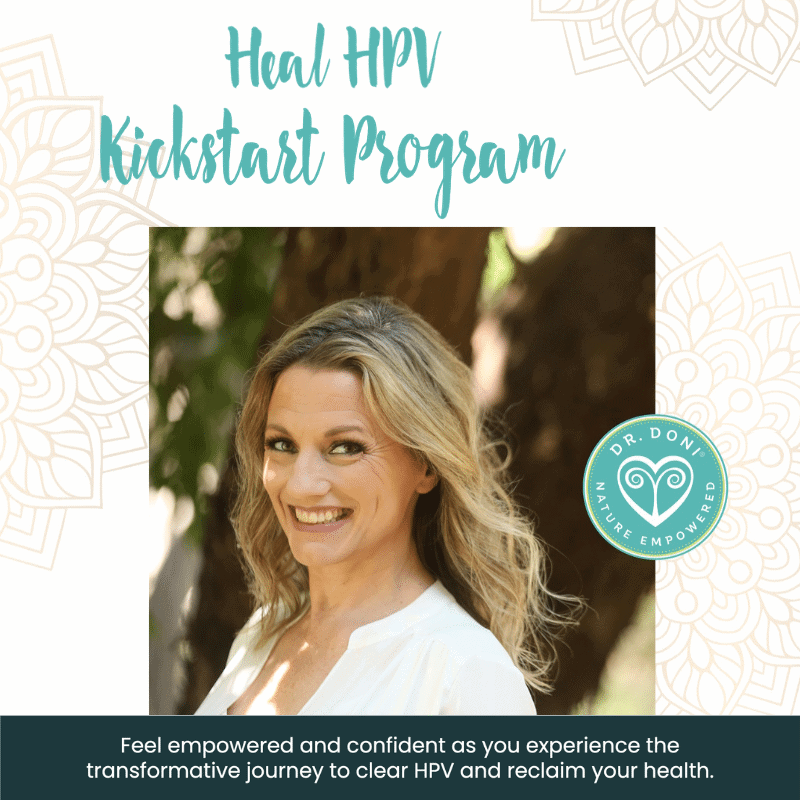
Or you can begin with the comprehensive Say Goodbye to HPV Program, which includes everything you need to implement my full protocol and to address all eight susceptibilities to HPV, including helping you to resolve underlying emotional stress and trauma.

If you have any questions, please don’t hesitate to reach out to my office. My team and I would be happy to connect with you and help you. Click here to set up a call with my team.
Thank you, everyone, for listening in to How Humans Heal and learning all about emotional healing from Dr. Nicole. If you haven’t already subscribed, I welcome you to subscribe so you don’t miss the next episode.
We’re here to help you!

Social:
- Facebook: https://facebook.com/drdoniwilson
- Instagram: https://instagram.com/drdoniwilson
- Threads: https://threads.net/@drdoniwilson
- YouTube: https://youtube.com/DoniWilsonND
Subscribe:
- Weekly Wellness Wisdom (Newsletter): https://doctordoni.com/www
- How Humans Heal (Podcast): https://doctordoni.com/podcast
More Resources from Dr. Doni:
- Stress Type Quiz: Assess your Adrenal Function
https://doctordoni.com/quiz - Dr. Doni’s Book: Master Your Stress, Reset Your Health
https://doctordoni.com/book - Dr. Doni’s Facebook Group: Stress Warrior Stress Resiliency
https://facebook.com/groups/stresswarrior - HPV Recovery Guide (FREE)
https://doctordoni.com/ddpp/hpv-guide/ - FREE Masterclasses with Dr. Doni
https://doctordoni.com/masterclasses - FREE Guides from Dr. Doni
https://doctordoni.com/guides
Personalized Solutions:
- 14-Day Detox Program: You can start this transformation program anytime
https://doctordoni.com/detox-program - Say Goodbye to HPV (12-week Program): Begin the journey to freedom from HPV today!
https://doctordoni.com/say-goodbye-to-hpv - If you’d like to meet with Dr. Doni one-on-one for your health, request a Health Breakthrough Session: https://doctordoni.com/breakthrough
Disclaimer: This specific article and all other Content, Products, and Services of this Website are NOT intended as, and must not be understood or construed as, medical care or advice, naturopathic medical care or advice, the practice of medicine, or the practice of counseling care, nor can it be understood or construed as providing any form of medical diagnosis, treatment, natural HPV cure, or prevention of any disease.


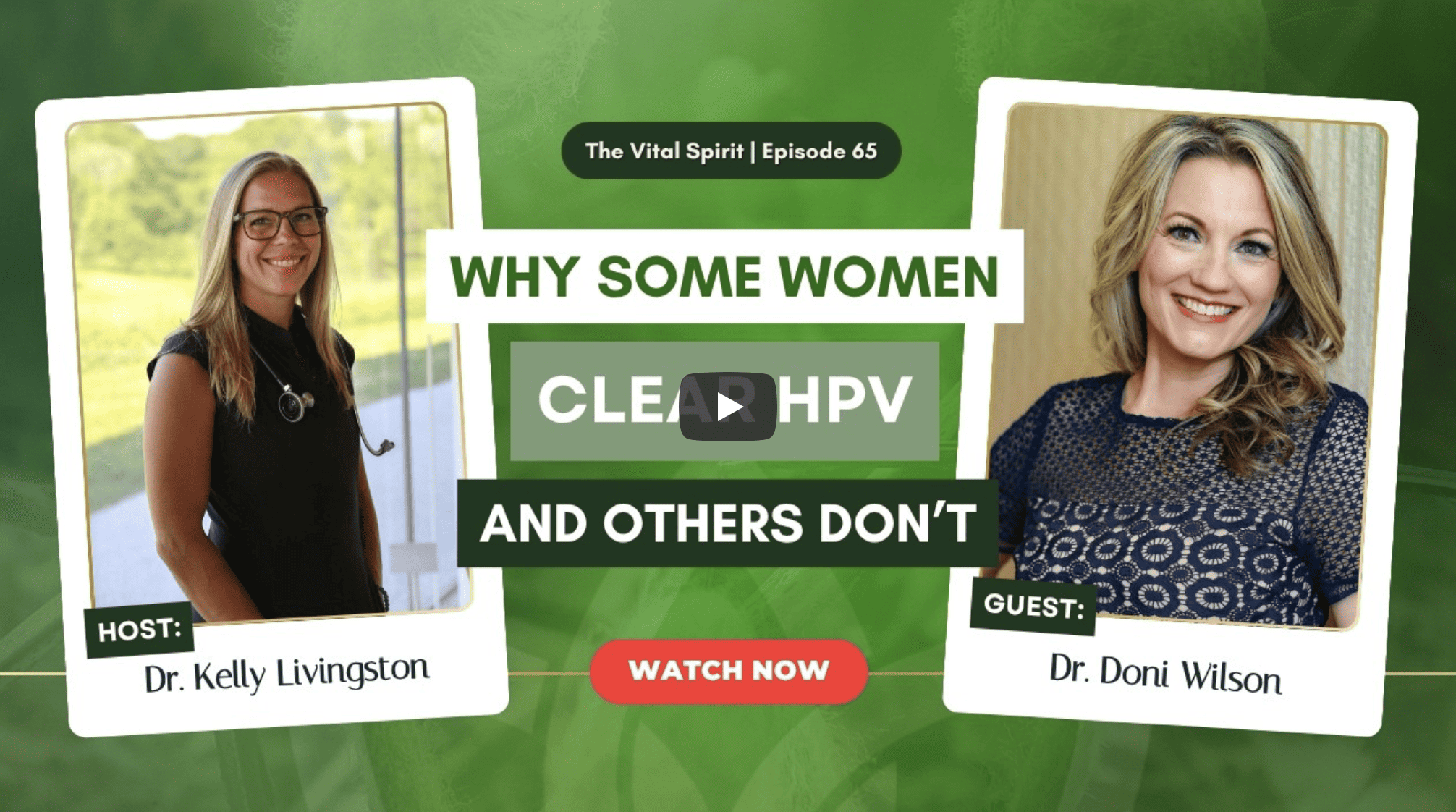
The Truth About HPV: Why Some Women Clear It and Others Don’t – Dr. Doni on The Vital Spirit Podcast
Dr. Doni was interviewed by Dr. Kelly Livingston on The Vital Spirit Podcast to talk about how we can clear HPV by addressing the root causes that made us susceptible to the virus in the first place.
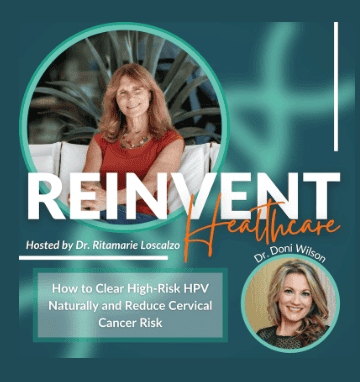
How to Clear High-Risk HPV Naturally and Reduce Cervical Cancer Risk – Dr. Doni on the Reinvent Healthcare Podcast
Dr. Doni was interviewed by Dr. Ritamarie Loscalzo on the Reinvent Healthcare Podcast to talk about what actually drives HPV persistence, why most women are told “there’s nothing you can do,” and how a terrain-based approach helps the body clear high-risk HPV and stay negative long term.
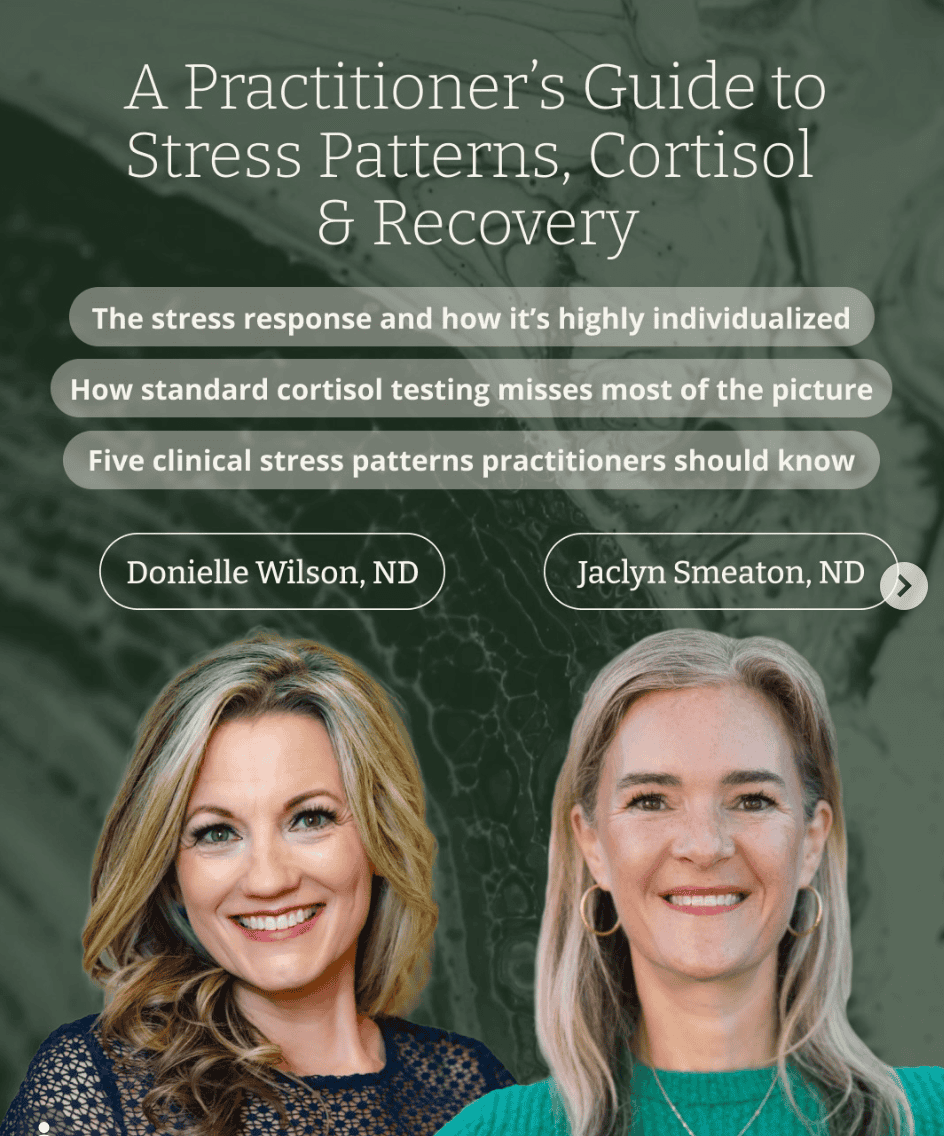
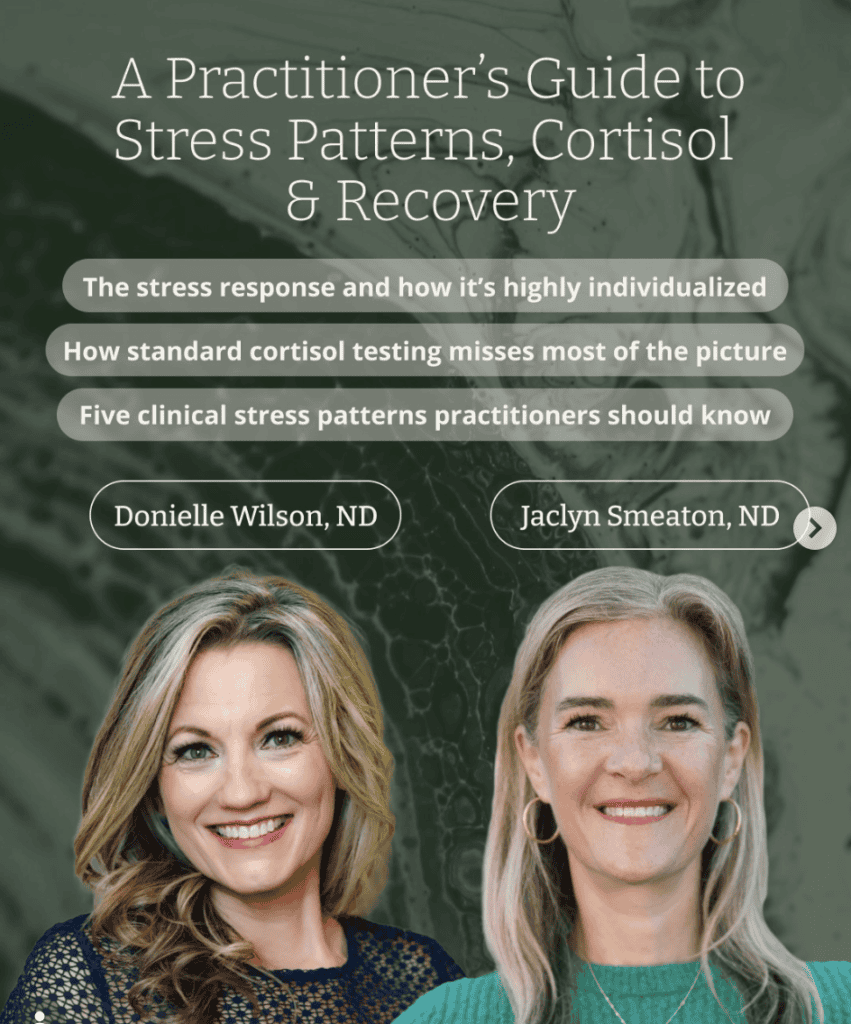
A Practitioner’s Guide to Stress Patterns, Cortisol & Recovery – Dr. Doni on The DUTCH Podcast
Dr. Doni was interviewed by Dr. Jaclyn Smeaton on The DUTCH Podcast to discuss Dr. Doni’s clinical philosophy, research findings, and personal journey around understanding and treating stress.
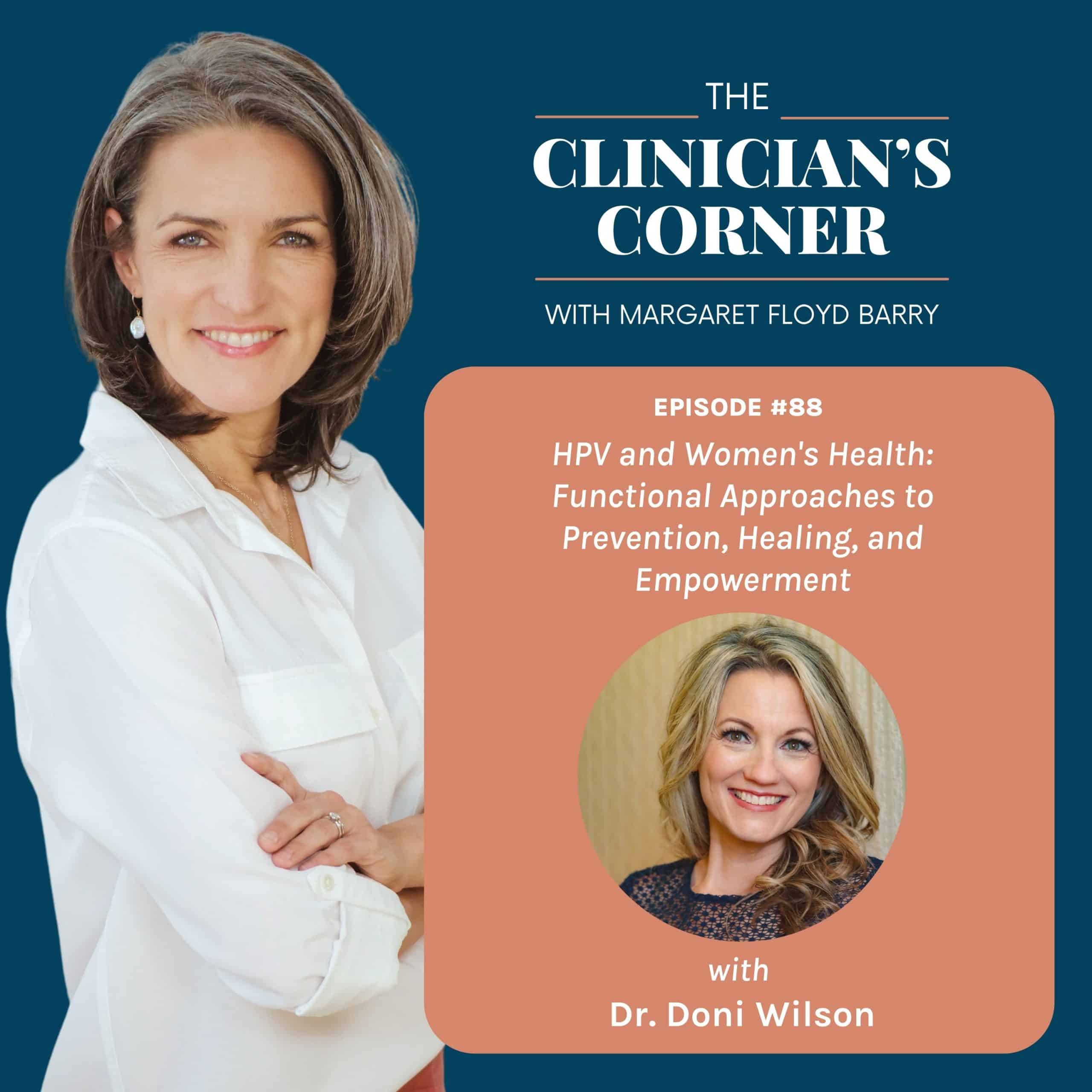
HPV and Women’s Health: Functional Approaches to Prevention, Healing, and Empowerment – Dr. Doni on “The Clinician’s Corner” Podcast
Dr. Doni was interviewed by Clinician Margaret Floyd Barry on “The Clinician’s Corner” Podcast to talk about how HPV isn’t just a women’s health issue, how stress and trauma can play a pivotal role in immune resilience, and the actionable strategies clinicians can implement to help their clients clear HPV naturally.