

In this episode of How Humans Heal, I have the pleasure of interviewing Dr. Aimie Apigian, the author of “The Biology of Trauma”. This is such an important topic for everyone, and it’s of great interest to me because I’ve been researching how trauma affects us as humans and how we can recover it for over 25 years.
Dr. Apigian shares that it took her eight rewrites to create the perfect experience for readers, recognizing that the topic of stress and trauma is so huge that you could start anywhere. The challenge with talking about stress and trauma is that it can retrigger our stress and trauma responses.
Sometimes in our attempt to heal, we end up just re-traumatizing ourselves. We find that there’s been a reason why our body and our mind have wanted to keep everything stuffed down and to keep everything packed tightly away. There’s a fear in the healing process of not even knowing if we want to look inside because of all the stuff we’re afraid we’re going to uncover.
Dr. Apigian’s intention is to help people not feel as scared about the healing process. She went through the process of healing from trauma herself, and now hopes to help people before they reach the breaking point she hit. She wants to provide a clear path forward.
Her book is like a map to your inner world – here’s how to safely unpack decades worth of experiences of being hurt, being betrayed, and being alone. That stuff hasn’t gone anywhere. It’s all just been waiting for us to recognize it and address it.
Recognizing Trauma Without Reliving the Past
Many people listening might be thinking, “Was that really a trauma that I experienced? Do I really fit this category?” The good news is that this book is actually written for the person who doesn’t think they’ve had trauma, because it’s going to show them otherwise. It shows them through the science of how you would know that your body is holding onto trauma.
This approach is different from other books in the field. While other books have done a great job of learning how to qualify events – what constitutes a big T trauma and what constitutes a little T trauma, labeling these events to help us understand what we’ve been through – this book takes a different route.
Instead of looking at the past, we look at your life today. Do we see trauma patterns showing up in your life today? Do we see patterns in your relationships that would suggest you’re holding onto beliefs about yourself and others that would have come from a traumatic experience?
What about your health? Do we see patterns showing up in your physical health today? That’s what happens when the body has been storing trauma. Things happen to us earlier, and our body doesn’t immediately show the manifestation of that pain, fear, or overwhelm. It takes years. The book focuses on the years of biology of trauma that forms. One of the primary mechanisms by which the body holds onto trauma is in our biology.
You can recognize by your physical health whether you think you’ve had trauma or not. Whether you acknowledge it, whether you remember it, your body is telling you it’s holding trauma, which means you need to do some work.
When it comes down to it, ninety-nine percent of health issues are related to stress and trauma exposure. As humans, life includes some exposure to what we would consider stress or potentially trauma. If you’re human, there’s going to be some exposure to stress and trauma. To the extent that we ignore or dismiss it, we’re just delaying the inevitable realization that we need to look at that.
You don’t necessarily have to recall or relive trauma for healing. That’s often people’s fear – that they have to relive it or recall it. It’s not necessary for healing.
The Challenge of Traditional Therapy Approaches
Dr. Apigian’s personal story illustrates the challenges with traditional approaches. As a physician and general surgery resident, she was disconnected from her body and preferred being busy and doing things rather than being and feeling. She was running away from her feelings without even knowing it. As a physician, she was frustrated with patients who came in with symptoms but whose labs didn’t show much wrong. She preferred patients she could help with clear diagnoses and treatments.
When she became that patient – sitting in the chair with symptoms that weren’t being explained, with mostly normal labs – she realized she needed to do her own trauma work. This came out of her experience with foster parenting and adoption.
Being a perfectionist, her approach was to go all in. She did it all – therapy sessions where she would process stories and do release work. But she would come home completely exhausted, lying on the couch binge-watching movies because she didn’t have the energy to think or move, often accompanied by emotional eating.
She didn’t realize she was doing therapy the wrong way. She was actually re-traumatizing herself in the process of trying to heal. If you have any health issue, you can’t do therapy like everyone else. Your body is already carrying a burden. Being unhealthy is a stress and a burden, which means it’s taking up energy. Therapy requires energy. Change and healing require energy.
If all your energy is going into trying to clean up inflammation in your gut, trying to clean out oxidative stress that’s accumulating, trying to clean out toxins that won’t budge because your nervous system is in survival mode and your detoxification pathways are shut down, and your mitochondria are infected and not making as much energy, this impacts your ability to go into therapy and have the capacity to do deep trauma work.
Understanding the Biology of Trauma
Dr. Apigian realized that her own biology was what was holding her back. Everything she shares in her book in terms of the biology that can hold a person back, she learned from personal experience. She had head injuries from the past, concussions and whiplash that she didn’t know were still affecting her and creating signals of danger for her nervous system.
The nervous system is what it’s all about. What state is your nervous system in? Your nervous system can either be in the state where it engages the healing pathways of the body – the innate healing strategies of the body – or it can be in one of the two survival modes where this is not the time to heal, but the time to survive and do whatever you have to do to survive.
This is the essence of how the biology of trauma is created: the body adapts to survive the unsurvivable. Many people are existing in survival mode most of their lives. When Dr. Apigian discovered this, she didn’t realize how much she was living in anxiety because it had been how she’d lived for so long. It had become her normal.
Over the years it took her to piece together this understanding of the biology of trauma, she realized the impact it had on her body. It wasn’t just negative self-thoughts, self-criticism, and judgment. Yes, she had formed beliefs about herself – that she was unlovable, that she had to perform and achieve to be worth someone’s time. But the cost had also been in the form of her physical health, building under the surface over time.
She had been able to ignore it until she started having health issues – one thing after another – and her body wasn’t even in a place where it could engage the healing strategies that our body naturally has.
The Nervous System: Survival Mode vs. Safety Mode
The mind and body are connected. Trauma or stress isn’t all in our head – it’s in our whole being. Healing is about paying attention to your nervous system. Those signals that our nervous system gives us when we’re in survival mode versus in recovery or calming mode help us learn to choose more calm signals for ourselves.
The only way we can choose signals of safety is when it feels good to us. Unfortunately, when we’ve been through trauma, being in survival mode and being stressed feels normal and good. We have to retrain ourselves to choose differently.
Part of the trauma response is feeling helpless. Part of experiencing trauma was that we didn’t have a choice or didn’t feel that we had a choice. We had to go along with something that wasn’t what we would have wanted. We had to experience something we wouldn’t have wanted to experience. Whether it was another person forcing their choice on us or life forcing its choice on us, there’s that strong element of every trauma response: “I can’t make this stop. I don’t have a choice.”
It’s important for a person to regain that choice – what we call “agency”. The moment we go from stress into trauma is realizing there is nothing else we can do that will make a difference. In that moment, you’ve lost your sense of agency, and that’s when our survival strategy changes.
We have to start regaining the sense that we can do something and it will make a difference. A psychology study done with dogs showed how learned helplessness gets wired into our body – not our mind, our body. Even very high-functioning people can have learned helplessness wired into their body and nervous system.
You can’t choose to wake up and not have a trigger today. That’s likely not something you have truly a choice over because it’s not in your logical conscious mind’s ability to stop a trigger from happening. That trigger happens in your survival system, which is not logic but your survival system. However, you can create safety for your survival system so it doesn’t kick in. You can create moments and signals of safety.
The first thing to learn is being able to feel in your body when you feel like you’re in survival mode and when you are in safety mode. If you don’t know that, how do you even know when you need to shift your body from survival to safety? You need to recognize what state your nervous system is in right now.
If it’s in stress or trauma survival modes, you can shift that. This starts to build your sense that you can do something, that you can learn to work with your body. That opens doors that had previously been locked.
Creating Your Safety Toolkit
Everyone needs to create a toolkit – a survival mode kit. It’s not the same for everyone. You have to see what creates safety for your body. You need to build your first aid kit or toolkit, but first you have to remind yourself that you have a toolkit. Where is it? What’s in it? What can you start to choose?
It takes practice to catch yourself. Sometimes at first it’s after the fact when you realize you could have chosen something from your toolkit at that point. Next time you try to catch it earlier. You catch it earlier and earlier to be able to redirect because you start to realize that the anxious thought or the trigger is not your true authentic self.
Sometimes it is your biology, but it’s not your true self. You have to pull back enough to say, “Okay, that’s the fear talking, or that’s the trauma response talking.” You need enough awareness to say, “I see you,” not “I don’t want to see you. I’m going to avoid you, stuff you, numb you, and distract myself.” Instead, it’s “I see you, and we have different resources now. We’re not stuck anymore. We’re not that little girl standing in front of her daddy anymore.”
Safety for everyone starts with creating inner safety. How you do that can be different for different people. There are different specific principles you can use.
Let’s take lavender as an example. For many people, lavender is a very calming scent. Smell is a very powerful way to shift our nervous system either into survival mode if we smell burning toast, or into safety if we smell roses or lavender.
But what if you as a child grew up next to a lavender farm and your family was one of chaos that created fear and terror? Sometimes when you smell lavender, it takes you back to that home. For someone next to you, lavender is calming and creates safety. For you, lavender is not going to create safety.
You each need to learn your body, your nervous system, and what creates safety for your nervous system. You also need to know what triggers to avoid right now because you haven’t yet developed your toolkit to choose something different in that moment. You need more practice to handle those bigger triggers that you do want to navigate differently at some point in the future. For now, choose to keep things in a manageable place.
The Foundation: Preparing for Deeper Healing Work
Much of the time, both colleagues and patients say they’ve done all this therapy, but it feels superficial. It could even be retriggering and making you feel worse along the way. What we’re talking about is getting to the core of the wound and actually doing the healing. It’s tricky because it’s an invisible wound we can’t see, but it’s there and it can heal. The question is how to gently, softly, and effectively heal it without making it worse.
Think of it like surgery. If a patient came in with a tumor that needed to be cut out, you can see exactly where it is in their body. It’s definitely there and definitely causing problems. Stored trauma in our body is the same – it needs to go.
But what if as a surgeon you just said, “Okay, let’s do it right now,” and took them immediately to surgery with no anesthesiologist because there wasn’t time to prepare? No lab work, no imaging, no preparation to make sure they’re stable and ready for surgery? If you cut them open, you may have good intentions, but it’s going to make things worse because you’re not doing the preparation and foundational work that allows their body to be ready for surgery.
For many people with cancer, we need them to do nutritional plans first because if we took them to surgery as they were, when they are malnourished, it was going to make them worse. This is the same approach with trauma. We need to do the foundation and preparation for it to be something that helps us rather than something that makes it worse.
When people say they’re too busy to deal with their trauma, they often go to addiction – addictive substances, addictive behaviors, or workaholism – to avoid it. But something’s going to happen. It’s inevitable. You’re going to do something to either avoid it or address it.
When we do foundational work and preparation work, it doesn’t take a lot of time. The exercises and somatic self-practices can be done for just two minutes. Do you have two minutes? Two minutes of not scrolling on social media? Yes, you can do two minutes.
It’s about baby-stepping our way into even learning how to feel safe, and that feeling safe is safe. Many people don’t realize that their busyness is the mask they use to avoid stillness, because stillness is actually terrifying. Feelings start to surface, and we avoid stillness like the plague because we might be considered lazy, or we wonder what’s going to come up in those moments.
The First Small Step Towards Healing
There’s this fear of “I can’t do therapy right now because I can’t fall apart.” People think that if they open everything up, they would fall apart, and they can’t fall apart right now. That’s not where we start. We don’t start with the deep stuff. Instead, we baby-step our way into it.
At first, you should do these exercises for less time than what you think you can do. Your mind has one idea of “Oh yeah, I can handle this,” and your body has a different idea of “No, you don’t understand how much pain I’m carrying. You really don’t want to see all of this.” So just fifteen seconds here, thirty seconds there, two minutes here. That will start to form the neural pathways of connection.
We have been living disconnected – that’s one of the primary patterns of trauma. How do we form the neural pathways where connection is now our new way of living life? Connecting with ourselves and with others, but with ourselves first and foremost. That takes baby steps.
As an addiction medicine physician, Dr. Apigian was able to study this aspect of the nervous system and trauma and how to safely change someone’s life drastically. If patients tried to cut themselves off cold turkey from whatever they’d been using, some nearly died. It’s too big of a change.
The same is true with us. Our nervous system has become dependent on a certain level of stress, busyness, and people-pleasing. If we try to change that and cut it off cold turkey, saying we’re never doing any of that again, it’s too big of a change. Our nervous system can only do small changes at a time, and then it embeds that through neuroplasticity.
Understanding Neuroplasticity and Nervous System Regulation
Neuroplasticity is a feature of our nervous system to make things easy for us. When our nervous system notices us doing the same thing every day or every week, it creates a neural pathway so we can do those things without thinking about it. Thinking requires energy, so our nervous system tries to make things easy through neuroplasticity so we can save our energy.
Whether it’s brushing our teeth or driving home from work, we have things we’ve done so many times we can do them on autopilot because of neuroplasticity. Unfortunately, we’ve also wired in through neuroplasticity our patterns of responses to problems and people. We respond in the same way we’ve always responded because it’s become our default. Our nervous system has automated it, making it the default way of responding.
It takes energy to do something different. It takes energy to change that neural pathway into a different pathway that will give us a different response. One way people can know they have stored trauma in their nervous system is by seeing that sometimes when there’s a person or a problem, they’re overreacting or under-reacting. Both are signs of a dysregulated nervous system.
A regulated nervous system is flexible and adaptable – it’s a healthy response for whatever the situation calls for. Our nervous system adapts to everything. If we walk outside when it’s hot, our nervous system starts sweating to cool us down. That’s a response to help us. If we have a dysregulated nervous system, we may not sweat for some time, or we may start sweating too much.
There’s temperature regulation, hormone regulation, blood sugar level regulation, and emotion regulation. If emotions seem to be on a roller coaster, that’s dysregulation of the nervous system and one of the patterns of how to know you have stored trauma in your body.
We can reprogram the autopilot and regulate our nervous system through baby steps. In doing so, we create connection and reconnect with ourselves. Many people feel disconnected from themselves. Women often talk about feeling angry at their body. We feel disconnected from this body we’re living in, even though our body is our home through our human experience.
That’s the reality of the effect of trauma, and there’s a cost to being disconnected. We can’t choose to just disconnect from uncomfortable feelings like grief, anger, or loneliness. If we disconnect from those, we also disconnect from joy and happiness. It comes at a cost.
Much of the healing journey is about reconnecting – first and foremost with ourselves, even learning who we are because most of us have lost ourselves. We need to regain that in a different way so it’s not the same relationship we’ve had with our body. It’s a completely different relationship – actually a friendship with our body. That is how we are going to heal.
Real Stories of Transformation and Practical Tools
The stories of transformation are inspiring. Dr. Apigian has been impressed with how fast the body can change when it has what it needs – when it’s given the right tools and the right sequence. Even though someone can have been living a certain way for decades, their body makes big shifts in a short amount of time as they learn to create safety.
John was one example. In just the first twenty-one days of the program, he was able to call his daughter, whom he had not seen for eight years, and go out to dinner with her. He said, “I had a great time. For the first time, I was able to be with her and listen to her, not get into this triggering dynamic where she storms off and she’s mad again.”
The impact wasn’t just on him, but his family as well because now he knows he can do hard things in relationships. Consider the impact on his daughter receiving that phone call and hearing from her dad, “I’d like to see you, and I see you.” That’s going to heal so much of her life as a result of the work he did.
Another example is someone who had been stuck in chronic autoimmunity so bad that she was having to take naps every single day just to get through the day. In the first twenty-one days of setting the foundation, she no longer needed naps. Five weeks in, she hadn’t needed daily naps. Something was shifting inside her biology as a result of creating safety.
She’s in her fifties, and this started happening as a teenager. She didn’t even think she was going to live past eighteen based on her family dynamics and how her health was going. At age sixteen, she was driving herself to doctor appointments to try to find answers because her parents were not emotionally available. This led to thirty years of being on medical disability. To see this degree of changes and shifts in just a short amount of time is amazing.
There are thousands of stories from course members who’ve gone through the program. How they live life is completely different. Some are going through cancer treatments and using these exercises on the radiation table to create safety at a time when they would normally be in survival mode with thoughts of “what if this” and “what if that,” literally contributing to their biology of trauma. Not anymore. Now they know how to create safety, stay out of overwhelm, and use tools to create inner safety that will do so much for their healing process, even during cancer treatments.
Try It Out: The Push Away Exercise
For those wanting to start immediately, here’s a simple exercise called the “push away.” Imagine there’s a huge rock in front of you. Some people want it to be a problem or something else, but it doesn’t matter because the physical movement is what’s important. That’s how our nervous system engages with the world – through the senses. What we feel, see, touch, and hear. The more we bring in those senses, the more it helps us learn to shift our nervous system.
Bring your hands up all the way to your shoulders, then slowly – ever so slowly, more slowly than you think you’d like to go – push that heavy rock away. The pushing away creates the experience of having space. When we have space, that’s often a source of safety for us. Having space to breathe, space to think. How often do we find ourselves saying, “I just need space. Give me space to think”? Space and time are signs of safety.
Push slowly and be able to feel what changes in your shoulders, what changes in your chest. For some people, because of their history and experiences, having space may not feel safe. Maybe they prefer to be small, in a small enclosed container, to hide away from somebody or something. In that case, there would be a different somatic exercise that would be more powerful for creating safety. It’s like trying on clothes – try this one and that one to see what creates the strongest and fastest sense of safety for your nervous system, because that’s what we want in our toolkit.
The most important message is hope. It doesn’t matter what your past has been. It doesn’t matter how bad it’s gotten. It does not matter. There is something you can do. Understanding the framework, understanding the layers that need to be healed, and understanding the order in which to do things can make all the difference in the world.
This work creates a better life for yourself and has a ripple effect that improves the lives of family members and people around you. When we become more regulated people, it allows others to see and experience a more balanced, centered, and authentic version of us, which helps them choose the more healing and authentic version of themselves.
Conclusion and Next Steps
As we wrap up this important conversation about trauma healing, I want to acknowledge your courage for listening to this topic and stepping into what’s possible on your healing journey. This isn’t just about improving your own life – it’s about preventing so many health issues and preventing the effects of generational trauma. When we heal ourselves, we improve the lives of our family members and the people around us.
The approach we’ve discussed today is about giving people hope through tools – practical tools, not just theories. As doctors and care providers, it’s part of our purpose to help others, and this is the ultimate way to help others heal. We know we can prevent so many health issues, and we can help break the cycle of generational trauma.
If you want to learn more about how Dr. Aimie you can visit her website here. You can also find her on Instagram @draimie or Facebook @Dr. Aimie. You can find a copy of her book “The Biology of Trauma” here. If you are interested in Dr. Aimie’s program The 21 Day Journey you can find more about it here. This program will help you discover how to recognize the difference between stress and trauma in your own body and what your body needs in each state path to personal healing and freedom.
A Note from Dr. Doni
Infections, imbalances, and symptoms are simply messages or signals showing us that trauma is affecting us on a physical level. It’s when we can heal from the stress and trauma that these physical symptoms and health issues disappear. That is also the case with high-risk HPV and abnormal cells on the cervix, as well as many other health issues such as pain and migraines.
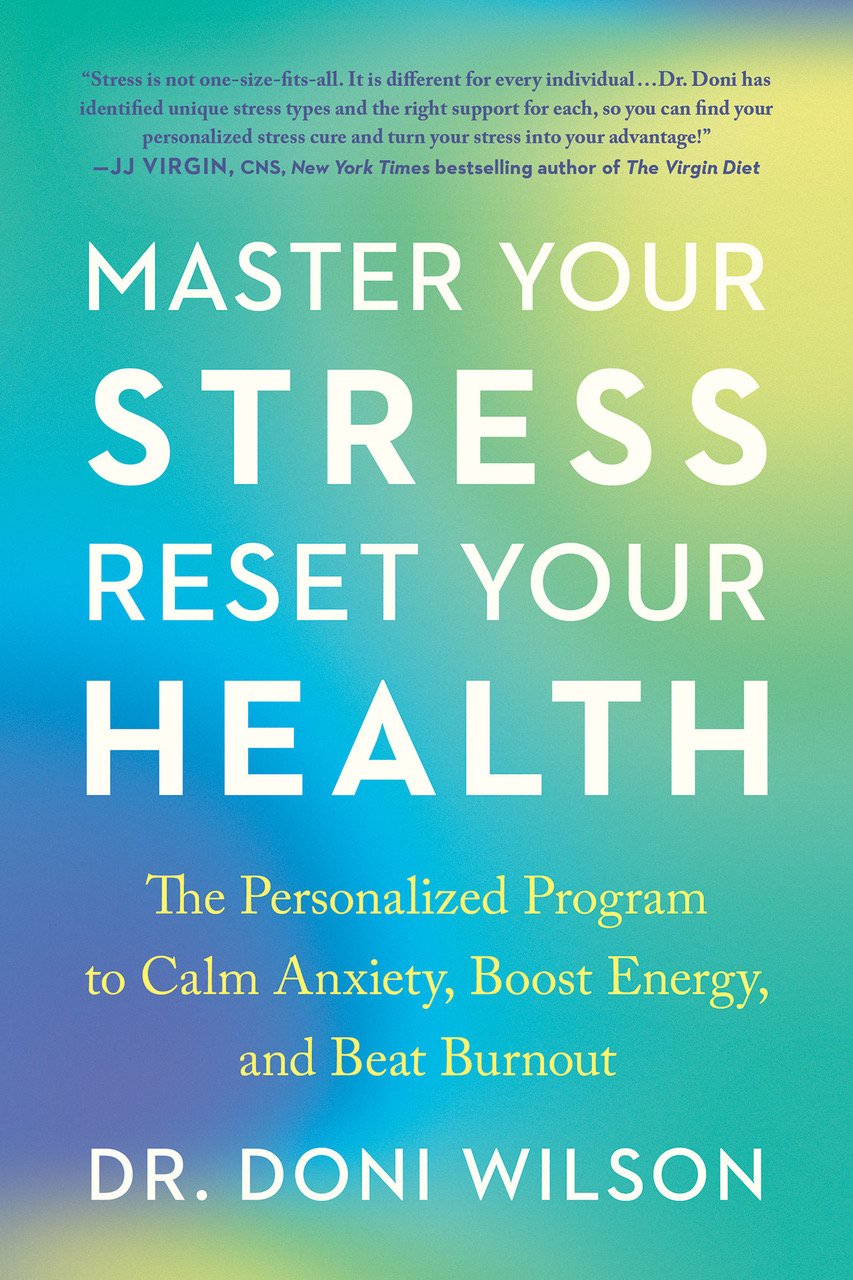
In my book – Master Your Stress Reset Your Health – I help you to identify how stress and trauma have impacted your nervous system and stress hormones, and then how to eliminate the impact of stress so that you can heal.
In the book, you’ll find out your “Stress Type,” which is how your body was uniquely affected by stress, and then how to heal based on your Stress Type using the proprietary C.A.R.E. method. C for clean eating, A for adequate sleep, R for recovery activities, and E for exercise. The tools Jane shared in this episode are covered under the R of C.A.R.E., including the research and how to choose them based on your Stress Type.
I find that stress recovery is essential for women who are healing from high risk HPV, so it is included in the Say Goodbye to HPV online program, and in one-on-one work with patients, which is available to women around the world.

If you would like to learn more and understand the next steps on your healing journey, you can comment below or you can reach out to my office through office@doctordoni.com and we can set up a time to meet, so I can get to know you, and we can think through the different options that make sense for you. It’s all about understanding where you’re starting from, and the next best step for your case. I will then guide you step by step in the direction of healing.
Please know that if you’re struggling and hoping there’s another option for healing, there is! I’m happy to help you create a plan to transform your health and your future.
Thanks again for joining me in this conversation with Dr. Aimie here at How Humans Heal. If you haven’t already, I welcome you to subscribe to my newsletter, podcast and join me for the next episode.
I hope this gives you new hope and inspiration for your ability to heal from trauma. Don’t give up – believe me, I’ve been through pain and suffering. I understand. You’re not alone.
Healing is possible.

Social:
- Facebook: https://facebook.com/drdoniwilson
- Instagram: https://instagram.com/drdoniwilson
- Threads: https://threads.net/@drdoniwilson
- YouTube: https://youtube.com/DoniWilsonND
Subscribe:
- Weekly Wellness Wisdom (Newsletter): https://doctordoni.com/www
- How Humans Heal (Podcast): https://doctordoni.com/podcast
More Resources from Dr. Doni:
- Stress Type Quiz: Assess your Adrenal Function
https://doctordoni.com/quiz - Dr. Doni’s Book: Master Your Stress, Reset Your Health
https://doctordoni.com/book - Dr. Doni’s Facebook Group: Stress Warrior Stress Resiliency
https://facebook.com/groups/stresswarrior - HPV Recovery Guide (FREE)
https://doctordoni.com/ddpp/hpv-guide/ - FREE Masterclasses with Dr. Doni
https://doctordoni.com/masterclasses - FREE Guides from Dr. Doni
https://doctordoni.com/guides
Personalized Solutions:
- 14-Day Detox Program: You can start this transformation program anytime
https://doctordoni.com/detox-program - Say Goodbye to HPV (12-week Program): Begin the journey to freedom from HPV today!
https://doctordoni.com/say-goodbye-to-hpv - If you’d like to meet with Dr. Doni one-on-one for your health, request a Health Breakthrough Session: https://doctordoni.com/breakthrough
Disclaimer: This specific article and all other Content, Products, and Services of this Website are NOT intended as, and must not be understood or construed as, medical care or advice, naturopathic medical care or advice, the practice of medicine, or the practice of counseling care, nor can it be understood or construed as providing any form of medical diagnosis, treatment, natural HPV cure, or prevention of any disease.


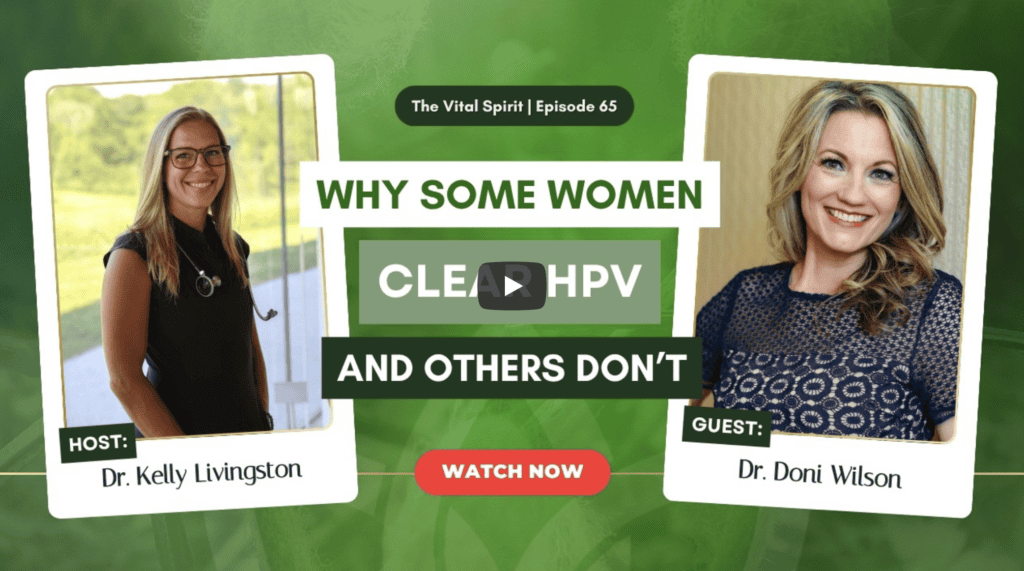
The Truth About HPV: Why Some Women Clear It and Others Don’t – Dr. Doni on The Vital Spirit Podcast
Dr. Doni was interviewed by Dr. Kelly Livingston on The Vital Spirit Podcast to talk about how we can clear HPV by addressing the root causes that made us susceptible to the virus in the first place.
How to Clear High-Risk HPV Naturally and Reduce Cervical Cancer Risk – Dr. Doni on the Reinvent Healthcare Podcast
Dr. Doni was interviewed by Dr. Ritamarie Loscalzo on the Reinvent Healthcare Podcast to talk about what actually drives HPV persistence, why most women are told “there’s nothing you can do,” and how a terrain-based approach helps the body clear high-risk HPV and stay negative long term.
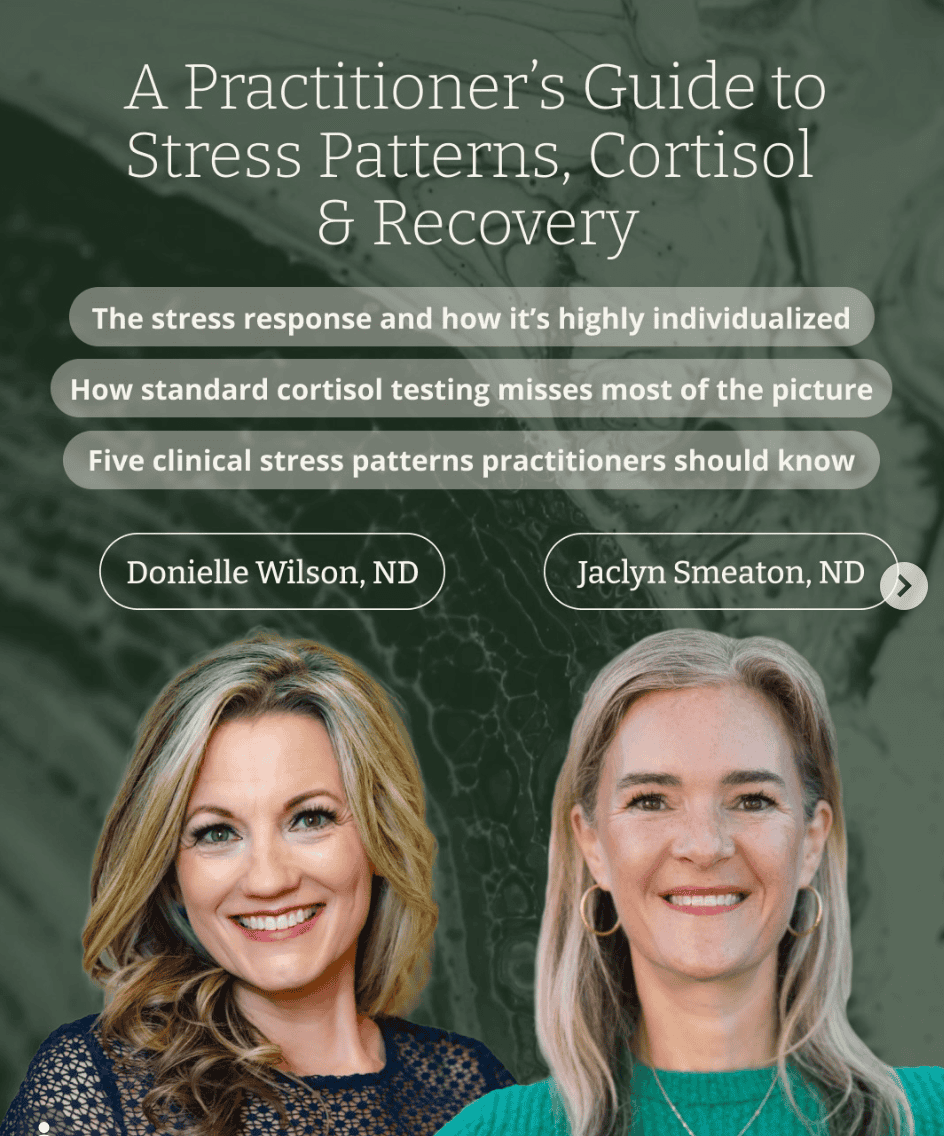
A Practitioner’s Guide to Stress Patterns, Cortisol & Recovery – Dr. Doni on The DUTCH Podcast
Dr. Doni was interviewed by Dr. Jaclyn Smeaton on The DUTCH Podcast to discuss Dr. Doni’s clinical philosophy, research findings, and personal journey around understanding and treating stress.
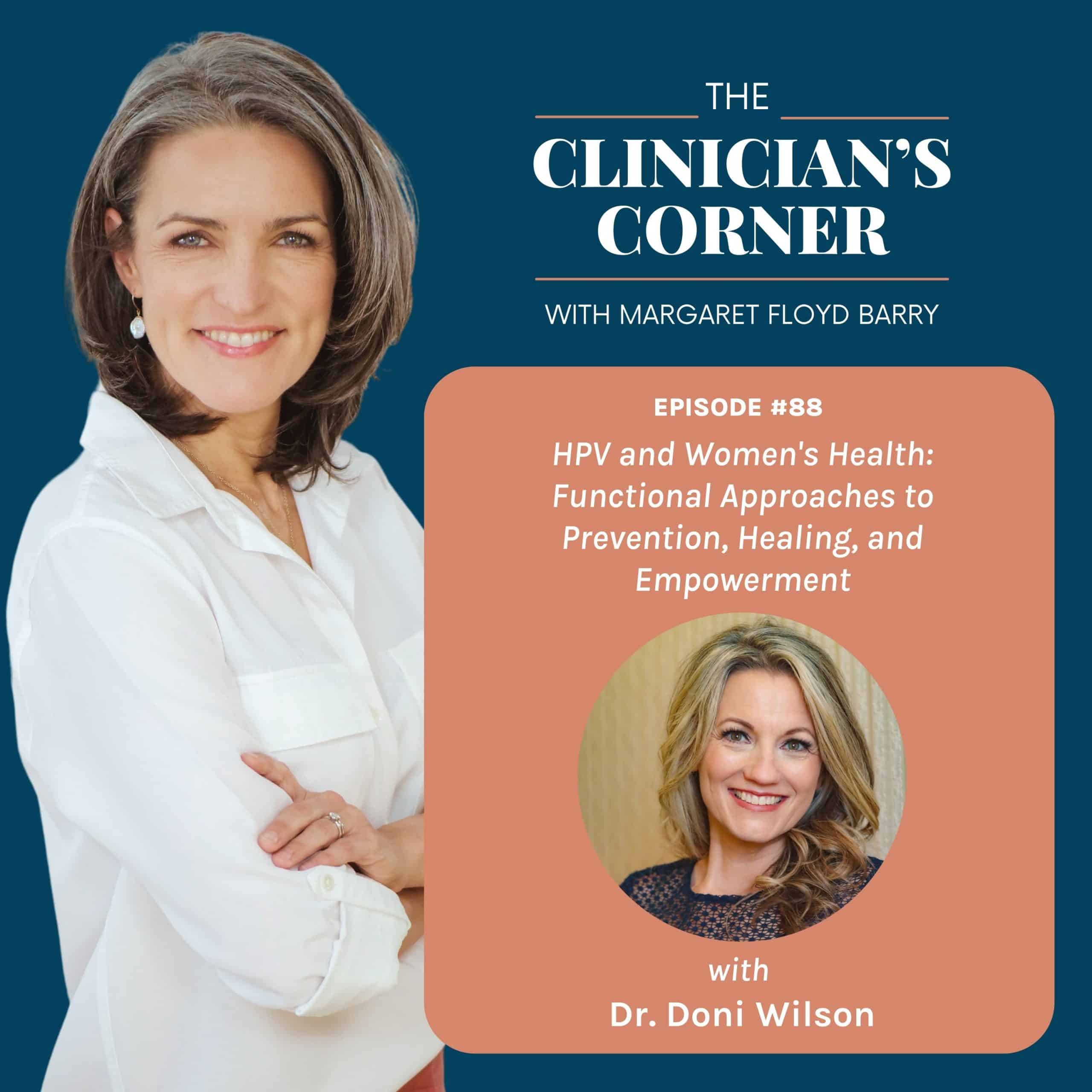
HPV and Women’s Health: Functional Approaches to Prevention, Healing, and Empowerment – Dr. Doni on “The Clinician’s Corner” Podcast
Dr. Doni was interviewed by Clinician Margaret Floyd Barry on “The Clinician’s Corner” Podcast to talk about how HPV isn’t just a women’s health issue, how stress and trauma can play a pivotal role in immune resilience, and the actionable strategies clinicians can implement to help their clients clear HPV naturally.