
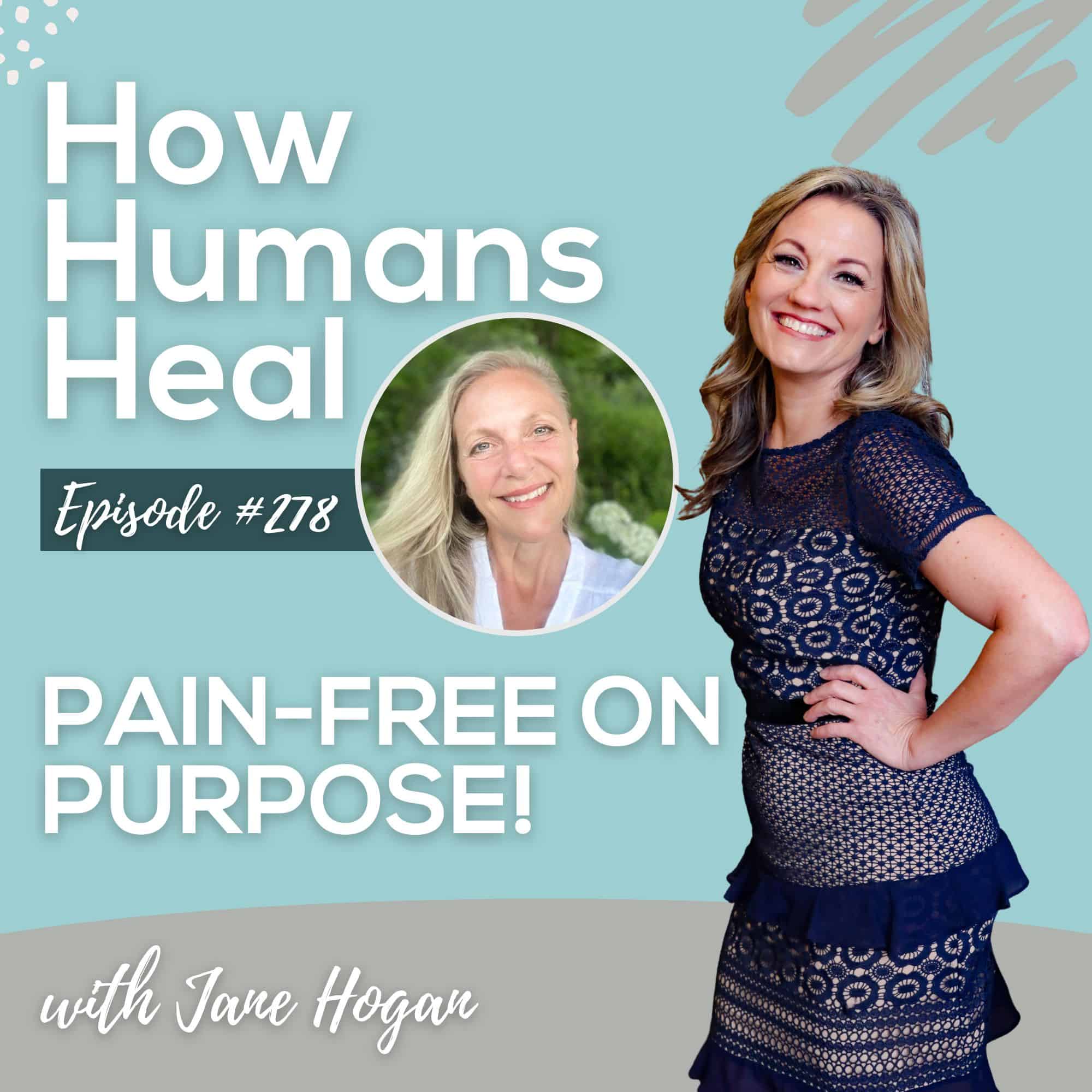
I spent so many years in pain – pain migraines, and from having Ehlers Danlos syndrome and joint hypermobility, as well as pain from chronic arthritis. So I understand what it’s like to be in pain and how it feels to want to get out of pain. Often as humans, we have not just physical pain but emotional pain, and often they go together.
When we are in physical and emotional pain, we tend to reach for substances to get us out of pain, even if it’s temporarily, and even if there are side effects or addictions.
That’s why I’m excited to introduce you to Jane Hogan, a functional medicine certified health coach and wellness educator. What Jane is here to share with us is how she was able to get herself out of pain without medications, and without side effects or addictions.
The Beginning: When Stress Triggers Pain
Jane’s journey started when she was working as an engineer with an established career. She had a very stressful year that began with her dear mother passing away suddenly. She became the executor of her estate, and her parents had been collectors, so there was a lot of stuff to deal with, and Jane lives seven hours away from her mother’s house! She has two older siblings to coordinate with, and there were tensions and difficulties with settling everything. Jane wasn’t sleeping, and the whole situation became overwhelming.
About a year after her mother passed is when the pain started, and it started suddenly. Within three months, she went from being strong and healthy to being barely able to walk. There was grotesque swelling on her knees and hands. She couldn’t make a fist or grip anything. Her jaw, shoulders, and feet were all affected. The pain was everywhere. She felt like someone had a voodoo doll and was sticking pins in her.
At first, she thought once her mother’s house was sold and everything was taken care of and the estate was settled, she would be fine. She even took a little vacation, but she got worse. One morning, lying in bed after her husband had gone to work, she had that feeling when you wake up and realize this wasn’t a dream – the pain was still there in her body. She could barely walk down the stairs and was wondering how she was going to do all the things they had planned to do. She could barely walk and hardly look after herself.
She had all these thoughts during what felt like the worst moment of her life. She remembers thinking that if this was the way her life was going to be, she was ready to be done. She didn’t want to be a burden on people or live like this. But in the next moment, she heard a voice in her head that wasn’t her own voice, and it said, “This is not how your life is going to turn out. You’re going to figure this out, and you will teach other people.”
That was when everything changed. She was still in pain, but she had the deepest inner knowing that she would figure it out. She just started experimenting.
The Food Connection: First Steps Toward Healing
Jane was really lucky that her family physician at the time was lovely and open-minded. Her doctor said that sometimes food can cause joint pain, which Jane thought was the wildest thing she had ever heard. But she was desperate, so she was willing to try anything. The doctor mentioned that gluten, dairy, and sugar were common triggers, so Jane started there.
She had no idea what she was doing and just stopped eating those foods cold turkey. She did have a significant reduction in pain within about five days, so she thought, “Okay, this is it. Food is medicine. I’m going to heal myself by just not eating all these foods.” But then it became more and more restrictive, and over time, she started developing a fear of food. She knew that just avoiding foods wasn’t the complete answer.
She started working with a naturopathic doctor who was wonderful, and they began with supplements and testing. She was taking handfuls of supplements and was getting better, but the pain wasn’t completely gone. She still had flares, and she knew that wasn’t the complete answer either.
All this time, she was researching because that’s what she does – taking a 50,000-foot view as a systems thinker, like an engineer. She realized that stress had turned this on, so stress must be part of this. She wondered why she couldn’t just turn it off, thinking she should be able to reverse engineer what happened.
Understanding the Stress-Pain Connection
What Jane found was that even though the original stress was over, the pain wasn’t gone. She realized that during that year when she was dealing with everything, including difficulties with her siblings, it brought up childhood issues that she thought she should be past at 50 years old. As Ram Dass says, “If you think you’re enlightened, go spend a week with your family.”
When we lose a significant person in our life, all of a sudden our emotions start processing things we may have been avoiding. Jane had really relied on her mother – they had a beautiful relationship as they got older, and her mother was her champion. But Jane wasn’t her own champion. When her mother was gone, even though her husband is wonderful and loves her and thinks she’s the best thing ever, she didn’t have that inner support system within herself.
She realized that feeling came from childhood. It wasn’t major trauma, just mild trauma, but she hadn’t really dealt with it. She hadn’t forgiven some things. These emotional issues needed attention. The same centers in the brain process both emotional and physical pain, which is why emotions have absolutely everything to do with joint pain and physical symptoms.
Jane has done extensive research in the years since this happened in 2016 – way more studying than she ever did for her engineering degree. She ended up leaving her engineering career and became a functional medicine certified health coach, started living her purpose, which was exactly what that voice had told her – that she was going to teach other people.
The Mind-Body Connection: How Thoughts Create Healing
The feeling, thoughts, and emotions that create healing in the body are tied to the nervous system, and the only person that can change your thoughts and feelings is you. That’s what Jane teaches now – how to change thoughts and feelings so that the nervous system gets the message of safety, and in that way, the body does its own healing.
We are the ones who decide the thought that’s going to lead to the feeling and the action and the outcome. So much of the time, because we’re racing through life from one stress to the next, we forget that we’re the ones who are the decision makers. We lose track of who we are in this human experience.
What we know is that 90 to 95% of the time, we’re just running on autopilot – old thoughts repeat, old habits repeat. When the same things are going in, the same outcome will come out. If we want a different outcome in our physical body, then we have to change the input so that the nervous system gets a different message. That requires brain retraining, and the brain learns through repetition and consistency. It’s really as simple as that – simple but not necessarily easy.
We can change these pathways. Whether we wake up because we’re in pain or because something else happens – a crisis, trauma, or health issue – we kind of have to look at what’s going on in our body and our life. We realize we’ve been repeating the same patterns from childhood and maybe even from our parents. We learned these familiar patterns and repeat them, and of course, it results in some health issue, physical or emotional or both, at some point in our lives.
The DESIGN Blueprint: A Systematic Approach to Healing
Jane developed what she calls her DESIGN blueprint because she’s an engineer and loves systematic approaches. The word “DESIGN” stands for the six steps in the process: Desire, Explore, Surrender, Integrate, Generate, and Navigate. Within each of those six steps, there are two habits or rituals related to that step that begin to calm the nervous system.
She suggests using tracking sheets because when we’re retraining our brain, we need to pull in all the support we can get. We build these habits one on another so that one habit cues another habit. The tracking sheet gives the brain little rewards, and our brain love rewards, even if it’s just checking off a little circle on a sheet.
Tools, like tracking sheets, help people with repetition and consistency because that’s what is needed – repetition and consistency. Over time, what happens is people become more aware. They realize they were holding tension or breathing in a shallow way, and they start to have awareness of where they were before so they can shift back.
Often, Jane says, your only job is to feel good. That’s it. We don’t learn this in childhood, and she hopes that in the future, children will learn this because it would be amazing for them to have that experience of first feeling loved and knowing how to regulate the nervous system. Those are important tools, and it’s so worth learning.
It’s like building a toolbox. At first, it feels like learning how to play an instrument or learning to dance – you have to put your focus on it and go little by little. But as you repeat it, it becomes easier and then becomes second nature.
The Power of Intentional Healing
The title of Jane’s book, “Pain-Free on Purpose,” reflects how pain led Jane to her purpose, but also that being pain-free is intentional. You have to be intentional about it, and through that, you can actually begin to calm the mind so that the nervous system can calm down, so that the body can shift into the rest and repair state most of the time. In that state, it heals and starts to take care of itself.
It’s not that we do the healing or that we have to think about what exercises we need to do to release pain. It’s all about how we can create calm. The approach uses lots of different tools – breathwork, biofeedback, mindfulness, meditation, and guided imagery.
Jane was interested in personal development and growth long before she had physical pain in her body, so she borrowed some things from that arena as well. Things like visualization work – it works for athletes to achieve goals, it works for business goals, but it also works when we can visualize our healed and healthy self doing something we’d love to do and really getting into the feeling of it.
Breathwork is foundational because it’s the quickest way to calm the nervous system. You’ve always got it with you, and it’s free.
The habits that come later in the blueprint are more about not putting your life on hold because of pain or your health condition. What’s something that brings you joy, something creative and playful? It doesn’t have to be artistic creative, but anything – we’re meant to be creative on some level. We also have a desire to learn things, so what’s something you’ve been putting off that you’ve always wanted to learn more about? Then make time for that!
Real-Life Transformations and Results
Jane has seen amazing transformations in her work. In her small group program with just eight people, she teaches 12 habits over 12 weeks with a lot of support – private coaching and group coaching.
One member was doing all the things Jane taught, and about three weeks in, she said the pain was gone but it kind of worried her. Her brain was so used to pain that having no pain felt weird, and she was probably worrying that it might come back or that it was too good to be true.
By week four, when Jane asked how she was feeling with the pain being gone, the woman said, “What pain?” It was just behind her now. Jane has seen so many people experience this when they embrace a lifestyle change and when they get the idea that it’s not about doing, it’s about being. It’s a new way of being, and when they get that this way of being is what puts them in the healing state, then it all starts to happen. Usually, within four to eight weeks, people are experiencing real change.
Jane lives in Newfoundland, Canada, and her students and clients are all over the world. The last cohort of her “Calm by DESIGN: Nervous System Regulation for Mind-Body Healing Program” had students from six countries.
We need help to learn to calm our nervous system because we don’t learn these skills in school, and while there are a lot of tools out there and books people can start to learn from, having a systematic approach from someone who figured it out herself and knows how to implement it makes all the difference.
We’re not short of information – we have all the information. These habits and rituals, are no secret. It’s all out there, and you can find it all. We just need to look for the support to help us stick to the plan, stick to the blueprint, so you can be successful and have quick results.
You don’t have to do it all at once. You can go at your own pace. Baby steps will take you anywhere as long as you keep taking them. It’s just those little steps that you take day by day, and what you do every day matters way more than what you do once in a while.
The Science Behind Mind-Body Healing
One way people can know whether it is the brain that’s turning on pain is understanding that while there are physical reasons for pain, what we know now from neuroscience is that a lot of times – some say 85% of the time – the pain is caused by the brain turning it on as a protection response.
If the pain dissipates or goes away or reduces while you’re on vacation or while you’re taking a break, when you’re feeling relaxed and calm or happy with friends, that’s the sign that it is the brain that’s turning on pain to protect you.
Sometimes we assume that if the pain is really big, then it’s going to need something equally big to override it. Yet sometimes it’s the simplest little tweak of perspective that makes the difference. Then, to create new neural pathways, you need repetition and consistency over time to retrain your system – to learn what taking care of yourself feels like and to create new habits.
Visualization exercises and guided imagery combined with breathwork give people the opportunity to experience that they can change their thoughts and the way they’re thinking and feeling and have a physical result. This helps us believe that we can shift it. The nervous system can be so responsive, and then it’s a matter of each day staying committed to continuing that new pattern.
Often times we have been so focused on our health issues and have been doing a lot of holistic practices, but unknowingly we’re creating stress with this hyper-focus on “I’m not well, and I’m broken, and I must be fixed” instead of thinking “in this moment I’m calm, in this moment I’m grateful, and in this moment I can think about something that was very loving for me and remember that.”
We know from the science that when we do that, we can create so much shift in our system that we think better, we have better relationships because we’re not operating from a place where our cognitive function is compromised and we’re not going to lash out at people. All areas of our life start to improve – relationships, finances, and health. It’s all connected. There’s no separation.
It’s amazing how people suddenly start noticing improvements in many different ways. Someone who knows them might say, “Oh, did you get a haircut? Your skin is glowing,” because their whole system is shifting and it can show up in ways you wouldn’t expect. Our inner state is reflected on the outside.
The same thought processes, whether they’re conscious or subconscious, that created the pain in our body or illness come from feelings of not being safe, not feeling loved or good enough. How can we live our life joyfully and live out our purpose if we don’t love ourselves or if we don’t feel safe in the world?
Pain Is a Messenger
Jane honestly believes that her pain experience was the best thing that could have happened to her because otherwise she would have been living a limited version of herself that didn’t feel good enough, and she wasn’t truly happy.
The pain was a wake-up call, and that’s all pain is – it’s a messenger. It’s neutral, and it’s protection.
Asking “what is the message, what am I supposed to learn?” can be so useful. Dr. Doni shares how she got so many messages from pain, including one day when she realized: “Wait a minute, if I could create time for myself, a break, a time to rest, then I could recover without having to go through pain to get me to take a break.”
Those are the patterns we get into – we just keep pushing ourselves. We’re taught from a young age that we can do more, work another day, and we don’t need a break. Sometimes we don’t even realize that it has to do with worthiness or deserving. We just think we’re supposed to keep going. If we could just put in our schedule four hours or a day where we don’t have to do anything and just rest and take care of ourselves, then our bodies wouldn’t have to get to the point of forcing us to take a day off because we are in pain.
Guided imagery and visualization practices are so good at healing and creating calmness in our brain and our bodies. Anytime you can create calm, you’re starting to shift the nervous system, and so you’re already beginning to heal even if you’re not noticing the difference right away. The more you can do this, the more you can get into it and feel the feelings, the faster your body can shift back into that healing state and then begin to do what it’s meant to do – run your body properly and do the repair that it needs to do.
This approach connects us with our senses, which give us so much information and speaks directly to our nervous system. That’s the job of our nervous system – to pick up on our environment. When we help ourselves understand what we’re picking up on in our environment, especially if we place ourselves in a safe space, we’re creating an experience where the nervous system believes that’s where we are and can help us stay there.
We can be in the driver’s seat and create experiences for our nervous system to feel safe, secure, calm, and peaceful, and then live from there. We’ve all heard the expression that our brain can’t tell the difference between something we visualize in our mind and what’s in the real world, so we’re just giving it a different experience. Through that experience, we can begin to shift and help the nervous system be calm. When stressors do show up, we already have built-up resilience. Our bucket isn’t already full, so we can experience those stressors from a more calm place.
This is truly about not just getting out of pain, but about retraining your nervous system and retraining your relationship with your whole body, your spirit, your mind, your whole self. It’s about learning that your only job is to feel good, and that through intentional practices and consistent small steps, you can transform not just your pain but your entire life experience.
The journey from pain to purpose is possible for everyone willing to take baby steps consistently, day by day, toward healing and wholeness.
Conclusion: A New Way of Being
Jane’s work and her book “Pain-Free on Purpose” show us that healing is truly possible when we understand that it’s not about doing, it’s about being. It’s a new way of being, and when we get that this way of being is what puts us in the healing state, then it all starts to happen. The same thought processes, whether they’re conscious or subconscious, that created the pain in your body come from feelings of not being safe, not feeling loved or good enough.
Pain is just a messenger – it’s neutral, and it’s protection. When we listen to its message and understand what we’re supposed to learn, we can begin to create the conditions for healing. We are meant to be here to live our purpose and feel good and love life. Through intentional practices, consistent repetition, and the understanding that we are the heroes of our own stories, we can transform not just our pain but our entire experience of life.
The journey shows us that all areas of someone’s life start to improve – relationships, finances, health. It’s all connected. There’s no separation. When we learn to create calm, feel safe, and love ourselves, everything begins to shift.
Next Steps: Your Journey to Healing
Remember, baby steps will take you anywhere as long as you keep taking them. It’s just those little steps that you take day by day, and what you do every day matters way more than what you do once in a while. Your only job is to feel good, and through consistent practice of these simple but powerful tools, you can begin to shift your nervous system into that healing state where your body can do what it’s meant to do.
If you’re interested in Jane’s book “Pain-Free on Purpose” it’s available on Amazon and other places books are sold. The book contains the complete DESIGN blueprint with all the tools and the systematic approach to help you retrain your nervous system and create lasting healing.
You can find Jane’s website – The Wellness Engineer – and a free webinar from her here. You can also find Jane on Instagram @thewellnessengineer and Facebook @Jane Hogan Health.
The key message Jane wants to leave you with is that the human body can heal, and it’s possible to heal from pain. We sometimes simply need to be able to release and let go and let our bodies, mind and spirit guide us to the healing that we need.
A Note from Dr. Doni
Infections, imbalances, and symptoms are simply messages or signals showing us that trauma is affecting us on a physical level. It’s when we can heal from the stress and trauma that these physical symptoms and health issues disappear. That is also the case with high-risk HPV and abnormal cells on the cervix, as well as many other health issues such as pain and migraines.
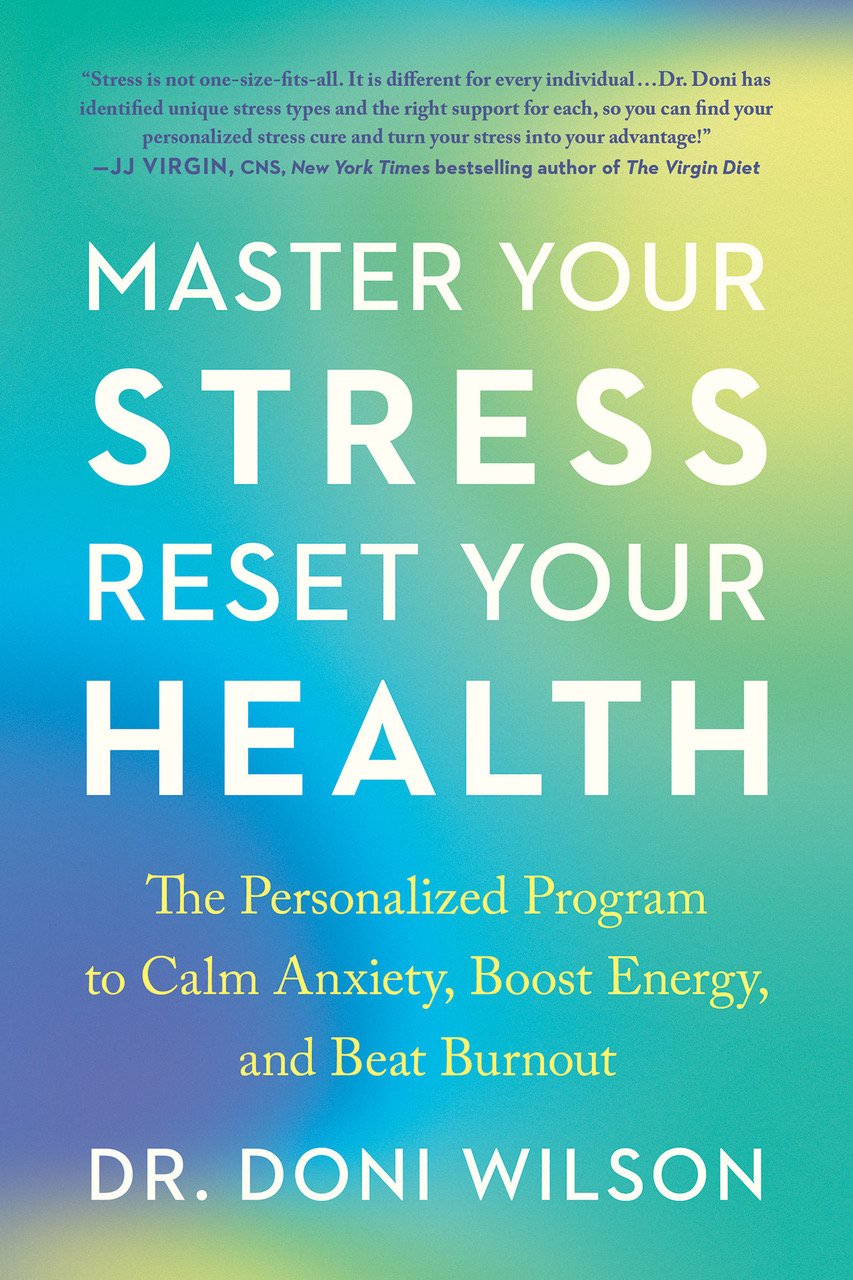
In my book – “Master Your Stress Reset Your Health” – I help you to identify how stress and trauma have impacted your nervous system and stress hormones, and then how to eliminate the impact of stress so that you can heal.
In the book, you’ll find out your “Stress Type,” which is how your body was uniquely affected by stress, and then how to heal based on your Stress Type using the proprietary C.A.R.E. method. C for clean eating, A for adequate sleep, R for recovery activities, and E for exercise. The tools Jane shared in this episode are covered under the R of C.A.R.E., including the research and how to choose them based on your Stress Type.
I find that stress recovery is essential for women who are healing from high risk HPV, so it is included in the Say Goodbye to HPV online program, and in one-on-one work with patients, which is available to women around the world.

If you would like to learn more and understand the next steps on your healing journey, you can comment below or you can reach out to my office through office@doctordoni.com and we can set up a time to meet, so I can get to know you, and we can think through the different options that make sense for you. It’s all about understanding where you’re starting from, and the next best step for your case. I will then guide you step by step in the direction of healing.
Please know that if you’re struggling and hoping there’s another option for healing, there is! I’m happy to help you create a plan to transform your health and your future.
Thanks again for joining me in this conversation with Jane here at How Humans Heal. If you haven’t already, I welcome you to subscribe to my newsletter, podcast and join me for the next episode.
I hope this gives you new hope and inspiration for your ability to heal. Don’t give up – believe me, I’ve been through pain and suffering. I understand. You’re not alone. Healing is possible.

Social:
- Facebook: https://facebook.com/drdoniwilson
- Instagram: https://instagram.com/drdoniwilson
- Threads: https://threads.net/@drdoniwilson
- YouTube: https://youtube.com/DoniWilsonND
Subscribe:
- Weekly Wellness Wisdom (Newsletter): https://doctordoni.com/www
- How Humans Heal (Podcast): https://doctordoni.com/podcast
More Resources from Dr. Doni:
- Stress Type Quiz: Assess your Adrenal Function
https://doctordoni.com/quiz - Dr. Doni’s Book: Master Your Stress, Reset Your Health
https://doctordoni.com/book - Dr. Doni’s Facebook Group: Stress Warrior Stress Resiliency
https://facebook.com/groups/stresswarrior - HPV Recovery Guide (FREE)
https://doctordoni.com/ddpp/hpv-guide/ - FREE Masterclasses with Dr. Doni
https://doctordoni.com/masterclasses - FREE Guides from Dr. Doni
https://doctordoni.com/guides
Personalized Solutions:
- 14-Day Detox Program: You can start this transformation program anytime
https://doctordoni.com/detox-program - Say Goodbye to HPV (12-week Program): Begin the journey to freedom from HPV today!
https://doctordoni.com/say-goodbye-to-hpv - If you’d like to meet with Dr. Doni one-on-one for your health, request a Health Breakthrough Session: https://doctordoni.com/breakthrough
Disclaimer: This specific article and all other Content, Products, and Services of this Website are NOT intended as, and must not be understood or construed as, medical care or advice, naturopathic medical care or advice, the practice of medicine, or the practice of counseling care, nor can it be understood or construed as providing any form of medical diagnosis, treatment, natural HPV cure, or prevention of any disease.

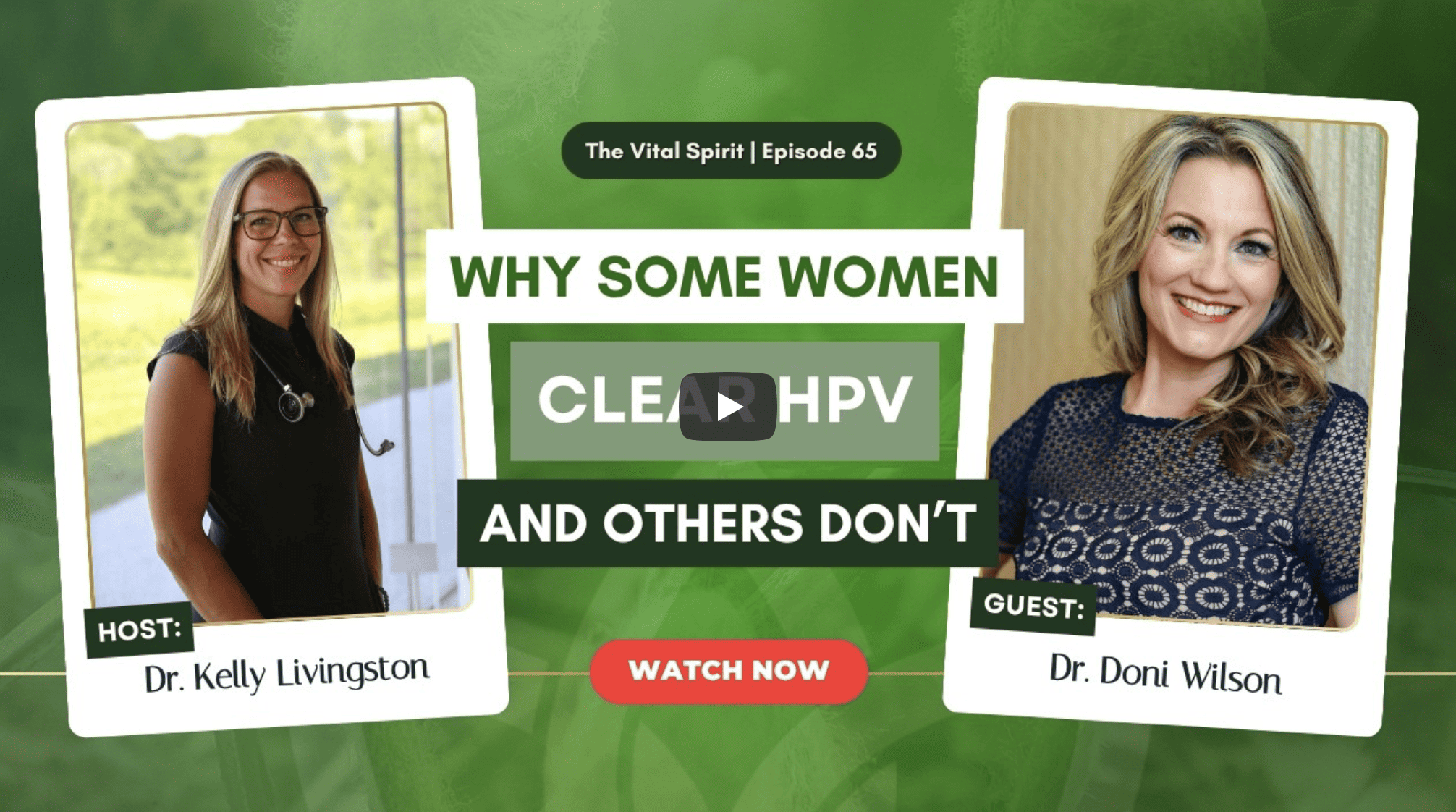
The Truth About HPV: Why Some Women Clear It and Others Don’t – Dr. Doni on The Vital Spirit Podcast
Dr. Doni was interviewed by Dr. Kelly Livingston on The Vital Spirit Podcast to talk about how we can clear HPV by addressing the root causes that made us susceptible to the virus in the first place.
How to Clear High-Risk HPV Naturally and Reduce Cervical Cancer Risk – Dr. Doni on the Reinvent Healthcare Podcast
Dr. Doni was interviewed by Dr. Ritamarie Loscalzo on the Reinvent Healthcare Podcast to talk about what actually drives HPV persistence, why most women are told “there’s nothing you can do,” and how a terrain-based approach helps the body clear high-risk HPV and stay negative long term.
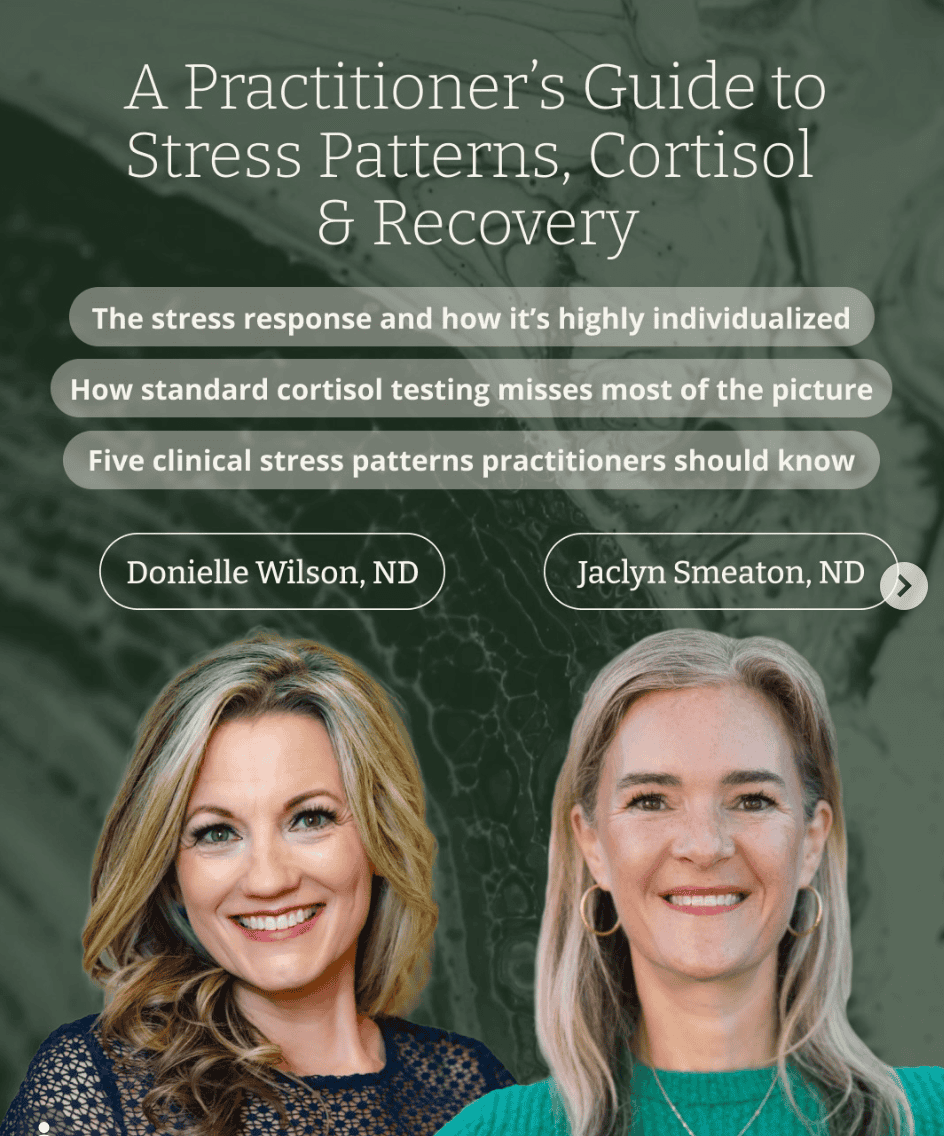
A Practitioner’s Guide to Stress Patterns, Cortisol & Recovery – Dr. Doni on The DUTCH Podcast
Dr. Doni was interviewed by Dr. Jaclyn Smeaton on The DUTCH Podcast to discuss Dr. Doni’s clinical philosophy, research findings, and personal journey around understanding and treating stress.
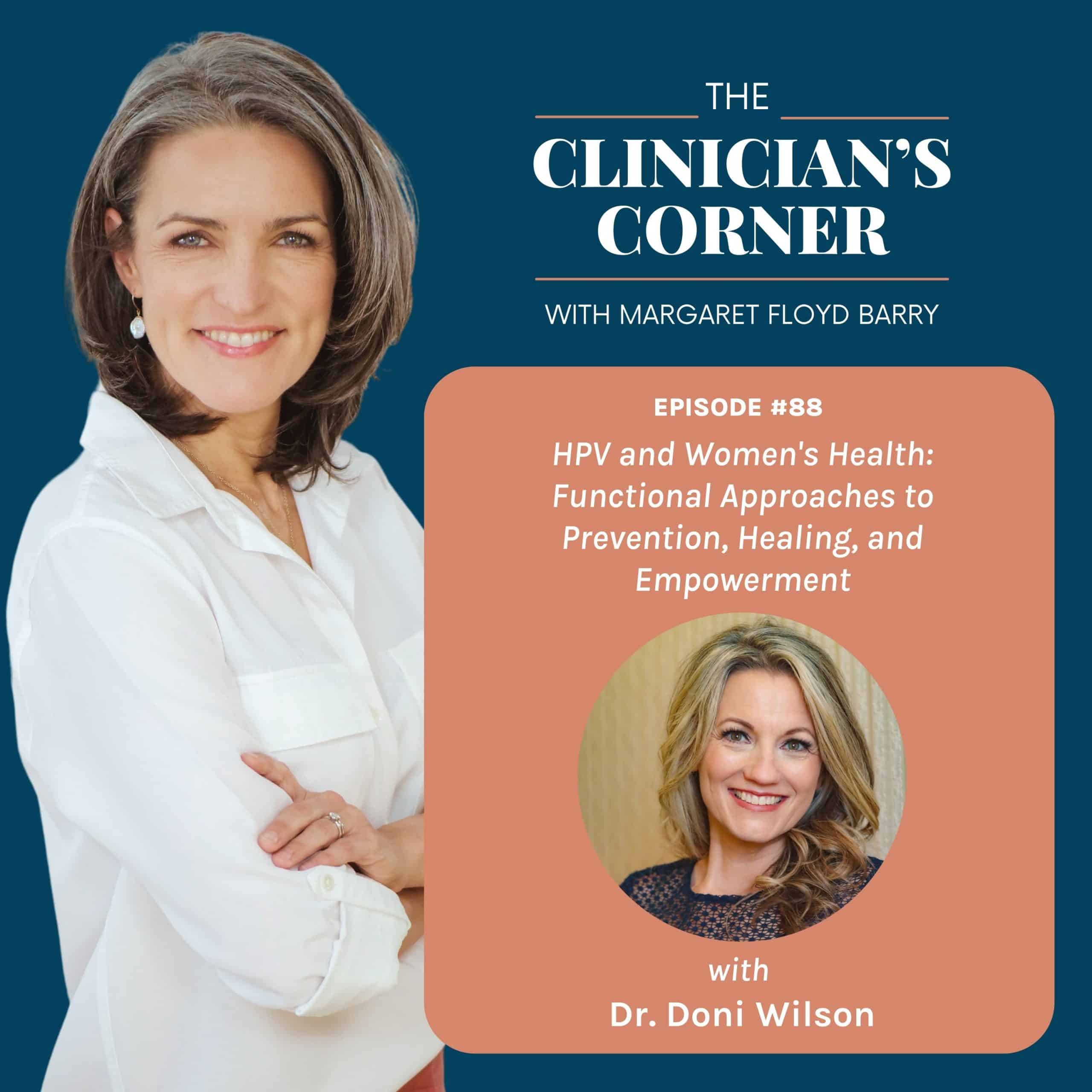
HPV and Women’s Health: Functional Approaches to Prevention, Healing, and Empowerment – Dr. Doni on “The Clinician’s Corner” Podcast
Dr. Doni was interviewed by Clinician Margaret Floyd Barry on “The Clinician’s Corner” Podcast to talk about how HPV isn’t just a women’s health issue, how stress and trauma can play a pivotal role in immune resilience, and the actionable strategies clinicians can implement to help their clients clear HPV naturally.