
High risk HPV is a sexually transmitted virus that is highly associated with risk of cervical (and other) cancer, however it is not that everyone who is exposed to the virus will develop cancer. There are factors that can make a person more susceptible to HPV, and stress exposure is at the top of that list.
To understand which cases of HPV are more likely to become persistent, and to have a higher likelihood of developing into abnormal cells, we need to consider what may be making one person more susceptible than another person.
If you’re struggling with high-risk HPV, abnormal cells, or any of these symptoms, this episode will help you understand how stress impacts your health, and why recovering from stress can help your body clear HPV to negative and keep it negative.
Understanding Stress
We all experience some degree of stress. In fact, our bodies require a certain amount of it to survive. To be clear, the goal is not to achieve zero stress or to be stress free.
Yet too much stress without enough recovery can lead to all different health issues: infections (including HPV), fatigue, anxiety, depression, sleep and digestive issues, hormone and blood sugar imbalances, weight changes, autoimmunity, and even heart disease, cancer, and dementia. Studies clearly show stress underlies most health issues, and aging itself.
Different Kinds of Stress
People often don’t realize they are stressed. That’s because we are so accustomed to stress, and don’t realize we can do anything about it, so we assume it is normal.
Stress may be severe, such as an acute crisis, abuse, or trauma. Or it can be stresses we deal with day in and day out, like work stress, a stressful relationship, or financial stress. Loss of a loved one is a stress. So are expectations and pressure, even pressure we put on ourselves, and caretaker stress, whether you’re caring for children, parents, or others.
Stress can also be physical. We exercise partly to put our bodies under a little stress to stimulate muscle growth, but over-exercising overstresses the system. Where the line falls is unique to each person, so sometimes you learn your limits by overdoing it and backing off to recover. Toxins like pesticides, infections, and injuries also act as stress.
How Stress Affects the Body
We have a built-in stress response system that includes our stress hormones, cortisol and adrenaline. We need our stress response system to escape danger. It’s chronic stress that is an issue.
A stress trigger sets off a domino effect that puts us into what I call stress mode. Adrenaline revs up, so you may feel anxious, your heart may race, and you may sweat. Digestion turns off. The immune system drops, so you’re more likely to catch a cold, and stress can also trigger inflammation and autoimmunity.
Every hormone is affected, from thyroid to estrogen, progesterone, and insulin. Mitochondria, the energy producers in our cells, can decrease their functioning, and the microbiome in our gut, skin, and vagina is disrupted, so healthy bacteria have a harder time protecting us.
When we keep pushing to keep up, our bodies get stuck in stress mode, and these systems become disrupted long term.
Health issues are a sign that stress is overloading your system. If you’re testing positive for HPV, it’s your body saying, “I need help recovering from stress.”
Your Stress Response and Recovery is Unique to You
In my research, I focus on understanding how stress impacts each of us uniquely. Cortisol levels can go higher, or lower, and adrenaline levels can also be higher or lower.
We can’t assume that we all have high cortisol. Just in the past couple days, analyzing patient’s cortisol and adrenaline levels, I’ve seen one patient with high cortisol and high adrenaline, another with low cortisol and high adrenaline, and another with both low.
The treatment is different for each, so it’s much better to test than assume you have high cortisol. Yes, we can help your body to recover – using diet and stress recovery activities, as well as nutrients and herbs.
It’s important to use the correct herbs and nutrients for your body and stress response pattern. For example, if your cortisol is elevated, it is best to use Ashwagandha, or a combination of phosphatidylserine and Banaba leaf. If on the other hand, your cortisol is low, you’ll instead want to use Rhodiola, Eleutherococcus, Glycyrrhiza (if you don’t have high blood pressure), and Holy Basil. If your adrenaline is high, magnesium threonate will help your body process it. And if your adrenaline is low, tyrosine is the precursor amino acid to make more.
Be careful! It is important to take this step by step, and to have assistance along the way.
How to Test Your Cortisol and Adrenaline Levels
I recommend a panel I call the “stress test” because it shows us your cortisol and adrenaline levels, which is essentially the current set point of your stress response system.
The stress panel can be collected at home and includes saliva samples collected throughout the day (morning, midday, evening, and bedtime). Cortisol should be highest in the morning and gradually decrease through the day. Adrenaline is measured in a second morning urine sample.
This type of testing isn’t part of a standard medical workup nor is it covered by insurance, even though decades of research demonstrate the importance. That’s why so many people are choosing to invest in their own health and future by checking their cortisol and adrenaline levels to prevent and/or reverse health issues.
The stress panel is available through my office – it can be done in the US and from other countries.
Where to Learn More About Stress and Stress Recovery
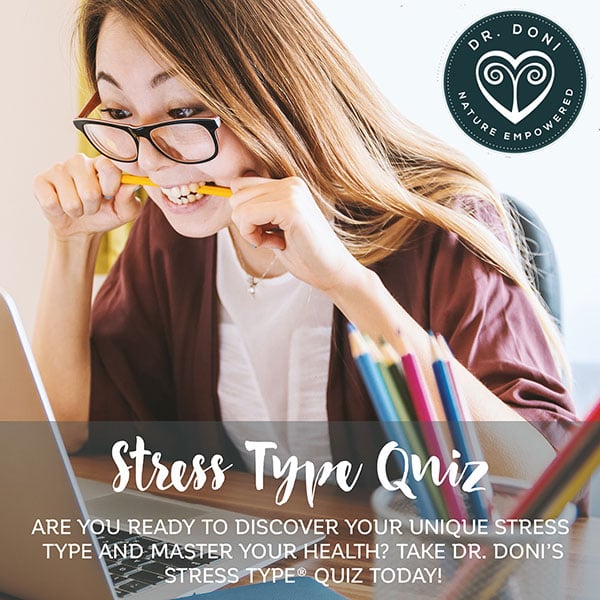
To learn more, I recommend reading my book Master Your Stress, Reset Your Health. You can also do the free Stress Type® quiz I developed based on my research. It will tell you what your stress pattern likely is, but if you want to know for sure, you’ll want to do a stress panel
Based on your results, we can use my Stress Recovery Protocol, including specific diet changes, nutrients, and herbs to support your body to recover from stress. It’s not about masking or suppressing. It is about actually helping your body to reset your stress response system to optimal.
We also use stress recovery activities like breathwork, meditation, music, journaling, somatic therapy, time in nature, and time with loved ones. Sometimes just five to ten minutes at a time makes a difference.
The Stress and High-Risk HPV Connection
As a women’s health expert, helping women to clear high-risk HPV to negative and keep it negative, one key aspect of my approach is to help women recover from stress. Simply boosting the immune system may not be enough to fully clear HPV.
There’s a clear connection between stress, trauma, and abuse, and higher risk of HPV and HPV-related cancer.
As your body is impacted by stress, it causes:
1. A drop in your immune function, making it more difficult to protect you from HPV.
2. Leaky gut, leading to nutrient deficiencies and inflammation that can spread throughout your body.
3. Gut and vaginal microbiome imbalances
4. Blood sugar fluctuations
5. Hormone imbalances, including estrogen and progesterone
6. Decreased detoxification and impaired methylation
All these disruptions caused by chronic stress increase your risk of HPV staying positive and potentially causing abnormal cells.
We need to address every system stress has impacted, while supporting cortisol and adrenaline. Then your body will be able to protect you from HPV and other health issues.
You Can Recover, Even While Still Under Stress
Recovery is possible, even while you’re still exposed to stress. Within weeks or a few months, my patients feel so much better: their energy is back, they’re sleeping, their mood and digestion improve, and their HPV goes to negative.
We can’t expect to have no stress, and putting that pressure on ourselves only causes more stress. Be careful not to get stuck blaming yourself or thinking there’s no way out. There is a way through. Listen to your body: maybe it needs a day off, a hot bath, a walk in nature, time with your pet, good food, or water.
Stress Recovery Is a Key Aspect of Dr. Doni’s HPV Protocol®
Supporting your body to recover from stress is an essential part of my protocol to clear HPV to negative, prevent it from causing abnormal cells, and prevent it from coming back again.
Recovering from stress also helps protect you from other infections and health issues tied to stress, like anxiety, depression, digestive issues, hormone imbalances, autoimmunity, heart disease, and dementia. There’s no downside to helping your body recover from stress.
Your symptoms are your body’s way of asking for attention, not a sign that you did something wrong. I’m here as a detective to help you find what your body needs. Reach out to my office if you’d like my help with any of the options mentioned here.
What I find in my practice is that with compassionate and diligent support, we can identify what your body needs to heal. I help patients to do this in my practice every day – by phone and zoom, anywhere in the world. You can set up a one-on-one appointment here.
If you’re dealing with persistent HPV, I welcome you to join my next FREE How to Get Rid of HPV workshop. During the 5-day workshop, women from all around the world come together in a safe, healing space online to learn, share, and be inspired about your ability to clear HPV to negative.
From there, you might choose to join the Heal HPV Kickstart Program. It is a 30-day program to support you to implement the initial steps of Dr. Doni’s HPV Protocol®, including diet changes and supplements.
Or you can begin with the comprehensive Say Goodbye to HPV 12-Week Program. It includes weekly videos from me, twice monthly live, group calls, and access to the full Dr. Doni’s HPV Protocol®, including supplements doses and the full series of vaginal suppositories.
To learn more, go to DoctorDoni.com/HPV. There, you’ll find lots of resources and stories from women who’ve followed my protocol and cleared HPV to negative.
Thank you for joining me today for this episode of How Humans Heal®. Make sure to follow and subscribe so you don’t miss the next episode! You can access it on YouTube and Apple Podcasts. You can also watch at doctordoni.com.
I look forward to connecting with you soon!
Dr. Doni

Social:
- Facebook: https://facebook.com/drdoniwilson
- Instagram: https://instagram.com/drdoniwilson
- Threads: https://threads.net/@drdoniwilson
- YouTube: https://youtube.com/DoniWilsonND
Subscribe:
- Weekly Wellness Wisdom (Newsletter): https://doctordoni.com/www
- How Humans Heal (Podcast): https://doctordoni.com/podcast
More Resources from Dr. Doni:
- Stress Type Quiz: Assess your Adrenal Function
https://doctordoni.com/quiz - Dr. Doni’s Book: Master Your Stress, Reset Your Health
https://doctordoni.com/book - Dr. Doni’s Facebook Group: Stress Warrior Stress Resiliency
https://facebook.com/groups/stresswarrior - HPV Recovery Guide (FREE)
https://doctordoni.com/ddpp/hpv-guide/ - FREE Masterclasses with Dr. Doni
https://doctordoni.com/masterclasses - FREE Guides from Dr. Doni
https://doctordoni.com/guides
Personalized Solutions:
- 14-Day Detox Program: You can start this transformation program anytime
https://doctordoni.com/detox-program - Say Goodbye to HPV (12-week Program): Begin the journey to freedom from HPV today!
https://doctordoni.com/say-goodbye-to-hpv - If you’d like to meet with Dr. Doni one-on-one for your health, request a Health Breakthrough Session: https://doctordoni.com/breakthrough
Disclaimer: This specific article and all other Content, Products, and Services of this Website are NOT intended as, and must not be understood or construed as, medical care or advice, naturopathic medical care or advice, the practice of medicine, or the practice of counseling care, nor can it be understood or construed as providing any form of medical diagnosis, treatment, natural HPV cure, or prevention of any disease.

Why Chronic Stress Can Feel Normal and How to Break the Pattern: Dr. Doni on The Fit Over 50 Life Podcast
Dr. Doni joins Mark Patrick and Kelli Calabrese on The Fit Over 50 Life Podcast to discuss chronic stress, people-pleasing, narcissistic relationships, and how your healing can begin right now.
Sleep Better, Stress Less, and Protect Your Bones: Dr. Doni on The Happy Bones Happy Life Podcast
Dr. Doni was interviewed by Margie Bissinger on the Happy Bones, Happy Life Podcast to talk about how stress, cortisol and poor sleep affect bone health, and what women can do to sleep better, stress less and protect their bones during and after menopause.
The Truth About HPV: Why Some Women Clear It and Others Don’t – Dr. Doni on The Vital Spirit Podcast
Dr. Doni was interviewed by Dr. Kelly Livingston on The Vital Spirit Podcast to talk about how we can clear HPV by addressing the root causes that made us susceptible to the virus in the first place.
How to Clear High-Risk HPV Naturally and Reduce Cervical Cancer Risk – Dr. Doni on the Reinvent Healthcare Podcast
Dr. Doni was interviewed by Dr. Ritamarie Loscalzo on the Reinvent Healthcare Podcast to talk about what actually drives HPV persistence, why most women are told “there’s nothing you can do,” and how a terrain-based approach helps the body clear high-risk HPV and stay negative long term.