
What if clutter is having a negative impact on our health and our life? What if we instead start to declutter? What kinds of shifts could happen when we get to the bottom of the pile and create space?
In today’s episode of How Humans Heal I’m talking with Heather Aardema. She is the founder of the School of Living Lighter and is a Board Certified Decluttering Coach who helps people understand what’s underneath the reason for clutter using a holistic approach. I’m so glad to have her here with us to help us understand what a different it can make and how to get started.
Needing to declutter is quite common. I, myself have been going through a decluttering process the past couple of years while rebuilding my house, so I know firsthand how valuable it is. And I was talking to a patient the other day whose daughter recently went to college. She was experiencing “empty nest syndrome” and found herself looking around her home thinking “what is all this stuff doing here?”
When we realize that our desk is piled with stuff and the drawers are overfilled, that’s when we know we need to declutter. To some degree, it’s part of the human experience because we’re so busy keeping up with life. When we finally go through a change that allows us to take time to look around our space, that’s when we realize that we have too much stuff and need to declutter.
Understanding What Clutter Really Is
Heather shares that it can make a massive difference in our day-to-day life when we address our clutter. It feels heavy, and it’s not just a feeling. There’s physiology to it. If we perceive it, our cortisol is going to go through the roof. Our stuff is more energy than matter, and it really can make an impact on how we show up, the decisions that we make, and the way we live our lives.
If you’re feeling heavy in your house, you have clutter. That’s one of the easiest ways to know. If you’re in your home and you feel calm and serene and light, then you probably don’t have clutter. But when you’re sitting around feeling heavy, that is a really big sign that you probably have a lot of things that are distracting you from your true potential.
Clutter is not just a tangible thing. It is any thought, feeling, or action that gets between where we are and where we want to be. Every human has some kind of clutter.
At the School of Living Lighter, led by Heather, she teaches that there’s mind clutter, body clutter, and home clutter. The home kind is the one we all know about, an uncomfortable amount of stuff. The body clutter can look like toxic mold, gasoline derivatives in your water, or chemicals coming from things like air fresheners.
Another form of body clutter can look like food. If we’re eating foods that leave us with symptoms, those items we’re consuming are probably clutter in our body as well.
The Power of Mind Clutter
Mind clutter is when we have thoughts that we’re too much or not enough, or that it’s not worth getting help on our healing journey, or it’ll take forever to declutter so why even start. That mind clutter can fill us with resentment or frustration and just leave us swirling and not making any changes.
What Heather is saying is that our thoughts can be clutter because they clutter our thought process. And when we get curious about clutter, we open the door to so much potential, and to so much more lightness.
Clutter could also be mold toxins. You can’t see them but they’re in the air, soaking into your system and affecting you.
Clutter is something that prevents us from getting where we want to go. Maybe you wanted to remodel your house but can’t get yourself into the project because of all the stuff, or you can’t start a business because your mind keeps telling you that you’re not worth it. That’s how clutter keeps us stuck.
When Clutter Becomes a Buffer
Many people come to Heather’s community with dreams of a second chapter or third chapter in life.
One woman had been an allopathic MD her whole life and had taken about ten years off to care for family members. Once they were doing well, she said to herself: once I deal with all my clutter, then I want to become a functional medicine doctor.
She had so much mind clutter about that next stage. She came back a month later and said she didn’t know why she wasn’t addressing her physical clutter. Heather helped her to realize that the physical clutter in her space was a buffer between her and the next chapter in her life. Once she realized these were fears she had, but that she could handle anything she faced, she was able to begin to declutter.
So often people say, why am I not decluttering? Why do I feel so frozen? Sometimes it’s because even though we really want the next chapter in our life, but it scares us, so we say I’ll do it once I’m done decluttering, and then the clutter becomes the excuse. When we figure that out, it’s permission to start letting go.
The Nervous System and Decluttering
Often when we feel frozen and stuck, looking around the house with all the stuff feels like too much. If you think of our nervous system, we’re not regulated. We’ll feel overwhelmed, and we’ll say it’s impossible. Heather never recommends to declutter from a dysregulated state because we’re not going to have very much success.
That’s why it’s important to take a holistic approach to letting go of your items. Decluttering can be fun. It can be meaningful. There are people in Heather’s community who share that it feels like a sacred experience for them, and the best decision of their adult life.
Dr. Doni shares that she started decluttering a couple of years ago and made progress little by little. I planned a time each week and asked someone to come over to help me. It made a huge difference to have someone with me to look through each item and consider: do I really need this, or can I let it go. We went room by room. It took us months, but it was so worth it.
When we finished the first round of decluttering, I was then able to be open to the idea of hiring a contractor to work on fixing my house. Before that, I was too overwhelmed.
After the house was rebuilt, I went through another decluttering processing as I decided what to keep in the new space. I didn’t want to fill the brand new place with clutter. So I became very intentional about only wanting to put things that don’t feel too heavy or too squished because I don’t want to end up back in that place of having too much stuff in a small space.
Making the Decluttering Process Meaningful
Being intentional means thinking about how you want to feel in your home and space. It is so important. We spend so much time in our homes. Our home can serve us, help us feel better, and help us become the person we want to be.
You can make the experience more meaningful by asking why were you bought these things in the first place? What holes were you trying to fill?
For example, when Heather was in her twenties, she was working in corporate America and traveling a lot. Anytime she traveled somewhere, she would buy something as a memory. She would spend more time thinking about what to buy than actually being present.
One day she got curious and realized that she thought all these different items were what made her interesting and valuable. She realized her worth doesn’t come from all of these things. Her worth comes from within, simply because she’s a human being.
Exercise: Write a Letter From Clutter
An exercise that Heather finds to be especially helpful is to write a letter as if it is written by the clutter to you.
It goes like this: Dear (insert your name), I am clutter, and this is what I want you to know… now let your heart pour out onto the paper, whatever comes to you. Then you sign the letter, “sincerely clutter.”
When people try this exercise, there is always a new awareness for why the clutter was there in the first place. Perhaps something happened in childhood, and clutter is a symptom. It often maps back to childhood experiences or perceived experiences.
With discovering this information, people often feel compassion and kindness toward themselves and permission to start letting go in a new way, without guilt, and without resentment. Writing this letter sounds so simple, but it is really an extremely powerful tool.
Dr. Doni shares that she loves that idea of a letter because if you’re too much in your head, you can’t get to the information you need. But when you allow yourself to have fun with it and write yourself a letter as if it’s a message from the clutter, you can have a whole different perspective. What is the message clutter is giving you?
We can use this type of exercise in medicine too by thinking about the health issue or infection as the messenger. It has a message for us. What is your body trying to tell you?
Why We Keep What We Don’t Need
Why is it that we keep things that we don’t really need but we keep them anyway?
All humans subconsciously have three desires: we want to maximize pleasure, minimize pain, and conserve energy. It takes energy to declutter, to let go, and to make a change. We’re not taught how to lean into the discomfort of change. When we start making change, immediately our primitive brain will say, “oh no, something’s wrong, you must stop.”
There’s an exercise done by Jack Canfield. You take your hands and clasp them together with one thumb on top of the other. Then you unclasp and put the opposite thumb on top. It feels different, weird, and a little awkward. We’ve been doing it the same way every time. Change is going to feel like putting the wrong thumb on top. It’s going to feel awkward in the beginning, but if we keep leaning into that discomfort, we’ll get to the other side of the change.
The other reason we keep things is because most of us are walking around with dysregulated nervous systems. If we’re feeling dysregulated, we are not going to address that pile of papers. When we learn to regulate our nervous systems, that’s when we can create a strong foundation and then to we can look at decluttering from a much clearer perspective.
Heather has created an online program to help people with decluttering. The program includes how to regulate the nervous system because it’s such a key aspect of change. It’s important to take a holistic approach to decluttering so that it is a good experience. Most of us think decluttering is going to be miserable, when it can actually be a special, beautiful, and sacred experience.
It’s important to get to the root cause of your clutter. If you don’t do that, what happens is that most people will just bring all the clutter back in or continue buying more stuff, and wonder, why is the clutter back again.
The Storage Industry and Mind Clutter
The storage industry wants us to think that the answer is just in storing more. There are more storage units than Starbucks, McDonald’s, Burger Kings, and Wendy’s combined here in the United States. We’re spending a lot of money keeping storage units for at least twenty months, storing things that we rarely, if ever, use.
Why is that? Because of the mind clutter. We think “I might need it someday. What if I don’t have the resources to buy it again? What if I regret getting rid of something?”
When we address the what ifs, when we address the mind clutter, when we learn to think intentionally, that is when we feel so much lighter.
We need to first regulate our nervous system so that we’re making decisions from a calm state. Then, any choice we’re making is coming from that calm state. We’re choosing from calm versus choosing from a stressed state.
The Power of Stories
Often people keep things because they are thinking that memories are stored in the items. That’s what we’re told. We’re told our memories are in the things, but really those things might trigger memories, but they’re not our memories. Our memories are inside of us, every single cell that we have.
What it comes down to is storytelling. You could walk into a neighbor’s house and easily say, oh my goodness, I would get rid of that, because you don’t have the stories that they have with their items.
The meaning we create is flexible, it can evolve. Just because we’ve had something for a long time, and maybe it served us in the past, doesn’t have to mean that it serves us today. We can say, okay, is this serving me today? Is it time for a new story? Who do I want to be? Who do I want to become?
The stories we associate with items are always optional, especially when they’re not serving us. Often people will say, my spouse died or my parents died, and I’m the receiver of everything, and they would be so mad if I got rid of everything. Those are the stories that really keep people stuck, and they’re not even true. When we start digging into things, usually the answer is actually no. They wouldn’t want me to spend so much time focusing on their clutter. They’d want me to be out there living my life.
For example, someone said that her mother had come from nothing and had worked so hard for a college degree, and she felt so awful throwing away the frame. She came to this beautiful realization that the college degree represented a complete experience for her mom. Through this exploration, she was able to let it go because it felt like clutter to her.
Ask: Is it Light or Heavy?
Heather recommends using the question, “do I feel light or heavy when we look at the items?”
If the items feel light, it’s not clutter. If it feels heavy, that means in the current format, it is clutter. If we don’t have the energy to change the structure or the form, then it’s permission to let it go.
This question can also be used when helping people decide to on a thought. Is this thought feeling good and light, or does this thought feel heavy and stressful and draining? Then we can choose to not have the thought and have a different thought. We don’t have to believe every thought we think.
Even if you look at your calendar and you keep saying yes to everybody and your calendar is so full, does it feel light or heavy to accept an offer to attend an event? We are allowed to say no.
One of Heather’s clients had remodeled her kitchen and loved the kitchen, but she felt heavy every time she walked in. She used the light vs heavy question for the different aspects of the kitchen and realized that the color of the cabinets was really bothering her. She had them painted, and it was a one-eighty degree difference.
We get to say, does this thing feel light or heavy? Then we can make changes. Sometimes really simple little changes or pivots, and our life becomes so much lighter. That’s called the lighter path. Anytime we come to a decision point, do I go light or do I go heavy? Do I make a big deal out of this? Do I create some drama, guilt, resentment? Or do I take the lighter path, which is not taking myself so seriously, having fun, deciding that decluttering gets to be an adventure?
Clutter is neutral, it’s morally neutral, but its impact is not. It impacts our psychology and it impacts our physiology.
The Health Impact of Clutter
How could the clutter actually impact someone’s health?
There’s some really interesting research, ethnographic research that took place in California. Researchers went into people’s homes, interviewed them, gave people cameras, and took saliva samples to measure cortisol. What they realized is that there was definitely a real physiological impact. When people said “my house is full of unfinished projects,” cortisol was through the roof, and these people also were more depressed, fatigued, had more anxiety.
In another study, they took a group of respondents, split them into two, and gave them some paperwork to fill out. One group worked in a messy office, the other worked in a clean office. Upon leaving, they were offered an apple or a candy bar. If you worked in the clean office, you were twice as likely to choose the apple over the candy bar. Isn’t it fascinating, connecting clutter to our decisions about what food we eat?
Clutter one hundred percent impacts how we feel, what we do or don’t do. It impacts the results that we have. If we want different results, it starts with thinking, what is it that we do want, getting clear on that, regulating our nervous system, and making sure we have a strong foundation.
Dr. Doni shares that she wrote about this concept in one of her books, to help people with insomnia. Research shows that when we have clutter in our bedroom or under the bed, it can really affect our sleep. If somebody is wanting to improve their sleep, it’s important to address the clutter in their bedroom and make sure there aren’t things under the bed. Make sure you don’t have a lot of electronics plugged in and blue light as well. Wi-Fi is also something to look at.
Heather shares that another thing to consider is photographs – pictures of people and of ancestors. You don’t want a lot of eyes peering at you in your bedroom. It’s also important to address the mind clutter because that is what keeps us up or wakes us up in the middle of the night.
The recommendation is to get the thoughts out of your head so that your brain has permission to relax and go to sleep. Write them down, whatever it is that is worrying you, get it on paper. After a good night’s sleep, we can look at whatever problem or issue with fresh eyes and with a lot of new ideas.
We can take wisdom from different studies and tools, but at the end of the day, we’re going to achieve the most success when we ask ourselves, where does it feel lightest for me to start?
Where to Begin and When to Seek Help
Begin with low hanging fruit. Get some wins, get some successes and momentum going. That’s called the progress principle. You get some wins. You go into areas that are the most lived in so that you can notice those wins, and do it in a way where you’re honoring your nervous system, honoring your humanness, and then you can do it with compassion and actually have fun.
If you are feeling heavy in your home, that is a sign that you may need help to declutter. There have been people who say they thought about their clutter for thirty years. If you’re feeling heavy in your home, think about the impact that’s having on you. Or if you have storage units and you don’t want them anymore, instead of that continuing to weigh on you, start to address your clutter. Address it with someone who feels light and right to you.
Remember that we don’t HAVE to declutter. We get to do this. This is actually a privilege.
Decluttering with somebody who is uplifting helps you see the larger picture, helps you get to the root of your clutter, and can help you have a more meaningful experience, plus then the clutter won’t come back.
When we have clutter, we have so much mind clutter, and we are so mean to ourselves about the clutter. If you’re feeling overwhelmed by the clutter, if you’re embarrassed that you’re still trying to declutter after years or decades, if you have a move coming up, or if you’re having health issues too – those are all reasons to get help to declutter.
Dr. Doni shares that if you are wondering why your health issue is not getting better, she recommends considering whether clutter of some form is blocking your healing. When I had a lot of clutter in my home, I was also experiencing chronic migraines and joint pain.
Clutter can also be related to infections that won’t go away, such as high-risk HPV virus. When women ask – why won’t HPV go away? I recommend that they look at their stress. Stress suppresses your immune system, making it harder to protect you from HPV.
Essentially, if really want a health issue to get better because you don’t want another surgery or prescription, that would be a really good time to look at your environment and consider whether clutter could be playing a role.
Getting to the Root of Clutter and Embracing the Joy of Missing Out
Decluttering is not just about getting rid of the clutter once. The goal is to get rid of the clutter and make sure it doesn’t come back. If you get to the root of your clutter, you’ll know yourself better. You’ll know what the holes are and you’ll address those in a healthy way, and then you won’t go looking for happiness in things anymore.
When we understand the actual root of our clutter, instead of having FOMO (fear of missing out), we can embrace something called JOMO, the joy of missing out.
It really does make things lighter. The joy of not needing to figure out where to store it, no need to worry about it going bad or expiring. It opens up the possibility of finding another amazing brand when in the market for a new one, and there’s more money in your bank account. So many things to be happy about, and so many different reasons for joy.
Embracing the joy of missing out can be a helpful tool for people when they’re learning to let go or trying to change their purchasing behavior. Sometimes it is just a reframe, a mindset shift, so that you can look at it in a different way and be able to lighten up a little bit. Then letting go feels not only easier, but more fun.
Joy of missing out can be really, really powerful.
Conclusion and Next Steps
So let me recap what we’ve learned today. Clutter is any thought, feeling, or action that gets between where we are and where we want to be. It’s not just the physical stuff in our homes. It’s the mind clutter, the body clutter like toxic mold or foods that don’t serve us, and yes, the home clutter too. The most important thing to remember is that if you’re feeling heavy, that’s your sign that clutter is impacting you.
Here are some simple next steps you can take right away.
- First, ask yourself the light or heavy question. Look around your space, think about your thoughts, and notice what feels heavy. That’s where your clutter is.
- Second, regulate your nervous system before you start decluttering. We don’t want to declutter from a dysregulated state.
- Third, write yourself a letter from clutter. Dear your name, I am clutter, and this is what I want you to know. Let your heart pour out onto the paper and discover what’s underneath your clutter.
- Fourth, start with the low hanging fruit. Pick the area that feels lightest to start, get some wins, and build momentum using the progress principle.
Remember, decluttering doesn’t have to be miserable. It can be a sacred, meaningful experience where you get to know yourself better and really decide who you want to become.
Take the lighter path. At every decision point, ask yourself, do I go light or do I go heavy? Choose light. Embrace JOMO, the joy of missing out, instead of FOMO, the fear of missing out. And most importantly, get to the root of your clutter so that it doesn’t just come back in a different form.
If you want to learn more about Heather you can find her on Instagram @heatheraardema and Facebook @School of Living Lighter. You can also go to her website School of Living Lighter where you can find more resources that go even deeper into this work. Heather also offers a masterclass that will teach you how to live lighter with less. You can access the masterclass here.
Note from Dr. Doni
This episode brought up some really important points that relate to clutter, but also to our health in general.
Too often, we are so busy in our lives, and so frustrated with our health, that we don’t take time to listen to what our bodies are trying to tell us, and to uncovering the underlying causes that we can address in order to reverse the health issue all together.
When it comes down to it, most all health issues are caused by unaddressed stress and trauma. That means that to restore health, we need to be willing to consider how stress and trauma are impacting us and set the intention to take steps to recover from stress and trauma. In doing so, our bodies are then able to heal.
It’s important to work with a practitioner who can help you look deeper to uncover what is causing you to have the health issue so that you are able to finally break the pattern.
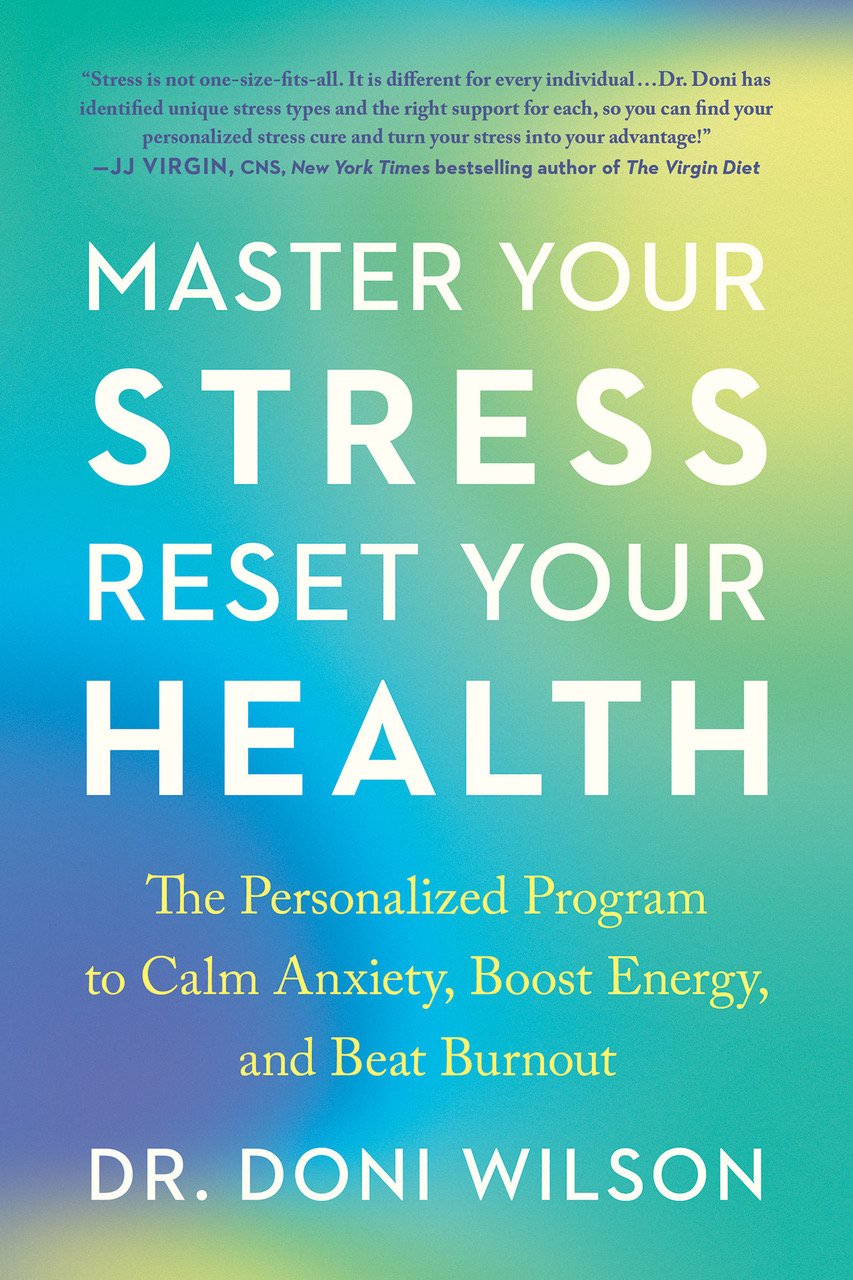
If you’re dealing with chronic stress or want to recover from trauma, you’ll find my most recent book: Master Your Stress Reset Your Health to be helpful. In the book, you’ll learn all about the human nervous system and stress response, how we all respond to stress and trauma uniquely as individuals, and how we can use natural approaches (diet, lifestyle, nutrients, herbs, and more) to help you recover from stress and trauma.
In the book, you’ll find out your Stress Type and how to optimize your cortisol and adrenaline levels to effectively erase the impact of stress on your biology.
I can tell you that it IS possible to heal from stress and trauma, to recover from anxiety and depression, and to rebalance what was disrupted by stress, such as hormones, digestion, neurotransmitters, and immune function. I also use this approach to help women dealing with an abnormal pap smear and high risk HPV. In this way, we can also prevent long term health issues, including risk of cancer, heart disease, and dementia.
I help patients to do this in my practice every day – by phone and zoom, anywhere in the world. You can set up a one-on-one appointment here. Once I meet with you one on one, we will create a strategic plan based on your health needs, including sessions with the health coach on my team to help guide you to implement my proprietary C.A.R.E. and Stress Mastery programs.
Thank you again so much Heather for sharing this wisdom with us today. And thank you everyone for joining us here on How Humans Heal.
If you found this information helpful, please make sure to subscribe so you don’t miss future episodes of How Humans Heal.
I look forward to connecting with you soon!

Social:
- Facebook: https://facebook.com/drdoniwilson
- Instagram: https://instagram.com/drdoniwilson
- Threads: https://threads.net/@drdoniwilson
- YouTube: https://youtube.com/DoniWilsonND
Subscribe:
- Weekly Wellness Wisdom (Newsletter): https://doctordoni.com/www
- How Humans Heal (Podcast): https://doctordoni.com/podcast
More Resources from Dr. Doni:
- Stress Type Quiz: Assess your Adrenal Function
https://doctordoni.com/quiz - Dr. Doni’s Book: Master Your Stress, Reset Your Health
https://doctordoni.com/book - Dr. Doni’s Facebook Group: Stress Warrior Stress Resiliency
https://facebook.com/groups/stresswarrior - HPV Recovery Guide (FREE)
https://doctordoni.com/ddpp/hpv-guide/ - FREE Masterclasses with Dr. Doni
https://doctordoni.com/masterclasses - FREE Guides from Dr. Doni
https://doctordoni.com/guides
Personalized Solutions:
- 14-Day Detox Program: You can start this transformation program anytime
https://doctordoni.com/detox-program - Say Goodbye to HPV (12-week Program): Begin the journey to freedom from HPV today!
https://doctordoni.com/say-goodbye-to-hpv - If you’d like to meet with Dr. Doni one-on-one for your health, request a Health Breakthrough Session: https://doctordoni.com/breakthrough
Disclaimer: This specific article and all other Content, Products, and Services of this Website are NOT intended as, and must not be understood or construed as, medical care or advice, naturopathic medical care or advice, the practice of medicine, or the practice of counseling care, nor can it be understood or construed as providing any form of medical diagnosis, treatment, natural HPV cure, or prevention of any disease.




The Truth About HPV: Why Some Women Clear It and Others Don’t – Dr. Doni on The Vital Spirit Podcast
Dr. Doni was interviewed by Dr. Kelly Livingston on The Vital Spirit Podcast to talk about how we can clear HPV by addressing the root causes that made us susceptible to the virus in the first place.
How to Clear High-Risk HPV Naturally and Reduce Cervical Cancer Risk – Dr. Doni on the Reinvent Healthcare Podcast
Dr. Doni was interviewed by Dr. Ritamarie Loscalzo on the Reinvent Healthcare Podcast to talk about what actually drives HPV persistence, why most women are told “there’s nothing you can do,” and how a terrain-based approach helps the body clear high-risk HPV and stay negative long term.
A Practitioner’s Guide to Stress Patterns, Cortisol & Recovery – Dr. Doni on The DUTCH Podcast
Dr. Doni was interviewed by Dr. Jaclyn Smeaton on The DUTCH Podcast to discuss Dr. Doni’s clinical philosophy, research findings, and personal journey around understanding and treating stress.
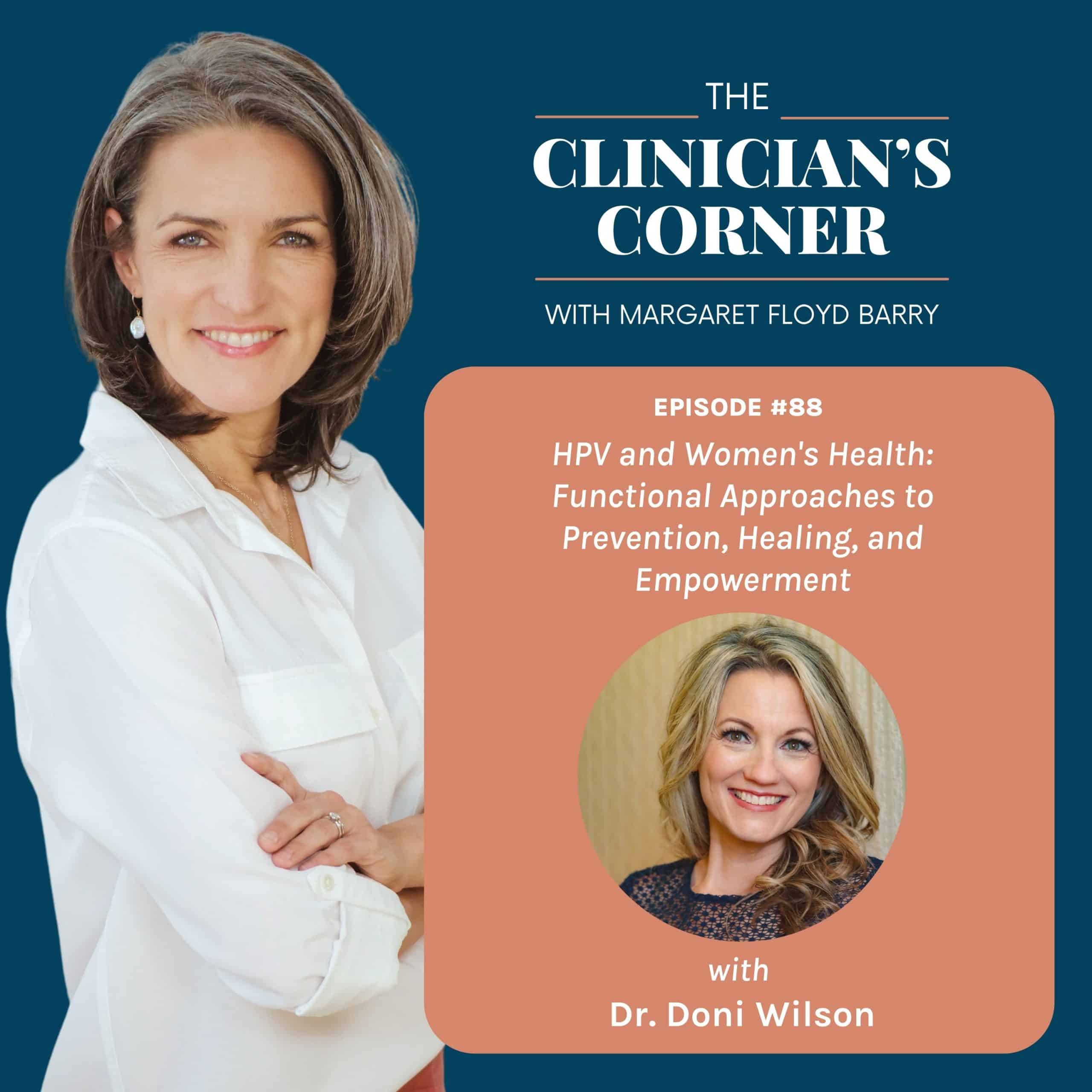
HPV and Women’s Health: Functional Approaches to Prevention, Healing, and Empowerment – Dr. Doni on “The Clinician’s Corner” Podcast
Dr. Doni was interviewed by Clinician Margaret Floyd Barry on “The Clinician’s Corner” Podcast to talk about how HPV isn’t just a women’s health issue, how stress and trauma can play a pivotal role in immune resilience, and the actionable strategies clinicians can implement to help their clients clear HPV naturally.